Author: 810467pwpadmin

  • The Ultimate Guide to Energy Resilience: Navigating the Iran Conflict as a Global Fuel Buyer

    The Ultimate Guide to Energy Resilience: Navigating the Iran Conflict as a Global Fuel Buyer

    As of March 26, 2026, the global energy landscape is facing one of its most significant tests in decades. The ongoing conflict in Iran has transcended regional borders, creating a ripple effect that touches every fuel buyer, refinery, and logistics provider on the planet. With approximately one-fifth of the world's global crude and natural gas supply currently disrupted, the term "energy resilience" is no longer just a boardroom buzzword: it is a survival mandate for industrial and commercial operations.

    In today's climate, navigating the volatility of the Middle East requires more than just capital; it requires a sophisticated understanding of maritime chokepoints, a vetted network of non-OPEC suppliers, and a logistics partner capable of moving refined products like EN590, Jet Fuel A1, and D6 through high-risk corridors. At Van Dyke Energy, we are dedicated to providing the stability and reliability required to keep global supply chains moving when the traditional markets falter.

    The Chokepoint Crisis: Understanding the Strait of Hormuz

    The primary driver of current market anxiety is the status of the Strait of Hormuz. Historically responsible for roughly 20% of global petroleum liquids consumption: approximately 20 million barrels per day: any sustained disruption here sends immediate shockwaves through the Brent and WTI indices.

    In early March 2026, international Brent prices surpassed $92 per barrel, marking a nearly 30% increase in a single week. For a fuel buyer, this volatility makes long-term forecasting nearly impossible. The current "war premium" on oil is not just about the availability of raw crude; it is about the risk associated with the transit of refined fuels.

    Regional Vulnerabilities in 2026

    • Europe: Having already pivoted away from Russian pipeline gas, Europe is now heavily reliant on LNG. With major exporters like Qatar facing project delays and regional instability, European buyers are aggressively seeking EN590 diesel and heating oil from alternative sources to replenish low stockpiles.
    • Asia (Japan & China): Japan remains particularly vulnerable, relying on the Middle East for roughly 95% of its crude oil. China, while diversifying, still moves half of its crude imports through the Strait.
    • Southeast Asia: The region is facing a "wake-up call" regarding energy security, leading to a surge in demand for verified, non-Middle Eastern supply contracts.

    global-network-connectivity.webp

    The Shift to Refined Products: EN590, Jet Fuel A1, and D6

    While crude oil makes the headlines, the real battle for energy resilience is fought in the refined products market. Industrial sectors, aviation, and heavy shipping cannot run on crude; they require specific, high-spec fuels that meet international standards.

    EN590 (Ultra-Low Sulfur Diesel)

    As supply chains tighten, EN590 has become the gold standard for European and Asian transport sectors. However, regional instability in the Gulf has led to a surge in fraudulent offers and "phantom" allocations. Buyers must prioritize sources that offer transparent logistics and verifiable Proof of Product (POP). Understanding what every fuel buyer should know about POP is critical to avoiding the pitfalls of a desperate market.

    Jet Fuel A1

    The aviation sector is particularly sensitive to the Iran conflict. Jet Fuel A1 prices have seen steep premiums for prompt delivery. Van Dyke Energy specializes in securing Jet A1 allocations from vetted refineries that bypass the immediate conflict zone, ensuring that commercial fleets remain operational despite regional theater escalations.

    D6 Virgin Fuel Oil

    For power generation and heavy industry, D6 remains a vital component of the energy mix. As natural gas supplies face potential blockades, D6 serves as a critical secondary fuel source. Ensuring the delivery of D6 in today's environment requires a logistics network that understands the nuances of secondary trading hubs outside the immediate conflict zone.

    Logistics Expertise: The Van Dyke Energy Advantage

    During periods of regional instability, the value of a fuel supplier is measured by their logistics expertise. It is one thing to have a contract for fuel; it is another thing entirely to have that fuel loaded onto a vessel and cleared for departure.

    At Van Dyke Energy, we leverage a vetted network of storage facilities and shipping partners to ensure that our buyers are protected from the worst of the regional disruptions. Our approach to energy resilience is built on three pillars:

    1. Vetted Supply Chains: We do not rely on a single geographical source. By diversifying our refinery relationships, we mitigate the risk of a single regional conflict halting our operations.
    2. Compliance Rigor: In a high-price environment, the risk of "too-good-to-be-true" offers increases. We adhere to the strictest compliance standards, working only with Top 50 Global Banks for SBLC and DLC transactions. You can read more about why global banks matter in fuel trade to understand how we protect our clients' capital.
    3. Real-Time Logistics Monitoring: We provide our clients with clarity on the movement of their products, ensuring that refined fuels like EN590 and Jet Fuel A1 are moving according to schedule, even when shipping lanes are under pressure.

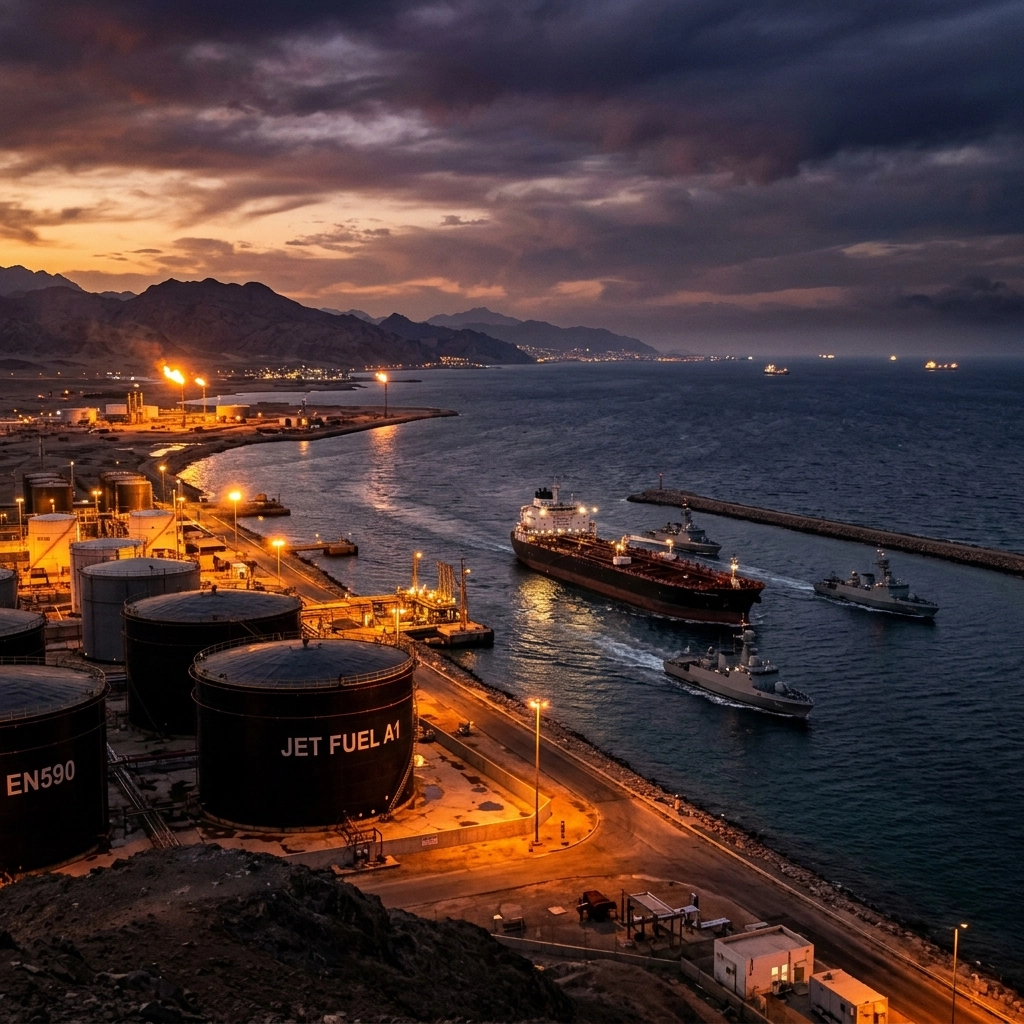
    refinery-operations-at-dusk.webp

    Red Flags for Fuel Buyers in a Conflict Zone

    When regional instability peaks, the "bad actors" in the energy trade become more active. Every fuel buyer should be on high alert for the following red flags:

    • Deep Discounts: If a seller is offering EN590 or Jet Fuel A1 at $20 below market price during a global shortage, the product likely does not exist or is tied to sanctioned entities.
    • Non-Standard Payment Terms: Requests for upfront payments via Western Union or non-banking channels are immediate disqualifiers. Always insist on bank-to-bank communication (MT799/MT760/MT103).
    • Unverifiable Logistics: If a seller cannot provide a clear path of how the fuel will bypass the Strait of Hormuz or other chokepoints, the delivery is at high risk.
    • Incomplete Documentation: Be wary of sellers who cannot provide a full Proof of Product (POP) or who use outdated SGS reports. For more on this, check our guide on 7 mistakes you’re making with EN590 procurement.

    Strategic Actions for Long-Term Resilience

    Navigating the 2026 Iran conflict requires a proactive strategy. Forward-thinking buyers are moving away from spot-market desperation and toward structured, long-term procurement plans.

    1. Diversify Your Supplier Base

    Do not put your entire energy needs in the hands of a single producer. By working with a broker-dealer like Van Dyke Energy, you gain access to a broad portfolio of vetted sellers across different continents.

    2. Accelerate Strategic Reserves

    If your operations depend on D6 or EN590, current market signals suggest that waiting for a "price dip" is a high-risk gamble. Securing allocations now, even at current premiums, is a hedge against the potential for a total blockade of the Strait of Hormuz.

    3. Formalize Your RFP Process

    A structured Request for Proposal (RFP) process ensures that you are only dealing with serious, capable suppliers. We recommend all our clients use a formal Fuel Buyer RFP to vet potential partners effectively.

    fuel-buyer-rfp-badge.webp

    4. Monitor Secondary Impacts

    The Iran conflict doesn't just affect fuel; it affects fertilizer and food security, as many agricultural precursors transit the same routes. A holistic view of your supply chain's energy needs will help you anticipate indirect costs.

    Conclusion: Reliability is the Only Currency

    In the face of the 2026 Iran conflict, the global energy market is undergoing a fundamental shift. The days of easy, uninterrupted supply are momentarily behind us, replaced by a climate where logistics expertise and vetted networks are the primary drivers of success.

    For the serious fuel buyer, energy resilience is achieved through a combination of strategic diversification and a partnership with a firm that understands the complexities of global oil and gas. At Van Dyke Energy, we pride ourselves on being that partner: redefining global oil and gas through a foundation built on trust and professional execution.

    If you are ready to secure your fuel supply chain and navigate these volatile markets with confidence, we invite you to contact us today.

    Mark Van Dyke
    Sales Director, VanDykeEnergy.com
    Reliability Powered by Trust.

  • Why Energy Resilience Will Change the Way Every Fuel Buyer Navigates the Iran Conflict

    Why Energy Resilience Will Change the Way Every Fuel Buyer Navigates the Iran Conflict

    In the current geopolitical landscape of March 2026, the term "business as usual" has been effectively scrubbed from the lexicon of the global energy sector. As the conflict in Iran continues to exert pressure on the world’s most sensitive maritime arteries, the role of the fuel buyer has evolved from a procurement officer to a strategic risk manager. The volatility we are witnessing is not merely a temporary price spike; it is a fundamental restructuring of how refined products move from point A to point B.

    For organizations relying on consistent supplies of EN590, Jet Fuel A1, and D6, the stakes have never been higher. Navigating these waters requires more than just a line of credit: it requires energy resilience. At Van Dyke Energy, we define energy resilience as the ability to maintain supply continuity through a combination of logistical expertise, vetted networks, and unwavering compliance, even when traditional corridors are under threat.

    The Strait of Hormuz: A Systemic Vulnerability Exposed

    The ongoing instability in the Middle East has once again highlighted the fragility of the Strait of Hormuz. With approximately one-fifth of the world’s crude and LNG supply passing through this narrow waterway, any disruption sends immediate shockwaves through the global market. In today’s climate, we are seeing Asian markets: which account for over 80% of the crude and LNG transiting the region: facing unprecedented exposure.

    However, the impact is not limited to crude. The refined products market is feeling the squeeze as well. When supply lines are threatened, the premium on "safe" fuel increases. We are observing European natural gas prices surging by nearly 50%, forcing a reallocation of resources that creates a vacuum in other markets. For the savvy fuel buyer, relying on a single source or a single transit route is no longer a viable strategy. You must look toward providers who possess the logistical infrastructure to bypass traditional bottlenecks.

    Van Dyke Energy Globe Graphic

    Why "Cheapest" is Currently the Most Expensive Option

    In a market defined by conflict, the pursuit of the lowest possible price per metric ton is a dangerous game. We are seeing an influx of "ghost offers" and unverified intermediaries claiming to have access to discounted Iranian or regional fuels. For a professional fuel buyer, these offers are massive red flags.

    Energy resilience is built on the foundation of reliability and compliance. Attempting to navigate the Iran conflict by cutting corners on vetting or choosing unverified sellers often leads to:

    • Seizure of assets due to non-compliance with international sanctions.
    • Total loss of capital through fraudulent SBLC (Standby Letter of Credit) demands.
    • Supply chain paralysis when "paper fuel" fails to materialize at the port.

    At Van Dyke Energy, we prioritize transparency. We encourage our partners to understand the banking side of these transactions. Understanding why top 50 global banks matter in fuel trade is essential when navigating high-risk geopolitical zones. If your seller cannot provide a clear, bank-verified path to product, the "discount" you are chasing is likely a mirage.

    Logistics: The True North of Fuel Procurement

    When regional instability occurs, the physical movement of fuel: logistics: becomes the primary differentiator between success and failure. Moving refined fuels like EN590 (Ultra-Low Sulfur Diesel) and Jet Fuel A1 requires more than just a vessel; it requires a vetted network of storage facilities and shipping routes that can adapt in real-time.

    Van Dyke Energy’s strength lies in our ability to maintain a global footprint that is not beholden to a single region. Whether we are moving D6 Virgin Fuel Oil or high-grade aviation fuel, our logistics framework is designed for redundancy.

    refinery-operations-at-dusk.webp

    Key Pillars of Our Resilient Logistics:

    1. Vetted Tank Farms: We utilize secure storage in strategic hubs (Rotterdam, Houston, Fujairah, and Singapore) to ensure that product is available even if regional production is throttled.
    2. Compliance-First Shipping: Every vessel in our network undergoes rigorous vetting to ensure it meets international safety and environmental standards, reducing the risk of port delays.
    3. Real-Time Diversification: If a primary shipping lane becomes high-risk, our team has the capability to reroute or source from alternative, pre-vetted refineries within our network.

    For more information on our specific seller capabilities, you can visit vandykeenergy.com/sellers.

    Red Flags: Navigating Fraud During Regional Conflict

    Crises create opportunities for bad actors. As the Iran conflict dominates headlines, we have seen an uptick in sophisticated scams targeting fuel buyers. If you are currently in the market for EN590 or Jet Fuel A1, be on the lookout for these specific warnings:

    • Requests for Upfront "Logistics Fees": Legitimate sellers like Van Dyke Energy do not require "insurance fees" or "clearance costs" to be paid to private accounts before Proof of Product (POP) is established.
    • Non-Standard Documentation: If the CIQ or SGS reports look tampered with or are more than a few weeks old, walk away. In a fast-moving conflict, only recent inspections matter.
    • Avoidance of Bank-to-Bank Communication: If a seller refuses to engage via standard banking procedures (MT799/MT760), they are likely avoiding the scrutiny of the Top 50 global banks that regulate this industry.

    To avoid these pitfalls, we recommend reviewing our guide on 7 mistakes you’re making with EN590 diesel procurement.

    The Importance of Proof of Product (POP) in 2026

    In an unstable market, "Proof of Product" is the only currency that matters before funds are committed. The Iran conflict has led to a surge in "shorted" contracts where buyers pay for fuel that simply does not exist or is currently under embargo.

    A resilient fuel buyer demands transparency. You should be able to verify the existence of the product through independent inspectors and bank-confirmed documents. This is a core component of how we operate at Van Dyke Energy. We believe that trust is not given; it is earned through the delivery of verified product. You can learn more about our commitment to this in our article on what every fuel buyer should know about POP.

    Verified fuel inspection of EN590 diesel ensuring proof of product for a global fuel buyer.

    Adapting Your Strategy: The Forward-Looking Perspective

    Building energy resilience is not a one-time fix; it is a continuous process of adaptation. In today’s climate, fuel buyers must shift from a reactive "spot market" mentality to a proactive "contractual" mentality. Secure, long-term relationships with established firms provide a buffer against the price volatility and supply shocks caused by the Iran conflict.

    Steps to Increase Your Resilience:

    • Diversify your sourcing: Do not rely solely on Middle Eastern exports. Leverage Van Dyke Energy’s global network to access refined products from multiple jurisdictions.
    • Formalize your RFP process: Use structured requests to ensure you are dealing with vetted entities. Our Buyer RFP process is designed to filter out the noise and focus on executable trades.
    • Verify the financial chain: Ensure your financial instruments are backed by reputable institutions that can withstand market turbulence.

    fuel-buyer-rfp-badge.webp

    Conclusion: Reliability as the Ultimate Competitive Advantage

    The Iran conflict has rewritten the rules of the energy trade. It has exposed the vulnerabilities of those who prioritize short-term gains over long-term stability. For the modern fuel buyer, the path forward is clear: you must align yourself with partners who prioritize energy resilience, logistics expertise, and absolute compliance.

    At Van Dyke Energy, we remain committed to moving the world’s most essential fuels: EN590, Jet Fuel A1, and D6: with the precision and reliability that today’s market demands. Our vetted network and transparent processes are built to withstand regional instability, ensuring that your operations never miss a beat.

    In a world of uncertainty, reliability is the only true competitive advantage.

    Mark Van Dyke
    Sales Director, VanDykeEnergy.com
    Reliability Powered by Trust.


    Ready to secure your supply chain? Contact our team today or visit our FAQ page for more information on our procurement processes.

  • Why the Iran Conflict Will Change the Way You Source Jet Fuel A1 and EN590 Diesel

    Why the Iran Conflict Will Change the Way You Source Jet Fuel A1 and EN590 Diesel

    In the current geopolitical climate of March 2026, the global energy landscape is undergoing its most significant transformation since the 1970s. The escalating conflict in Iran has moved beyond localized skirmishes into a full-scale disruption of the world’s most critical energy transit routes. For the modern fuel buyer, the "old way" of sourcing refined products: relying on stable spot markets and predictable Middle Eastern flows: is officially dead.

    As of today, Sunday, March 22, 2026, the Strait of Hormuz is effectively a no-go zone for unescorted commercial tankers. With over 24% of global jet fuel exports previously flowing through this narrow passage, the ripple effects are being felt from the runways of Heathrow to the industrial hubs of Southeast Asia. To maintain energy resilience, companies must now pivot their procurement strategies toward vetted, reliable logistics partners who can navigate this instability without compromising on compliance.

    The Collapse of Global Supply: Numbers That Matter

    The data coming out of the first quarter of 2026 is sobering. Global Jet Fuel A1 exports have collapsed by over 60% since the beginning of March. We have seen daily volumes drop from 1.8 million barrels per day (b/d) to less than 700,000 b/d in a matter of weeks.

    This isn't just a Middle Eastern problem; it's a systemic failure. Major refining regions are cutting output dramatically to safeguard their own domestic crude feedstocks. In Singapore, refinery run rates have been slashed from 85% to 60%. In China, top regulators have advised firms against shipping fuel without "special reasons," effectively halting a major source of secondary supply for the Pacific market.

    For the EN590 diesel market, the situation is equally dire. As a middle distillate, diesel shares the same refining fraction as jet fuel. When jet fuel supplies tighten and prices skyrocket, the pressure on the diesel pool becomes unsustainable. European buyers, already avoiding Russian-origin product, now find their secondary sources in India and the Middle East throttled by the conflict.

    Refinery operations at dusk showcasing the backbone of the refined fuels supply chain

    Why "Spot Sourcing" is No Longer a Viable Strategy

    For years, many fuel buyers operated on a "just-in-time" basis, picking up spot cargos of EN590 or Jet Fuel A1 when prices were favorable. In the 2026 market, this strategy is high-risk and likely to result in empty tanks.

    The conflict has forced a hard pivot toward long-term, vetted contracts. Because jet fuel markets have minimal spot trading and inventory constraints, price volatility is now amplified. Northwest Europe delivered prices for Jet Fuel A1 have nearly doubled, exceeding $1,600 per ton. At these record highs, the only way to ensure supply security is through forward-looking agreements with sellers who control their own logistics chain.

    At Van Dyke Energy, we are seeing an unprecedented surge in requests for multi-year allocations. The market is moving toward a "Flight to Quality," where the pedigree of the seller and their ability to actually deliver product to a safe port is more important than a few cents' difference in the Platts-linked price.

    Geographic Shifting: Where the Fuel is Actually Moving

    With the Middle East largely neutralized as a reliable export hub, the global supply map is being redrawn. Energy resilience now depends on geographic diversification. We are seeing a massive shift toward:

    1. The Dangote Refinery in Nigeria: With its 650,000 b/d capacity, it has become a critical lifeline for Atlantic Basin buyers.
    2. The U.S. Gulf Coast: While prioritizing domestic markets, USGC refiners are now the primary "lender of last resort" for Jet Fuel A1 in Europe.
    3. Strategic Asian Reserves: Countries like South Korea have imposed mandatory export caps to protect their own economies, making remaining unallocated volumes extremely precious.

    If you are a buyer still looking for "cheap" fuel coming out of the Persian Gulf, you are likely looking at a phantom cargo. The risk of seizure, insurance hikes (War Risk premiums have tripled this month), and physical blockades make those routes commercially non-viable for most.

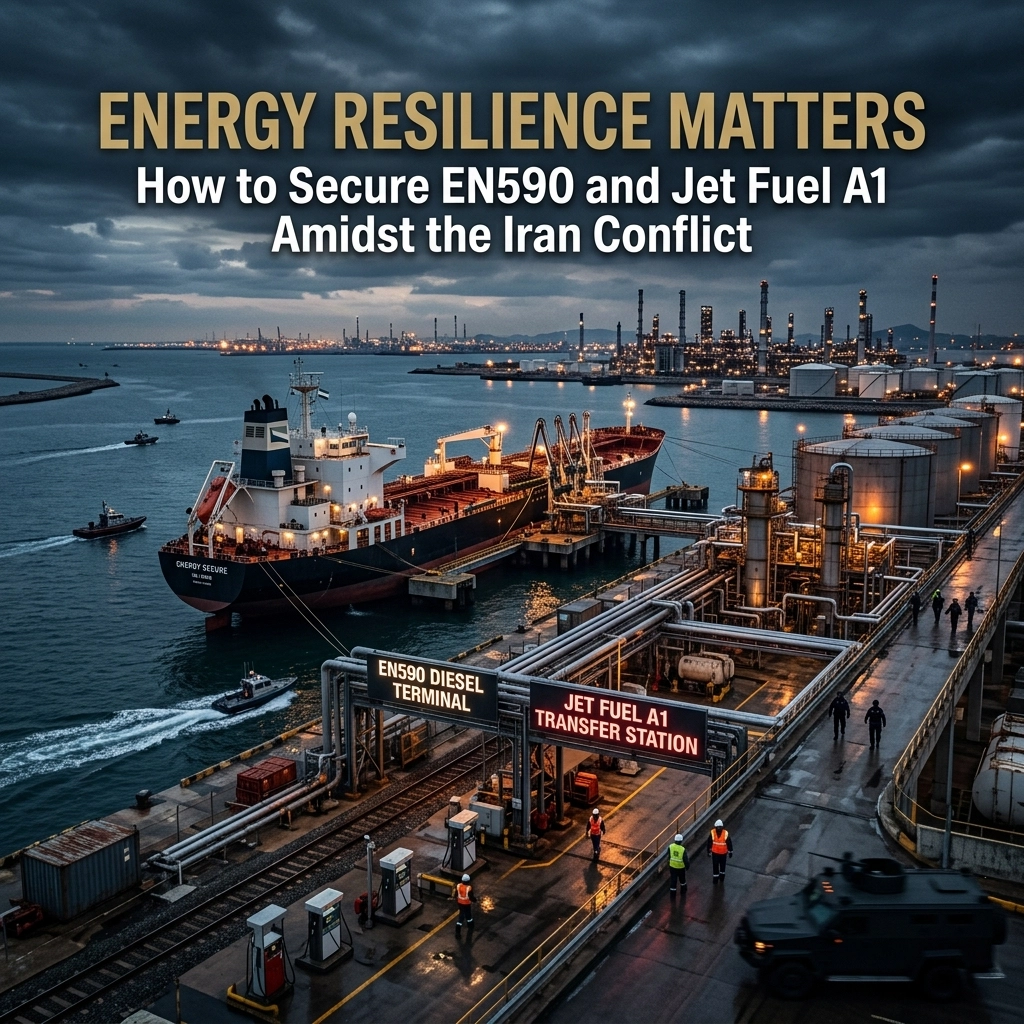
    Secure fuel tanker transporting EN590 diesel and Jet Fuel A1 through challenging global shipping routes.

    Red Flags: Avoiding Scams in a Desperate Market

    Whenever there is a supply crunch, bad actors emerge. The 2026 Iran conflict has created a "perfect storm" for fuel procurement fraud. We are seeing a rise in "Ghost Tankers" and forged Proof of Product (POP) documents.

    Watch for these red flags in today’s market:

    • Pricing that is "too good to be true": If a seller is offering EN590 at 2024 prices while the market is at record highs, it is a scam.
    • Unverified Logistics: If the seller cannot name the vessel or the port of loading within a 48-hour window of the ICPO, walk away.
    • Non-Standard Financial Demands: Always ensure your transactions are backed by Top 50 Global Banks and utilize standard instruments like SBLCs or DLCs.

    Van Dyke Energy emphasizes a strict vetted buyer and seller process to eliminate these risks. In a volatile market, compliance is your only real protection.

    The Van Dyke Energy Advantage: Logistics in a War Zone

    Navigating the 2026 energy crisis requires more than just a Rolodex of suppliers; it requires logistics expertise. Moving refined fuels like Jet Fuel A1, EN590, and D6 worldwide despite regional instability is what we do.

    Our network is built on real-world assets and verified relationships. We don't just "broker" deals; we facilitate the secure movement of energy. Whether it is rerouting cargos around the Cape of Good Hope to avoid the Red Sea or securing allocations from the few remaining stable refining hubs, we provide the reliability that the current market lacks.

    Reliability in 2026 means:

    • Vetted Networks: Every participant in our supply chain undergoes rigorous Due Diligence.
    • Compliance First: We adhere to the highest international standards, ensuring that every drop of fuel is legally sourced and ethically transported.
    • Strategic Positioning: We focus on supply routes that bypass the current conflict zones, ensuring that your fuel actually arrives at the discharge port.

    Van Dyke Energy Global Connectivity Map

    Conclusion: Securing Your Energy Future

    The Iran conflict is not a temporary blip; it is a fundamental restructuring of the energy trade. The era of cheap, easy-to-source fuel is over. For fuel buyers, the priority has shifted from "lowest price" to "highest certainty."

    As we look toward the remainder of 2026, those who fail to secure their supply chains through reputable, expert partners will find themselves grounded or idle. Energy resilience is no longer a buzzword: it is a requirement for survival.

    At Van Dyke Energy, we remain committed to providing the transparency and reliability needed to navigate these turbulent waters. If you are struggling to secure EN590 or Jet Fuel A1 in the current climate, it is time to change your approach.

    Visit our Buyers page to learn how we can help secure your fuel requirements through our verified global network.


    Mark Van Dyke
    Sales Director, VanDykeEnergy.com
    Reliability Powered by Trust.

  • Why Global Energy Resilience Will Change the Way You Source EN590 Diesel and Jet Fuel A1

    Why Global Energy Resilience Will Change the Way You Source EN590 Diesel and Jet Fuel A1

    In the current geopolitical climate of March 2026, the term "energy resilience" has evolved from a corporate buzzword into a critical survival metric for any serious fuel buyer. As regional instability in the Middle East: specifically the escalating conflict involving Iran: continues to send shockwaves through the global supply chain, the traditional methods of sourcing EN590 diesel, Jet Fuel A1, and D6 fuel are no longer sufficient.

    For the modern procurement officer, resilience is no longer just about finding the lowest price per metric ton; it is about the guaranteed continuity of supply in a world where trade routes can be closed overnight and sanctions lists are updated weekly. At Van Dyke Energy, we are seeing a fundamental shift in how refined products are moved and secured. The ability to navigate these volatile waters requires more than just capital: it requires a vetted network and deep logistics expertise.

    The Iran Factor: Market Volatility and the New Normal

    The ongoing conflict in Iran has created a dual-pressure system on the global energy market. First, there is the physical threat to transit through the Strait of Hormuz, a vital artery for the world’s petroleum supply. Second, the secondary effects of regional instability have caused a massive tightening in the insurance and freight markets, making the delivery of Jet Fuel A1 and EN590 more complex than at any point in the last decade.

    When regional powers clash, the first casualty is often the reliability of the "paper" market. We are seeing a surge in speculative offers that cannot be fulfilled because the underlying logistics have collapsed. For a fuel buyer, this means that traditional sourcing hubs are under immense pressure. Energy resilience in this context means having the ability to pivot supply chains away from high-risk zones without sacrificing compliance or quality standards.

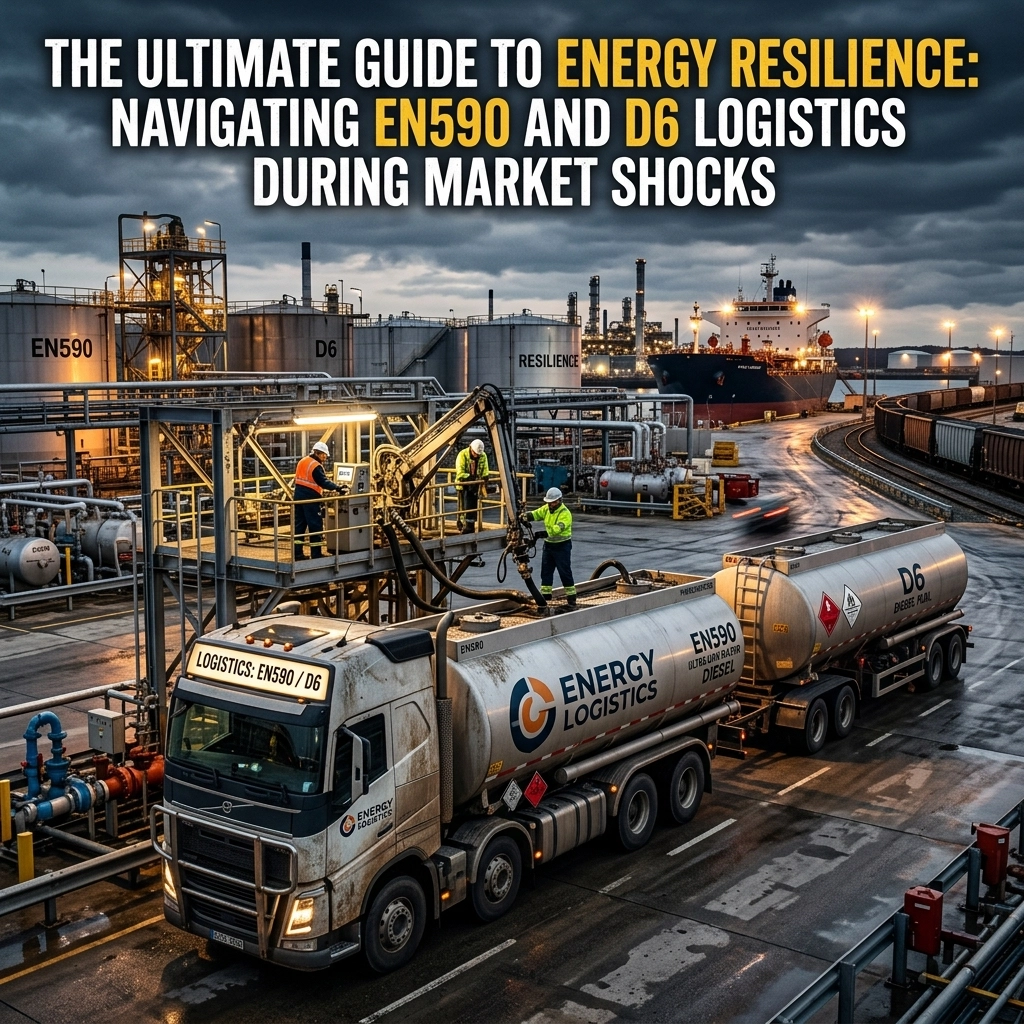
    Industrial fuel tanker moving through a strategic maritime route for Jet Fuel A1 and EN590 diesel distribution.

    Why Refined Products Require Specialized Logistics Expertise

    Refined fuels like EN590 10ppm and Jet Fuel A1 are high-specification products that do not tolerate delays. Unlike crude oil, which can be stored for longer periods with fewer quality degradation concerns, refined products must move through the supply chain with precision.

    In today’s climate, Van Dyke Energy leverages a robust logistics framework to ensure that our clients receive their allocations regardless of regional flare-ups. Our expertise includes:

    • Diversified Sourcing Routes: We don't rely on a single geographical point of failure. By maintaining a global network of vetted sellers, we can facilitate the movement of fuel through alternative corridors.
    • Vetted Tanker Availability: We maintain relationships with Tier-1 shipping lines that are equipped to handle high-risk transit, ensuring that D6 and EN590 shipments are prioritized and protected.
    • Compliance Rigor: With shifting sanctions and heightened scrutiny, our compliance team ensures every transaction meets international standards, protecting both the buyer and the seller from legal and financial repercussions.

    To understand more about how we structure these transactions, you can visit our Buyers page or review our FAQ.

    Red Flags in a High-Stress Market

    When supply is tight and the news cycle is dominated by conflict, the "grey market" becomes flooded with fraudulent offers. Expert buyers should be on high alert for several red flags that have become prevalent in 2026:

    1. Unrealistic Pricing: If the price for EN590 is significantly below the Platts average despite rising regional tensions, the offer is likely a scam.
    2. Inadequate Proof of Product (POP): In a volatile market, real sellers have real product. Any hesitation in providing verifiable POP is a signal to walk away. You can read more about this in our guide on what every fuel buyer should know about POP.
    3. Non-Standard Financial Demands: Requirements for upfront payments or non-functional SBLCs (Standby Letters of Credit) from non-rated banks are major warning signs. We always emphasize the importance of working with Top 50 global banks to secure the trade.

    Van Dyke Energy Globe Graphic

    Securing Jet Fuel A1 and EN590: The Strategic Imperative

    For airlines and heavy industrial users, Jet Fuel A1 and EN590 are not just commodities: they are the lifeblood of their operations. The current instability has highlighted the fragility of "just-in-time" delivery models. Energy resilience demands a shift toward "just-in-case" strategic stockpiling and long-term contracts with reliable partners.

    At Van Dyke Energy, we specialize in bridge-building between high-capacity sellers and serious fuel buyers. By utilizing our Fuel Buyer RFP process, we filter out the noise of the market and focus on transactions that are backed by physical product and secure logistics. This transparency is what builds Reliability Powered by Trust.

    Secure fuel storage terminal at night showing strategic reserves for a professional fuel buyer and energy resilience.

    Compliance and Verification in 2026

    The complexity of today's energy landscape means that the vetting process for a fuel buyer is more rigorous than ever. At Van Dyke Energy, we don't just facilitate sales; we manage risk. This involves:

    • SGS/Saybolt Verification: Ensuring that the quality of EN590 and Jet Fuel A1 meets international specifications at the point of loading and discharge.
    • KYC (Know Your Customer) Protocols: Rigorous background checks on all parties involved to ensure no connection to sanctioned entities or conflict zones.
    • Safe Settlement Procedures: Utilizing established banking instruments to ensure that funds only move when the product is verified and delivered.

    The Role of D6 in the Modern Energy Mix

    While much of the focus is on EN590 and Jet Fuel A1, the demand for Virgin Fuel Oil D6 remains high for industrial power generation. In times of conflict, the demand for D6 often spikes as nations seek to bolster their domestic energy reserves. Moving D6 requires specialized maritime handling and a deep understanding of bulk storage capabilities: areas where Van Dyke Energy excels.

    Refinery Operations at Dusk

    Conclusion: Adapting to a Resilient Future

    The conflict in Iran and the broader instability in global energy markets are not temporary hurdles: they are the new landscape. To succeed in this environment, a fuel buyer must prioritize energy resilience over short-term price gains. This means partnering with a firm that understands the technicalities of EN590 diesel and Jet Fuel A1, the nuances of global logistics, and the absolute necessity of compliance.

    Van Dyke Energy remains committed to providing our clients with the stability they need to operate. By combining a vetted network with a focus on transparency and trust, we ensure that your fuel supply remains secure, regardless of the geopolitical forecast.

    If you are ready to secure your supply chain or want to learn more about our procurement processes, we invite you to contact us directly or explore our about us section to see how we are redefining global oil and gas trade.

    For more insights into avoiding procurement pitfalls, read our article on 7 mistakes you're making with EN590 diesel procurement.

    Mark Van Dyke
    Sales Director, VanDykeEnergy.com
    Reliability Powered by Trust.

  • 7 Mistakes You’re Making with Fuel Procurement During the Iran Conflict (and How to Fix Them)

    7 Mistakes You’re Making with Fuel Procurement During the Iran Conflict (and How to Fix Them)

    As of mid-March 2026, the global energy landscape is facing its most significant challenge in decades. With the ongoing conflict in Iran reaching a fever pitch, the traditional rules of the fuel trade have been rewritten overnight. The Strait of Hormuz: a vital artery that typically handles 20% of the world's oil: has seen daily tanker traffic drop from 138 vessels to a staggering low of just two ships this month.

    For any serious fuel buyer, this isn't just a logistical headache; it is a direct threat to operational survival. Brent crude has surged past $100 per barrel, and European natural gas prices have spiked by over 50% following recent production shutdowns. In this climate of extreme volatility and regional instability, the margin for error in procurement is zero.

    At Van Dyke Energy, we are seeing a recurring pattern of errors from organizations attempting to navigate these waters. Whether you are sourcing EN590, Jet Fuel A1, or D6, these are the seven most critical mistakes being made right now: and how you can fix them to ensure your energy resilience.

    1. Relying on "Business as Usual" Shipping Routes

    The most glaring mistake is the assumption that traditional logistics channels remain viable. With the Strait of Hormuz effectively neutralized, the cost of moving refined fuels has skyrocketed due to "conflict surcharges" and the necessity of longer, alternative routes.

    The Fix: You must prioritize partners with established logistics expertise who can navigate around geopolitical bottlenecks. Van Dyke Energy leverages a global network that bypasses high-risk zones, utilizing diversified discharge ports and multimodal transport strategies to keep EN590 and Jet Fuel A1 flowing. Do not wait for the Strait to reopen; secure your supply chain through Mediterranean or Atlantic-based hubs now.

    2. Ignoring the Reality of Force Majeure

    The recent drone strikes on Qatar’s Ras Laffan facilities and subsequent force majeure declarations by major exporters have proven that even the most stable contracts can vanish in an instant. Many buyers are currently holding worthless pieces of paper because they didn't account for the regional "domino effect" of the Iran conflict.

    The Fix: Diversify your seller portfolio immediately. Relying on a single source in the Middle East is no longer a viable strategy. Explore our buyers' resources to understand how to qualify multiple vetted sellers across different geographic regions to mitigate the risk of local shutdowns.

    Van Dyke Energy Globe Graphic

    3. Skipping Enhanced Due Diligence and Compliance

    In a high-price, low-supply environment, "tainted" fuel often enters the market. The Iran conflict increases the risk of sanctioned product being laundered through secondary markets. A failure to perform rigorous compliance checks can lead to massive fines, seized shipments, and permanent reputational damage.

    The Fix: Stick to a vetted network. At Van Dyke Energy, we prioritize transparency and strict adherence to international trade laws. Every drop of D6 or EN590 we facilitate is backed by verified origins and rigorous inspection standards. If a deal looks too good to be true during a global conflict, it is almost certainly a compliance trap.

    4. Hesitation in the Face of Price Volatility

    We are seeing many fuel buyers paralyzed by the 60% surge in crude prices. They are waiting for a "dip" that may not come for months. In the energy sector, "wait and see" often results in "wait and fail." As of March 9, Brent reached $100, and with supply lines tightening, the upward pressure remains relentless.

    The Fix: Shift from a spot-market mindset to a long-term energy resilience strategy. Locking in volumes now: even at current premiums: is often cheaper than facing a total supply out-of-stock situation next month. Use professional procurement structures to hedge your risk.

    5. Neglecting Proof of Product (PoP) Verification

    The chaos of war provides the perfect cover for scammers and "ghost" fuel providers. We have seen an uptick in fraudulent offers for Jet Fuel A1 where the seller claims the product is "diverted" or "held in secret storage" due to the conflict.

    The Fix: Demand transparency. Never move forward without a verified Proof of Product. If you are unsure of the technical requirements, read our guide on what every fuel buyer should know about PoP. Real fuel moves through real refineries and real tanks, not just PDFs.

    Refinery Operations at Dusk

    6. Using Unverified Intermediaries

    The Iran conflict has brought out an army of "mandates" and "brokers" who claim to have "inside tracks" to discounted fuel. In 99% of cases, these intermediaries add zero value and 100% more risk. They often lack the financial standing or the direct refinery relationships needed to execute in a crisis.

    The Fix: Work directly with established entities. Van Dyke Energy functions as a bridge between serious buyers and verified sellers. Our reputation is built on trust and the ability to execute when others cannot. Check our about page to see how our structured approach eliminates the middleman noise.

    7. Failing to Utilize a Structured RFP Process

    In a panic-buy environment, many organizations abandon their standard procurement protocols. They send informal emails or WhatsApp messages hoping to secure a cargo. This is a red flag to legitimate sellers who prioritize professional, structured requests.

    The Fix: Professionalize your approach. A formal Request for Proposal (RFP) signals to the market that you are a serious, qualified buyer with the financial capacity to close. It ensures all technical specifications: from sulfur content in EN590 to the flash point of Jet Fuel A1: are clearly defined and met.

    Fuel Buyer RFP Badge

    Why Energy Resilience Matters in 2026

    The conflict in Iran is not just a regional dispute; it is a fundamental shift in how global energy is traded. The "just-in-time" delivery model for refined fuels has collapsed. Today, the winners are those who prioritize logistics expertise and vetted networks.

    At Van Dyke Energy, we understand that our clients aren't just buying fuel; they are buying certainty. Whether you are seeking a reliable supply of D6 for industrial use or Jet Fuel A1 for aviation, our focus remains on moving refined products safely and compliantly through the world’s most challenging environments.

    The Authoritative Path Forward

    If you are currently struggling with canceled shipments, sudden price hikes, or unverified suppliers, it is time to reassess your procurement strategy. The mistakes listed above are common, but in the current geopolitical climate, they are also fatal to your bottom line.

    Key Action Steps:

    • Audit your current suppliers: Are they reliant on the Strait of Hormuz?
    • Verify your PoP: Are you dealing with real fuel or paper promises?
    • Formalize your process: Use a structured RFP to attract top-tier sellers.
    • Consult the experts: Reach out to Van Dyke Energy to leverage our global logistics network.

    The energy market of 2026 demands a higher level of sophistication. Don't let regional instability derail your operations. Build your strategy on a foundation of reliability and trust.

    For more insights into the technicalities of fuel trade, read our post on why top 50 global banks matter in fuel trade to understand the financial security needed during times of conflict.


    Mark Van Dyke
    Sales Director, VanDykeEnergy.com
    Reliability Powered by Trust.

  • How to Maintain Energy Resilience and Secure EN590 Diesel Despite Regional Conflicts

    How to Maintain Energy Resilience and Secure EN590 Diesel Despite Regional Conflicts

    In the current geopolitical landscape of March 2026, the global energy market is facing one of its most rigorous tests in decades. As regional conflicts, specifically the ongoing instability in and around Iran, continue to disrupt traditional supply routes, the role of a sophisticated fuel buyer has shifted from simple procurement to strategic risk management. Maintaining energy resilience is no longer a luxury; it is a fundamental requirement for industrial survival.

    For organizations relying on EN590 diesel, Jet Fuel A1, and D6 virgin fuel oil, the volatility in the Middle East has created a "new normal" characterized by price fluctuations and logistical bottlenecks. However, even in this climate, fuel procurement remains possible for those who understand how to navigate the complexities of international logistics and vetted supplier networks.

    The Impact of Regional Conflict on Global Distillates

    The Middle East remains the heartbeat of global energy production. When regional tensions escalate: as we are currently witnessing in Iran: the ripples are felt immediately in the Mediterranean and Northwest European markets. The primary concern for a fuel buyer today isn't just the price per barrel, but the physical delivery of refined products through contested maritime corridors.

    Conflict in this region often leads to:

    • Increased Freight and Insurance Premiums: War risk surcharges can double the cost of shipping overnight.
    • Supply Chain Diversion: Vessels are forced to take longer routes (such as around the Cape of Good Hope), delaying EN590 deliveries by weeks.
    • Refinery Constraints: Regional instability often limits the production capacity of local refineries, forcing buyers to look toward the U.S. or alternative European hubs.

    At Van Dyke Energy, we have optimized our operations to mitigate these specific risks. By leveraging a global footprint, we ensure that our clients are not overly exposed to a single geographical point of failure.

    Van Dyke Energy Globe Graphic

    Securing EN590: Why Logistics Expertise is the Ultimate Safeguard

    EN590 10PPM is the backbone of European and international transport. In times of conflict, the demand for high-quality, low-sulfur diesel spikes as nations bolster their strategic reserves. To secure these volumes, you need more than just a contract; you need a logistics powerhouse that understands the nuances of FOB (Free on Board) and CIF (Cost, Insurance, and Freight) movements in high-risk zones.

    Energy resilience is built on the ability to pivot. If a traditional port of loading becomes a "no-go" zone due to regional strikes or blockades, your supplier must have the capacity to re-route product or tap into secondary storage facilities. Van Dyke Energy maintains deep relationships with major storage terminals and vetted shipping lines to ensure that Jet Fuel A1 and EN590 continue to flow, regardless of the headlines.

    For more information on how we manage these complex transactions, visit our About Us page.

    Identifying Red Flags: Procurement Risks in a Volatile Market

    Whenever there is a crisis in the energy sector, "bad actors" emerge. These are often intermediaries claiming to have access to millions of metric tons of product at "discounted" prices. In 2026, the sophistication of these scams has increased. Every serious fuel buyer must be vigilant.

    Common Red Flags to Watch For:

    1. Unrealistic Discounts: If the price for EN590 is significantly below the current Platts benchmark despite the Iran conflict driving prices up, it is likely a fraud attempt.
    2. Pressure to Bypass Due Diligence: Scammers often use "regional urgency" as an excuse to skip standard KYC (Know Your Customer) or AML (Anti-Money Laundering) procedures.
    3. Invalid Proof of Product (POP): During conflicts, many claim to have "allocation" from state-owned refineries that they cannot prove. Understanding what constitutes a real POP is critical.

    Fuel buyer performing due diligence on EN590 refinery documents to verify proof of product.

    We recommend all our partners read our guide on what every fuel buyer should know about POP to protect their capital and their reputation.

    The Role of Vetted Networks and Financial Instruments

    In a high-risk environment, the "Who" is just as important as the "What." Van Dyke Energy operates through a meticulously vetted network of producers, shippers, and financial institutions. In today’s market, the strength of your banking relationships dictates the speed of your trade.

    The use of SBLCs (Standby Letters of Credit) and DLCs (Documentary Letters of Credit) from Top 50 Global Banks is non-negotiable for securing large-scale shipments of Jet Fuel A1 or D6. These instruments provide the necessary security for both the buyer and the seller, ensuring that funds are only released upon successful delivery and inspection by independent bodies like SGS or Saybolt.

    To understand why your choice of bank matters so much in the current climate, explore our analysis on why top 50 global banks matter in fuel trade.

    Maintaining Resilience: A Checklist for the Modern Fuel Buyer

    To ensure your operations remain uninterrupted by the regional conflicts in the Middle East, consider adopting the following strategies:

    • Diversify Supply Origins: Do not rely solely on Middle Eastern exports. Look toward U.S. Gulf Coast or Asian refined products when the Strait of Hormuz is under threat.
    • Secure Longer-Term Contracts: While the spot market offers flexibility, term contracts (12-month R&E) provide a level of price and volume stability that is invaluable during periods of war.
    • Validate the Logistics Chain: Ensure your seller has a proven track record of moving product. Ask for redacted Bill of Ladings or track records of successful discharges in the last 6 months.
    • Focus on Compliance: Ensure every transaction follows strict Terms and Conditions. Compliance is your best defense against secondary sanctions or legal entanglements arising from regional conflicts.

    Massive fuel storage terminal infrastructure ensuring energy resilience for Jet Fuel A1 and diesel.

    Moving Beyond Diesel: Jet Fuel A1 and D6 Resilience

    While EN590 is a primary focus for many, the aviation and power generation sectors face similar pressures. Jet Fuel A1 is highly sensitive to geopolitical shocks. As commercial and military flight paths are rerouted to avoid conflict zones, the demand for refueling at "safe" hubs increases exponentially.

    Similarly, D6 Virgin Fuel Oil remains a critical component for power plants and heavy industry. Ensuring a steady supply of D6 requires a logistics partner who can manage the massive tankers (VLCCs) required for these movements. Van Dyke Energy’s expertise extends across the entire refined spectrum, ensuring that whether you are fueling a fleet of aircraft or a national power grid, your supply remains secure.

    The Van Dyke Energy Commitment

    In today's climate, trust is the only currency that doesn't depreciate. At Van Dyke Energy, we pride ourselves on being a beacon of reliability in an industry often clouded by uncertainty. Our logistics expertise allows us to move EN590, Jet Fuel A1, and D6 worldwide, overcoming the hurdles presented by regional instability and political friction.

    We invite serious buyers to review our FAQ or reach out to us directly through our Buyers Portal to discuss how we can support your energy requirements during these challenging times.

    Authoritative Conclusion

    The conflict in Iran and the broader regional instability are significant challenges, but they are not insurmountable. Energy resilience is achieved through a combination of rigorous compliance, sophisticated logistics, and a commitment to transparency. By partnering with an entity that understands the intricacies of the global fuel market, you can secure your supply chains and protect your organization from the volatility of 2026.

    Securing EN590 or Jet Fuel A1 is no longer just a transaction: it is a strategic operation. Ensure you have the right team on your side.

    Strategic energy director overseeing global fuel logistics at a shipping port to secure EN590 diesel.

    Mark Van Dyke
    Sales Director, VanDykeEnergy.com
    Reliability Powered by Trust.


    For further insights into fuel procurement strategies, check out our post on 7 mistakes you’re making with EN590 diesel procurement or contact us today to speak with a logistics expert.

  • 7 Mistakes You’re Making with Fuel Procurement During Regional Conflicts (and How to Fix Them)

    7 Mistakes You’re Making with Fuel Procurement During Regional Conflicts (and How to Fix Them)

    [HERO] 7 Mistakes You’re Making with Fuel Procurement During Regional Conflicts (and How to Fix Them)

    As of March 14, 2026, the global energy landscape is facing one of its most volatile periods in decades. With the ongoing conflict in Iran and the resulting instability across the Strait of Hormuz, the traditional playbook for energy procurement has been shredded. For the modern fuel buyer, the stakes have never been higher.

    What worked in a stable market will fail you in a contested one. At Van Dyke Energy, we are seeing a surge in refined product demand: specifically EN590, Jet Fuel A1, and D6: but we are also seeing buyers make critical, avoidable errors that jeopardize their operations. When supply lines are threatened and geopolitical tensions escalate, your procurement strategy must shift from "cost-minimization" to energy resilience.

    Here are the seven most common mistakes fuel buyers are making during this regional conflict and the decisive steps required to fix them.


    1. Over-Reliance on Volatile Supply Chokepoints

    The current crisis in the Middle East has proven that geography is destiny. Relying on a single supply route: like the Strait of Hormuz: is no longer a calculated risk; it is a strategic failure. With tanker movement down nearly 90% in certain sectors, the bottleneck is real and punishing.

    The Fix: You must diversify your geographic sourcing immediately. Van Dyke Energy specializes in leveraging a global logistics network that bypasses traditional chokepoints. By sourcing refined fuels from alternative hubs in the Americas and non-contested European corridors, we ensure that your EN590 or Jet Fuel A1 isn't sitting on a tanker waiting for a ceasefire that may not come.

    2. Failing to Verify the "Proof of Product" (POP)

    In times of conflict, the market is flooded with "phantom fuel." Fraudulent actors capitalize on the desperation of buyers by offering deep discounts on products they don't actually own. If you are not rigorously verifying the Proof of Product (POP), you are inviting financial disaster.

    The Fix: Adopt a "Trust but Verify" stance. High-level transparency is the only currency that matters in 2026. Understanding the nuances of POP is critical for any serious buyer. You should prioritize working with sellers who provide transparent, bank-to-bank verification.

    Energy professional verifying fuel proof of product on a digital tablet at a high-tech petroleum refinery.

    3. Ignoring the Compliance Shift

    Regional conflicts trigger rapid changes in international sanctions and compliance law. A supplier that was "safe" last month might be on a restricted list today due to shifting alliances in the Iran conflict. Buying fuel that inadvertently violates these sanctions can lead to massive fines and the blacklisting of your organization.

    The Fix: Partner with an entity that maintains a vetted network. At Van Dyke Energy, compliance isn't a secondary thought: it is our primary filter. We continuously monitor the regulatory environment to ensure that every drop of D6 or EN590 we move is fully compliant with current international law. This protects your reputation and your bottom line.

    4. Underestimating Logistics Complexity

    It is one thing to buy fuel; it is another thing entirely to move it. During regional instability, freight rates skyrocket, and insurance premiums (War Risk Surcharges) can make a deal's economics "nearly impossible." Many buyers secure the product but fail to secure the vessel or the route.

    The Fix: Integrated logistics expertise is non-negotiable. You need a partner who understands the "last mile" of energy delivery. Whether it is Jet Fuel A1 for aviation hubs or EN590 for industrial power, the logistics must be baked into the contract from day one. Van Dyke Energy’s ability to move refined fuels worldwide despite regional instability is built on our deep relationships with Tier-1 shipping lines and specialized insurers.

    Van Dyke Energy Globe Graphic

    5. Using Weak Financial Instruments

    In a high-risk market, sellers are wary of "soft" financial commitments. If your procurement strategy relies on unconfirmed letters of credit or non-top-tier banks, your bids will be ignored in favor of buyers who bring Top 50 Global Bank security to the table. In 2026, the strength of your bank is as important as the strength of your balance sheet.

    The Fix: Ensure your SBLC (Standby Letter of Credit) is issued via a top-tier financial institution. This provides the seller with the necessary confidence to prioritize your allocation over others.

    6. Waiting for Market "Stability" Before Buying

    The most expensive fuel is the fuel you didn't buy when you had the chance. In the current climate of the Iran conflict, "waiting for the dip" is a dangerous game. Markets in 2026 move on headlines, not just fundamentals. By the time the market "stabilizes," the supply you need may already be contracted to a more decisive competitor.

    The Fix: Shift to a hedged procurement model. Instead of trying to time the bottom of the market, focus on securing a steady, reliable flow of product. Energy resilience is about continuity, not just price-chasing. Establishing a long-term relationship with a reliable supplier like Van Dyke Energy allows you to navigate price volatility without risking a total supply shutdown.

    7. Misunderstanding Product Specifications (EN590 vs. Alternatives)

    As the conflict reshapes refinery outputs, certain specifications like EN590 10PPM may become scarce in specific regions. Many buyers fail to have a "Plan B" specification, leading to operational downtime when their primary fuel type is unavailable or delayed.

    The Fix: Understand the flexibility of your machinery and your local regulations. While EN590 is the gold standard for diesel, knowing when and how to pivot to similar refined products or different grades can save your operations.


    The Van Dyke Energy Advantage: Reliability Powered by Trust

    In a world of regional conflict and market chaos, Van Dyke Energy stands as a pillar of stability. We don't just trade fuel; we manage the complex intersection of geopolitics, logistics, and finance.

    Our vetted network of refineries and our presence in key global markets allow us to bypass the noise and deliver results. Whether you are seeking Jet Fuel A1 for an international fleet or EN590 for a national power grid, we provide the energy resilience required to thrive in 2026.

    Why buyers choose us during times of conflict:

    • Global Reach: We are not tethered to a single region. Our logistics span the globe.
    • Compliance First: We navigate the complex web of sanctions so you don’t have to.
    • Proven Reliability: We move product when others are stuck in port.
    • Vetted Sellers: We only work with the most reliable producers in the industry.

    The Bottom Line:
    Regional conflicts change the rules of the game. If you are still playing by the 2024 rules, you are losing. It is time to audit your procurement process, diversify your supply chain, and partner with an expert who understands the reality of the 2026 energy market.

    Stop making these seven mistakes. Start building a resilient energy future today.

    Ready to secure your supply?
    Contact Van Dyke Energy | Learn more about our Buyer Process


    Mark Van Dyke
    Sales Director, VanDykeEnergy.com
    Reliability Powered by Trust.

  • Global Energy Resilience: Navigating the Iran Conflict with Van Dyke Energy

    Global Energy Resilience: Navigating the Iran Conflict with Van Dyke Energy

    The global energy landscape in March 2026 is defined by a singular, pressing reality: the escalating conflict in Iran. For international fuel buyers and energy stakeholders, this geopolitical instability has traditionally signaled supply chain paralysis and skyrocketing premiums. However, the narrative of 2026 is different. At Van Dyke Energy, we are demonstrating that through strategic US-led logistics partnerships and resilient supply chain architecture, the flow of critical energy products like EN590 10ppm Diesel and Jet Fuel A1 remains not only active but secure.

    In today's climate, reliability is the only currency that matters. While the Strait of Hormuz experiences unprecedented tension, our operations have pivoted to ensure that global hubs: specifically Rotterdam and Singapore: continue to receive the refined products necessary to power global commerce.

    The 2026 Energy Paradox: Conflict vs. Continuity

    The current conflict has created a volatile environment where traditional supply routes are frequently reassessed. Despite these challenges, Van Dyke Energy has maintained a forward-looking perspective, anticipating disruptions before they manifest as delays. By leveraging US maritime security protocols and deep-tier logistics integration, we have insulated our clients from the worst of the regional volatility.

    Our commitment to Global Energy Resilience is not just a slogan; it is an operational mandate. We understand that for a buyer in Europe or an airline hub in Southeast Asia, "geopolitical tension" is a risk factor that must be mitigated by their supplier. We take that burden off the client.

    Van Dyke Energy Globe Graphic

    Strategic Logistics: The US Partnership Advantage

    The backbone of our current operational success lies in our alignment with US-led logistics frameworks. As the conflict in Iran impacts commercial shipping lanes, the presence of coordinated maritime protection and intelligence sharing has become vital. Van Dyke Energy utilizes these high-security corridors to move product safely across contested waters.

    Key pillars of our resilient logistics include:

    • Real-time Vessel Tracking: Enhanced monitoring systems that allow for immediate rerouting in response to regional threats.
    • Diversified Sourcing: While regional tensions persist, our ability to pull from secondary and tertiary reserves ensures that a bottleneck in one area does not stop a delivery to Rotterdam.
    • Strategic Hub Buffering: Maintaining significant floating and land-based storage in neutral territories to act as a surge protector against sudden supply shocks.

    For more details on our operational footprint, visit our About Us page.

    Maintaining the Flow of EN590 and Jet Fuel A1

    The demand for EN590 10ppm Ultra-Low Sulfur Diesel and Jet Fuel A1 does not diminish during wartime; if anything, the requirement for high-quality, reliable fuel increases as military and civilian logistics ramp up. Van Dyke Energy remains a primary conduit for these products into the world’s most critical ports.

    Delivering to Rotterdam (ARA Region)

    As the gateway to Europe, the Rotterdam hub is essential for the continent’s industrial stability. We are currently moving bulk shipments of EN590 to European buyers under CIF (Cost, Insurance, and Freight) terms that include comprehensive war-risk insurance, providing an extra layer of financial security for our partners.

    Powering Singapore and the APAC Region

    In the East, Singapore remains the heartbeat of global trade. Our supply lines for Jet Fuel A1 into Singapore have remained consistent throughout the first quarter of 2026. By utilizing high-capacity tankers and streamlined customs processing, we ensure that the APAC aviation sector remains fueled despite the Middle Eastern backdrop.

    A high-capacity oil tanker transporting Jet Fuel A1 across international waters at sunset.

    Red Flags: Avoiding Scams in a High-Tension Market

    Whenever there is conflict, there is an increase in fraudulent activity. Scammers often use the "war in Iran" as an excuse for unusual procedures, hidden fees, or requests for upfront payments. Expert buyers must remain vigilant.

    Watch out for these warning signs:

    1. Non-Standard Financial Instruments: If a seller asks for payments outside of the Top 50 Global Banks, walk away. In a high-risk environment, the security of a reputable SBLC (Standby Letter of Credit) is non-negotiable. Learn more about why bank rankings matter.
    2. Unverifiable POP (Proof of Product): In times of conflict, "fake" product documents are rampant. Always insist on verifiable, fresh Proof of Product. You can read our guide on what every fuel buyer should know about POP.
    3. Pressure Tactics: Be wary of sellers claiming they have "the last ship out of the Gulf" and demanding immediate wire transfers. Professional energy trade follows strict compliance and SCO (Soft Corporate Offer) procedures.

    For a deeper dive into avoiding procurement pitfalls, see our article on 7 mistakes you’re making with EN590 procurement.

    Financial Integrity in a War Zone

    Trading energy during a conflict requires more than just ships; it requires a robust financial foundation. Van Dyke Energy operates with maximum transparency. We utilize standard international banking protocols, including MT700 and MT760 instruments, ensuring that both the buyer and the seller are protected.

    Our reliance on US-led banking standards provides our global customers with the confidence that their capital is safe. We do not engage in "grey market" transactions or use unrated financial institutions. This commitment to traditional, secure trade finance is what allows us to keep moving product when others are sidelined by compliance issues or risk-aversion.

    Van Dyke Energy operations center overseeing secure fuel trade logistics at a busy shipyard.

    The Path Forward: Reliable Supply in Uncertain Times

    As we look toward the rest of 2026, the conflict in Iran will likely continue to influence market sentiment and price volatility. However, the physical delivery of fuel remains a matter of logistics and resolve. Van Dyke Energy is uniquely positioned to bridge the gap between volatile production zones and stable consumption markets.

    Whether you are a refinery in need of feedstock or a logistics firm requiring massive volumes of EN590, our team is equipped to handle the complexities of the current geopolitical landscape. We are not just selling fuel; we are providing the reliability that allows your business to function in an era of uncertainty.

    Key Takeaways for Today's Market:

    • Logistics is the new lead indicator: Secure routes are more important than spot prices.
    • Partner with "Trusted Names": In a crisis, the reputation of your supplier is your primary risk-mitigation tool.
    • Demand Transparency: From vessel tracking to financial documentation, never settle for "fog of war" excuses.

    For those looking to secure fuel allocations or discuss current Sellers' terms, we encourage you to reach out through our official channels. Our FAQ page also provides updated information on our current procedures under the 2026 conflict protocols.

    Van Dyke Energy continues to stand as a beacon of stability. We are moving product, we are securing shipments, and we are powering the world: one vessel at a time.

    Mark Van Dyke
    Sales Director, VanDykeEnergy.com
    Reliability Powered by Trust.

  • Looking For Jet Fuel A1? Here Are 10 Things You Should Know About Today’s Market Trends

    Looking For Jet Fuel A1? Here Are 10 Things You Should Know About Today’s Market Trends

    Hey there, I’m Mark Van Dyke, Sales Director here at Van Dyke Energy. If you’re reading this on February 28, 2026, you’re likely navigating one of the most complex fuel markets we’ve seen in years. Whether you're a procurement officer for a major airline, a government contractor, or a private broker, the landscape for Jet Fuel A1 has shifted significantly since the turn of the decade.

    Securing high-volume distillates like Jet A1 isn't just about finding the lowest price: it’s about reliability, compliance, and understanding the macro-trends that dictate availability. In today’s market, a "good deal" on paper can often be a logistical nightmare or a compliance red flag.

    To help you stay ahead of the curve, I’ve compiled the 10 most critical things you need to know about the Jet Fuel A1 market right now.


    1. Jet A1 Remains the Undisputed Global Standard

    Despite the buzz around alternative fuels, Jet Fuel A-1 dominates global aviation, holding approximately 71.8% of the total market volume in 2025 and moving into 2026. Outside of North America (where Jet A is more common), Jet A-1 is the lifeblood of commercial aviation.

    Its dominance is due to its optimal performance characteristics, widespread infrastructure, and universal engine compatibility. When you are trading on the global stage, especially in hubs like Rotterdam, Singapore, or Houston, Jet A-1 is the primary liquidity mover. At Van Dyke Energy, we focus on this standardization because it ensures our clients have access to consistent supply chains regardless of where their fleet is grounded.

    2. The Asia-Pacific Surge is Redefining Demand

    If you aren't looking East, you're missing the largest piece of the pie. Asia-Pacific is currently both the largest and fastest-growing market for jet fuel, accounting for nearly 37% of global demand.

    Driven by the massive traffic rebounds in China, India, and the ASEAN nations, this region is expanding at an 11.7% CAGR. For buyers, this means that supply originates increasingly from Eastern refineries, and competition for those allocations is fierce. If your supply chain doesn’t have a footprint or a partner with ties to these regions, you may find yourself paying a premium as the Western markets tighten.

    Van Dyke Energy Globe Graphic

    3. Record Load Factors are Straining Supply

    Commercial aviation is seeing a massive recovery momentum. We are seeing record load factors of 82.1% across the board. Airlines aren't just flying more often; they are flying fuller planes and larger aircraft.

    Both scenarios lead to a direct increase in Jet A-1 consumption. When planes are heavy, they burn more fuel. This "heavy lifting" by the airlines has created a scenario where refinery output is struggling to keep pace with the immediate demand of the commercial sector, which now accounts for over 78% of all jet fuel consumption.

    4. The "SAF Irony": Why Sustainability is Boosting A1 Volumes

    Sustainable Aviation Fuel (SAF) is growing at a staggering 17.4% CAGR. You’d think this would hurt Jet A-1 demand, but it’s actually doing the opposite in the short term.

    Here is the "insider" secret: many SAF blends have a lower energy density than pure Jet A-1. To maintain the same flight range, airlines often have to uplift extra fuel total. Furthermore, with mandates like the EU’s 2% SAF blend requirement, the demand for high-quality Jet A-1 to act as the base carrier for these blends remains at an all-time high. Jet A-1 isn’t being replaced; it’s being supplemented.

    Jet Fuel A1 aircraft fueling at night, highlighting aviation logistics and SAF blend demand

    5. Price Projections for 2026: The $88 Benchmark

    According to current IATA projections and market data for 2026, we are looking at a projected jet fuel price of approximately USD 88 per barrel. This assumes Brent crude averages around USD 62 with a crack spread of about USD 26.

    For buyers, this means your budgeting should be built around these benchmarks. If a "seller" approaches you with prices significantly below these market rates: say, "Gross 50 / Net 40": you are likely looking at a fraudulent offer. In the real world of Van Dyke Energy, we trade on reality, not on "too-good-to-be-true" discounts that never close.

    6. Defense and Military Demand is a Stable Pillar

    While commercial travel fluctuates with the economy, defense and military demand remains a rock-solid 15% of the total market. The U.S. Air Force alone consumed roughly 85 million barrels in the last fiscal year.

    This is important for private buyers to understand because military contracts often take priority in times of supply chain disruption. Understanding the "Defense Priority" in fuel logistics is a key part of risk management when you are planning your quarterly lifts.

    7. The Rise of Business Aviation and Fractional Ownership

    We’ve seen a 12-15% increase in flight hours for business jets and fractional ownership models. This segment of the market requires fuel at a wider variety of regional airports compared to the "hub-to-hub" model of major airlines.

    This creates a logistical "long tail" for fuel distribution. If you are managing a fleet of business jets, your concern isn't just the price at Rotterdam; it's the availability and TTO (Tanker Take Over) procedures at smaller terminals.

    8. Red Flags: How to Spot a "Ghost" Seller

    This is where I get serious. The fuel industry is unfortunately plagued by intermediaries who don't have product. In today’s market, you must be vigilant. Here are a few Red Flags we always warn our clients about:

    • Refusal of Soft Probe: If a seller won't allow a soft probe of their bank or won't provide a verifiable Proof of Product (POP), walk away. You can learn more about this in our guide on what every fuel buyer should know about POP.
    • Non-Standard Procedures: If the seller demands an upfront payment before any verification of product or tank coordinates, it’s a scam.
    • Unrealistic Discounts: As mentioned, Jet A-1 is a global commodity with tight margins. Deep discounts don't exist in a market with 82% load factors.

    Jet Fuel A1 storage terminal with tanks and pipelines, showing real supply chain infrastructure

    9. Mastering the Terms: FOB vs. CIF in 2026

    In the current climate, your choice of shipping terms can make or break your margins.

    • FOB (Free On Board): Most of our sophisticated buyers prefer FOB Rotterdam or Houston. It gives the buyer control over the logistics and the vessel.
    • CIF (Cost, Insurance, and Freight): This is often preferred by newer buyers, but it puts the logistical risk on the seller.

    In 2026, port congestion and vessel availability are major factors. If you're buying CIF, ensure your contract includes clear penalties for delivery delays. At Van Dyke Energy, we work with our sellers to ensure that whether it's FOB or CIF, the transparency of the vessel’s location and the Q&Q (Quality and Quantity) report is never in question.

    10. The Critical Importance of Top-Tier Banking

    Finally, let’s talk money. In today’s high-interest, high-scrutiny environment, the strength of your financial instrument is just as important as the fuel itself.

    Most major refineries and legitimate sellers will only accept SBLCs (Standby Letters of Credit) or DLCs (Documentary Letters of Credit) from the Top 50 Global Banks. If your bank isn't on that list, you may find your "confirmed" deal stalled at the compliance desk. We’ve written extensively on why Top 50 Global Banks matter in fuel trade, and it remains the number one reason deals fail to reach the finish line.


    The Van Dyke Energy Advantage

    Navigating the Jet Fuel A1 market in 2026 requires more than just a spreadsheet; it requires a partner who understands the nuances of the "crack spread," the shift in APAC demand, and the rigid requirements of international banking compliance.

    At Van Dyke Energy, we pride ourselves on being that partner. We don't just move fuel; we build the trust and the transparency necessary to keep the global economy moving. Whether you are looking for EN590 diesel, Jet A1, or D6, we bring professional expertise and a direct, no-nonsense approach to every transaction.

    Ready to discuss your fuel requirements?

    In an industry where time is money and reliability is everything, don't leave your fuel supply to chance. Work with the experts who know the market inside and out.

    Mark Van Dyke
    Sales Director, Van Dyke Energy
    Reliability Powered by Trust.

  • The Ultimate Guide to Global Fuel Procurement: Everything Jet A1 and Diesel Buyers Need to Succeed

    The Ultimate Guide to Global Fuel Procurement: Everything Jet A1 and Diesel Buyers Need to Succeed

    Global fuel procurement isn't for the faint of heart. Whether you're sourcing Jet A-1 for aviation operations or EN590 diesel for commercial fleets, the stakes are high, the margins are tight, and one bad contract can cost you millions. In 2026, buyers face a landscape shaped by geopolitical volatility, stringent compliance requirements, and suppliers who aren't always what they claim to be.

    This guide cuts through the noise. We're covering everything from contract structures to red flags that should send you running: because in this business, knowledge isn't just power. It's profit protection.

    Understanding Your Fuel Options: Jet A-1 vs. EN590 Diesel

    Jet A-1 remains the global standard for commercial aviation fuel. It's kerosene-based, freezes at -47°C, and must meet ASTM D1655 or DEF STAN 91-91 specifications. If you're procuring for airlines, FBOs, or charter operations, this is your primary concern. Quality is non-negotiable: contamination or off-spec fuel grounds aircraft and triggers liability nightmares.

    EN590 diesel dominates the road transport and industrial sectors across Europe and beyond. The current standard mandates ultra-low sulfur content (maximum 10 ppm), specific cetane ratings, and cold-weather performance characteristics. For buyers sourcing EN590, specifications vary by climate zone, and your supplier should understand the difference between Grade A (temperate) and arctic-grade variants.

    Fuel storage terminal with tanks and loading truck for diesel and Jet A-1 procurement

    Both fuels share common procurement challenges: price volatility, supply chain complexity, and counterparty risk. The difference lies in regulatory frameworks and end-use requirements. Aviation fuel procurement typically involves longer lead times and more rigorous testing protocols, while diesel markets offer more spot-buying opportunities but face tighter environmental compliance scrutiny.

    Contract Strategies That Actually Work

    The wrong contract structure exposes you to unnecessary risk. Here's what experienced buyers actually use in today's market:

    Fixed-price contracts lock in rates for defined volumes and periods: typically 6 to 24 months. These provide budget certainty but eliminate upside if spot prices drop. They work best when market indicators suggest upward price pressure or when operational budgets demand predictability.

    Formula-based contracts tie your price to published benchmarks: Platts, Argus, or NYMEX for diesel; regional Jet A-1 indices for aviation fuel. You'll pay the index price plus an agreed differential (premium or discount). This approach keeps you competitive with market rates while allowing negotiation on the differential rather than the absolute price.

    Spot contracts purchase fuel at prevailing market rates with minimal commitment. You gain maximum flexibility but accept full price volatility exposure. Spot buying makes sense for supplemental volumes or when you have strong market intelligence suggesting favorable near-term pricing.

    Take-or-pay agreements require minimum volume commitments, protecting supplier interests while guaranteeing your supply continuity. These typically offer better per-unit pricing but penalize you for underutilization. Only commit to volumes you're confident you'll consume.

    The most sophisticated buyers use hybrid strategies: covering base-load requirements with formula-based contracts while managing marginal demand through spot markets.

    Quality Standards You Can't Ignore

    Off-spec fuel isn't just inconvenient: it's catastrophic. For Jet A-1, compliance with ASTM D1655 or equivalent international standards is table stakes. Your supplier should provide:

    • Full batch certification with laboratory analysis
    • Sulfur content verification (typically ≤3,000 ppm)
    • Water contamination testing (critical for aviation safety)
    • Flashpoint confirmation (minimum 38°C)
    • Freeze point verification (-47°C for Jet A-1)

    For EN590 diesel, specifications are equally rigorous:

    • Sulfur content (≤10 ppm in most jurisdictions)
    • Cetane number (minimum 51, though higher ratings improve performance)
    • Cold filter plugging point (CFPP) appropriate for your climate zone
    • Density and viscosity ranges within EN 590 parameters

    Third-party inspection by firms like SGS, Bureau Veritas, or Intertek isn't optional for serious buyers. These independent verifications catch specification failures before fuel enters your supply chain. Never rely solely on supplier-provided certificates: counterfeits are disturbingly common.

    Laboratory testing of diesel fuel quality with beaker and inspection equipment

    Supplier Selection and Due Diligence

    The global fuel market attracts both legitimate operators and sophisticated fraudsters. Your due diligence process should be ruthless:

    Financial verification starts with confirming your supplier's banking relationships. Legitimate suppliers maintain accounts with Top 50 global banks and can demonstrate transaction history. If they're pushing for upfront payments to "tier-2" regional banks, walk away.

    Proof of Product (POP) documentation should include recent tank storage receipts, refinery gate certificates, and verifiable allocation letters. Be skeptical of suppliers offering below-market pricing: it usually signals either non-existent inventory or off-spec product.

    Operational track record matters more than glossy marketing materials. Request references from current clients, verify loading terminal access, and confirm their logistics capabilities match your delivery requirements.

    Geographic presence indicates commitment. Suppliers with physical offices, owned storage infrastructure, and direct refinery relationships present far less risk than intermediaries working from virtual addresses.

    Geographic Considerations and Logistics

    Fuel pricing, availability, and regulatory requirements vary dramatically by region:

    North America offers robust supply infrastructure with multiple pipeline networks and terminal access points. Jet A-1 and diesel markets are deep and liquid, though pricing varies significantly between Gulf Coast, Midwest, and West Coast regions.

    Europe maintains the strictest environmental standards globally. EN590 diesel specifications evolved here, and aviation fuel must meet stringent European Aviation Safety Agency (EASA) requirements. Storage and handling regulations are comprehensive: factor compliance costs into your procurement models.

    Middle East and Asia present opportunities for competitively priced supply but require careful attention to specification compliance. Not all "EN590" diesel marketed in these regions meets European standards, and aviation fuel quality can vary between suppliers.

    Emerging markets often face supply constraints requiring import contracts and port storage arrangements. Infrastructure limitations can create delivery delays: build buffer inventory if you're operating in these regions.

    Fuel tanker ship docked at industrial port terminal for global petroleum logistics

    Risk Management Essentials

    Fuel price volatility demands both contractual and financial hedging strategies:

    Futures and swaps allow you to lock in future pricing without taking physical delivery immediately. This stabilizes budgeted costs while maintaining supply flexibility. Most major fuel buyers maintain hedging relationships with commodity trading desks.

    Multiple supplier contracts mitigate single-point-of-failure risks. Regional supply disruptions, refinery outages, or geopolitical events can interrupt specific supply chains. Diversification across suppliers and geographic sources protects operational continuity.

    Storage capacity provides leverage in negotiations and protection against short-term supply disruptions. If you have adequate tankage, you can time purchases to favorable market conditions rather than buying under pressure.

    Force majeure clauses should clearly define triggering events and remediation obligations. Your contract should specify whether force majeure excuses performance entirely or requires reasonable alternative fulfillment efforts.

    Negotiation Priorities for Serious Buyers

    When structuring fuel contracts, focus on these high-impact terms:

    Volume flexibility provisions allow adjustment for operational changes without penalty. Build in minimum/maximum volume ranges that reflect realistic consumption variance.

    Price formula transparency ensures you understand exactly how your rate is calculated. Demand disclosure of the specific index, publication date, and differential calculation methodology.

    Delivery terms should specify Incoterms precisely: FOB, CIF, DES, or DAP: and identify the exact delivery point. Ambiguity here creates disputes and unexpected costs.

    Quality assurance clauses must include specification conformance guarantees, independent inspection rights, and remedies for off-spec delivery. Your contract should specify whether you can reject non-conforming fuel and who bears associated costs.

    Payment terms reflect your negotiating leverage and counterparty risk assessment. Established suppliers with strong credit typically extend 30-60 day terms. Demands for upfront payment or payments to third parties raise red flags about legitimacy.

    Red Flags That Should Send You Running

    Experienced buyers recognize warning signs immediately:

    • Below-market pricing that seems too good to be true: it always is
    • Pressure for rapid decisions without adequate due diligence time
    • Requests for payment to third-party accounts unrelated to the named supplier
    • Reluctance to provide verifiable references or operational details
    • Incomplete or suspicious documentation with inconsistent details
    • No physical presence or legitimate contact information
    • Unwillingness to accommodate third-party inspection before payment

    The global fuel trade involves legitimate transaction complexity, but it shouldn't involve opacity about basic commercial terms or counterparty identity.

    The Bottom Line

    Successful fuel procurement in 2026 requires equal parts market knowledge, operational planning, and risk management discipline. Whether you're sourcing Jet A-1 or EN590 diesel, the fundamentals remain consistent: verify everything, diversify risk, and never compromise on quality standards.

    The buyers who thrive in this market don't chase the lowest price: they optimize total cost of ownership while protecting operational continuity. They build relationships with credible suppliers, invest in due diligence, and structure contracts that balance flexibility with price stability.

    Understanding these principles separates professional procurement operations from those learning expensive lessons the hard way. In fuel trading, education through experience costs too much( learn from those who've already paid that tuition.)