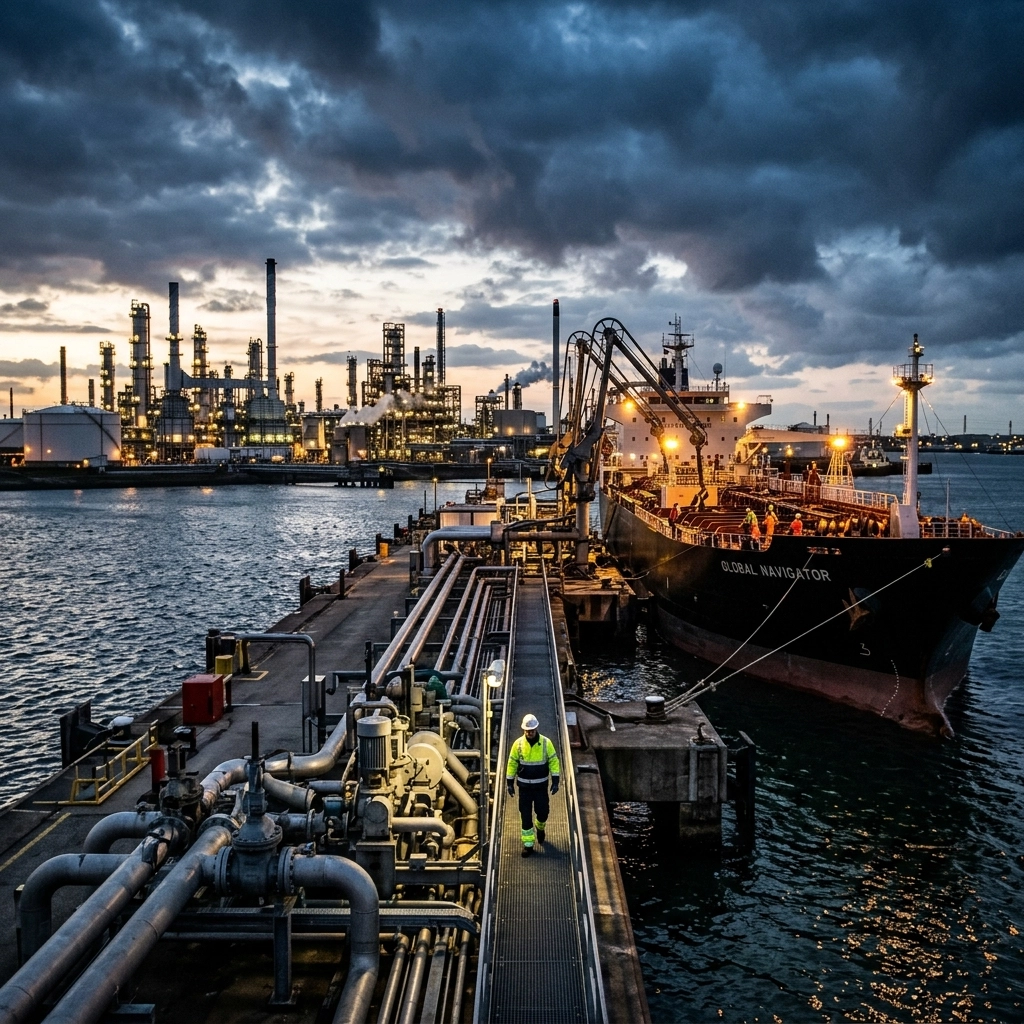
As of Friday, 17 of April 2026, the global energy landscape is facing one of its most significant stress tests in decades. The escalating conflict involving Iran and the resulting instability surrounding the Strait of Hormuz have sent shockwaves through the commodities markets. For any serious fuel buyer, the priority has shifted from simple price discovery to a rigorous pursuit of energy resilience.
In today’s climate, the ability to source refined products like EN590, Jet Fuel A1, and D6 is no longer just a matter of having the capital; it is a matter of having a logistical partner who understands how to navigate geopolitical minefields. At Van Dyke Energy, we are seeing firsthand how regional tensions redefine the "normal" flow of trade, and we are working around the clock to ensure our clients maintain operational continuity despite these global disruptions.
The Anatomy of the 2026 Energy Crisis
The current situation in the Middle East has moved beyond theoretical risk. With Brent crude prices hovering above $90 per barrel and insurance premiums for maritime transit through the Persian Gulf reaching record highs, the "business as usual" model of fuel procurement has collapsed. The Strait of Hormuz, which handles approximately 25-30% of global oil and a massive portion of the world's liquefied natural gas, is currently the world's most precarious chokepoint.
For a fuel buyer, this tension creates a two-fold problem: supply scarcity and logistical paralysis. When a primary shipping lane is threatened, the immediate reaction is a spike in freight rates and a sudden withdrawal of less-sophisticated suppliers from the market. This is where the distinction between a middleman and a seasoned logistics partner becomes clear. Reliability is not a luxury; it is the difference between keeping your fleet moving or facing a total shutdown.

Securing EN590 and Jet Fuel A1 Amidst Uncertainty
In the refined fuels market, EN590 Diesel 10ppm and Jet Fuel A1 are currently the most vulnerable to price volatility and supply chain breaks. Because these products are critical for global logistics, aviation, and infrastructure, any delay in delivery can have a cascading effect on national economies.
Energy resilience requires a diversified sourcing strategy. Relying on a single refinery or a single geographic region is a high-risk gamble in 2026. At Van Dyke Energy, we have spent years building a vetted network of non-sanctioned refineries and tier-1 suppliers across multiple continents. This allows us to pivot when one region becomes too volatile to navigate safely.
When sourcing EN590 or Jet Fuel A1 in the current environment, buyers must prioritize:
- Proof of Product (POP): Verification that the fuel actually exists and is ready for lift.
- Non-Sanctioned Origins: Ensuring that the product does not originate from restricted zones, which could lead to severe legal and financial penalties.
- Transparent Logistics: Real-time tracking and clear timelines for CIF (Cost, Insurance, and Freight) or FOB (Free on Board) transactions.
For more insights on avoiding common pitfalls, see our guide on 7 mistakes you’re making with EN590 diesel procurement.
Logistics as a Strategic Weapon
Logistics expertise is the true backbone of energy resilience. Moving fuel during a regional conflict requires more than just a tanker; it requires a deep understanding of compliance, maritime law, and emergency rerouting protocols.
Van Dyke Energy specializes in the worldwide movement of refined fuels. Even as tensions rise, our ability to move D6 Virgin Fuel Oil and other critical energy products remains unhindered. We achieve this by leveraging our deep connections with top-tier global banks and shipping companies that understand how to manage the risks associated with high-tension zones.
In today's market, we often see "paper traders" disappear when things get difficult. A true partner stays in the trenches, managing the SBLC (Standby Letter of Credit) processes and ensuring that all vetted fuel trading protocols are followed to the letter.

Warning Signs: Red Flags in High-Tension Markets
When global supply is tight, the market becomes flooded with opportunistic actors and outright scams. A fuel buyer must be more vigilant than ever. We have identified several red flags that are currently prevalent in the wake of the Iran conflict:
- Unrealistic Pricing: If the offered price for Jet Fuel A1 or EN590 is significantly below the Platts average, it is likely a scam or involves sanctioned product.
- Pressure to Bypass Compliance: Any supplier asking to skip standard Proof of Product (POP) steps or KYC (Know Your Customer) protocols is a major risk.
- Vague Logistics Plans: If a seller cannot clearly articulate the loading port, the vessel details, or the insurance coverage, they likely do not have control over the product.
- Sanctioned Refinery Origins: With the current tensions, ensuring your fuel does not come from a sanctioned entity is paramount to your company's survival. Read more about sanctioned vs. non-sanctioned refineries to protect your operations.
The Role of Vetted Networks and Compliance
In 2026, compliance is not just a legal requirement: it is a risk management strategy. At Van Dyke Energy, our vetted network is our greatest asset. Every refinery, every vessel, and every banking partner we work with undergoes a rigorous screening process. This ensures that when we facilitate a trade, the product is compliant, the transaction is secure, and the delivery is guaranteed.
The importance of working with Top 50 Global Banks cannot be overstated. These institutions provide the necessary financial stability and oversight required for large-scale fuel trades, especially when dealing with the complexities of SBLCs and fuel trade finance.

Building Long-Term Energy Resilience
Energy resilience is not built overnight. It is the result of strategic planning, diversified sourcing, and partnering with experts who can see through the fog of geopolitical conflict. Whether you are looking for Jet Fuel A1 for an international airline or EN590 for industrial use, your procurement strategy must account for the reality that the Middle East: and the global energy market as a whole: will remain volatile for the foreseeable future.
To maintain resilience, we recommend the following:
- Establish Multi-Region Sourcing: Don't put all your eggs in one basket. Look for suppliers with a presence in the Americas, Europe, and Asia.
- Audit Your Suppliers: Conduct deep-dive due diligence on every entity in your supply chain.
- Leverage AI and Technology: Use modern logistics tools to gain real-time visibility into your shipments. You can learn more about how technology is changing the landscape in our post on AI developments in the oil & gas industry.
- Prioritize Stability over Spot Pricing: In a crisis, the "cheapest" fuel is the one that actually arrives at your terminal on time.

Conclusion: Reliability is the Only Currency
In the face of the ongoing Iran conflict and the potential for prolonged disruptions in the Strait of Hormuz, the global energy market is undergoing a fundamental transformation. The companies that thrive will be those that prioritize reliability, compliance, and logistics expertise over short-term gains.
At Van Dyke Energy, our mission remains clear: to provide our clients with the fuel they need, regardless of the regional tensions that may arise. Our vetted network and logistics framework are designed for exactly this kind of environment. We don't just trade fuel; we provide the energy resilience that keeps the world moving.
If you are a serious fuel buyer looking to secure your supply chain, we invite you to explore our buyers page or contact us directly to discuss how we can support your operations.
Mark Van Dyke
Sales Director, VanDykeEnergy.com
Reliability Powered by Trust.