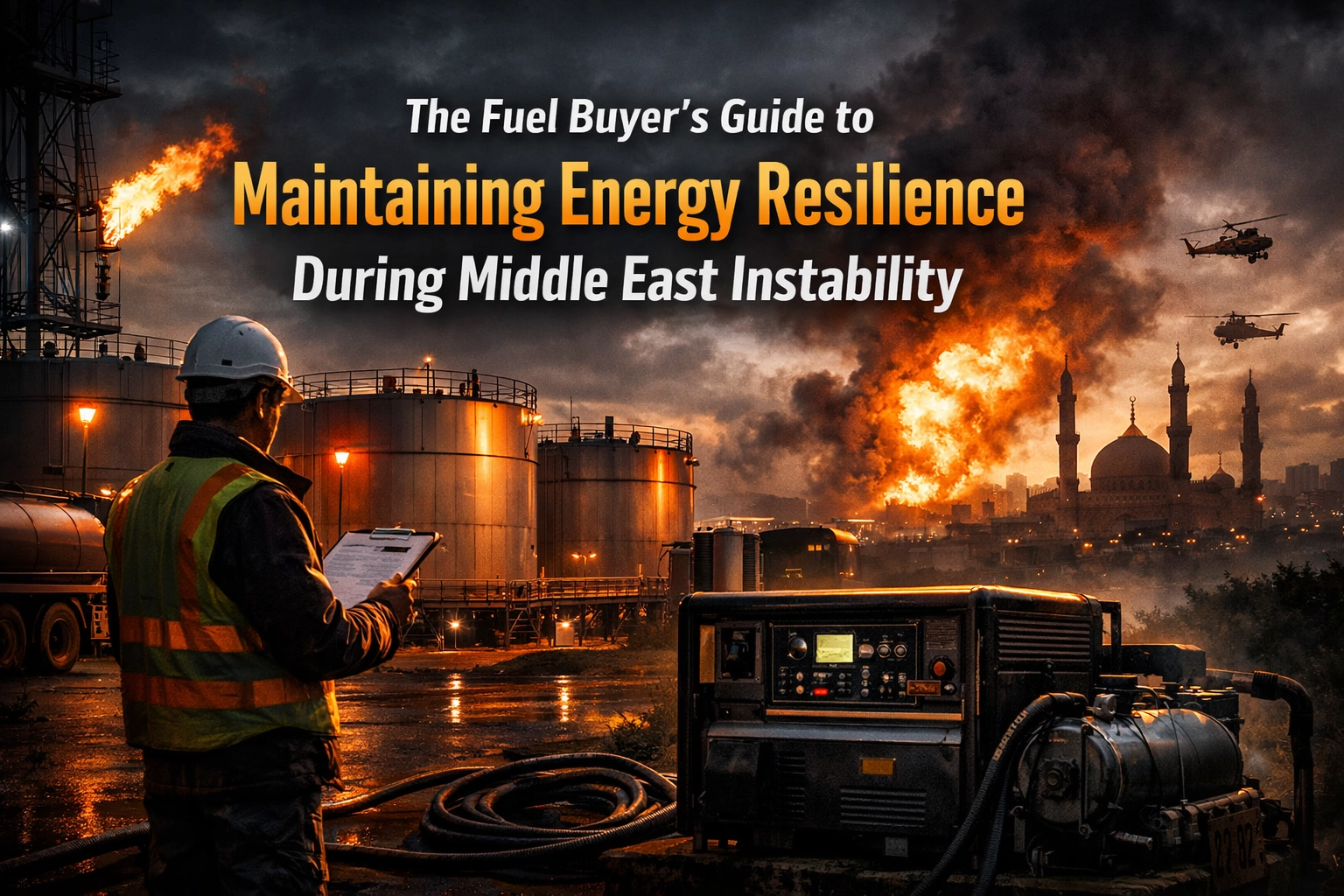
In today’s volatile climate, the global energy landscape is facing its most significant test in decades. As of mid-April 2026, the ongoing conflict involving Iran and broader regional instability in the Middle East has sent shockwaves through the petroleum markets. For the modern fuel buyer, the priority has shifted from simple price-shopping to a rigorous focus on energy resilience and supply chain security.
The geopolitical friction in the Persian Gulf is no longer just a headline; it is a direct disruptor of the logistics that move EN590, Jet Fuel A1, and D6 to the world’s major trading hubs. With approximately 20% of the world’s oil and gas passing through the Strait of Hormuz: which currently faces restricted shipping and severe supply bottlenecks: the "war premium" on refined products has become a permanent fixture of the balance sheet.
At Van Dyke Energy, we recognize that navigating this instability requires more than just access to fuel; it requires a sophisticated understanding of compliance, logistics, and a vetted network that can bypass traditional bottlenecks.
The 2026 Energy Landscape: Iran and the Global Ripple Effect
The escalation of conflict in the Middle East has fundamentally altered how refined fuels are traded. Targeted attacks on energy infrastructure and the subsequent closure of key maritime routes have reduced global production capacity. Reports indicate that European gas prices have surged by nearly 60%, while the global energy index has risen by over 40% in the first quarter of 2026 alone.
For buyers of EN590 diesel and Jet Fuel A1, these disruptions create a dual challenge: skyrocketing costs and the physical risk of non-delivery. When regional refineries in Saudi Arabia, Qatar, or Abu Dhabi face operational pauses due to security threats, the global market feels the pinch immediately. This is where energy resilience becomes the competitive advantage for industrial and aviation sectors.

Navigating the Compliance Maze: Sanctions and Origin Risks
During periods of Middle East instability, the risk of "tainted" or sanctioned fuel entering the secondary market increases. As Iran’s role in the conflict evolves, international regulatory bodies have tightened oversight on fuel origins. For a fuel buyer, inadvertent procurement of sanctioned product can lead to catastrophic legal and financial consequences.
Reliability is built on compliance. At Van Dyke Energy, we maintain a rigorous vetting process that ensures every drop of fuel: whether it is EN590 for heavy freight or D6 for power generation: is fully compliant with international trade laws. Understanding the distinction between sanctioned vs. non-sanctioned refineries is no longer a niche expertise; it is a requirement for survival in the 2026 market.
Strategic Fuel Management in Volatile Times
Traditional fuel procurement models are failing in the current environment. Relying on outdated index-based pricing during a regional war leaves buyers exposed to extreme volatility. To maintain resilience, professional buyers are adopting the following strategies:
1. Moving Beyond Traditional Surcharge Models
Standard DOE index-based fuel surcharges are often too slow to react to real-time disruptions in the Persian Gulf. Sophisticated buyers are now looking toward market-based solutions that utilize real-time data specific to geography and time of purchase. This prevents overpayment during sudden spikes and ensures that procurement costs reflect the actual market reality.
2. Prioritizing Verified Proof of Product (POP)
In a tight market, phantom fuel offers become common. Scammers take advantage of regional instability to offer "discounted" fuel that doesn't exist. It is essential to understand what every fuel buyer should know about POP (Proof of Product) before any capital is committed.
3. Leveraging Financial Instruments
The role of Top 50 global banks and SBLCs cannot be overstated. In an era of high-interest rates and geopolitical risk, having a secure financial framework for transactions ensures that logistics providers can move product without delay.

Logistics Expertise: How Van Dyke Energy Moves Fuel Worldwide
Despite the closure of key shipping lanes in the Middle East, the global demand for refined products remains constant. Achieving energy resilience requires a logistics partner who can pivot quickly. Van Dyke Energy’s expertise lies in our ability to reroute supply chains and utilize a vetted network of refineries and storage facilities outside the immediate conflict zone.
Whether you are seeking EN590 diesel procurement or bulk Jet Fuel A1, our logistics framework is built for mission-critical delivery. We specialize in moving refined products from stable regions to major hubs in Rotterdam, Houston, and Singapore, bypassing the volatility of the Strait of Hormuz when necessary.
Refined Fuels We Manage:
- EN590 (10ppm): The backbone of European and global freight, essential for maintaining supply chains during energy shortages.
- Jet Fuel A1: Critical for global aviation, where price certainty is needed for long-term flight scheduling.
- D6 (Virgin Fuel Oil): Essential for industrial power generation and maritime use.
Red Flags for Fuel Buyers in 2026
In a high-pressure market, it is easy to overlook red flags. Professional buyers must remain vigilant against the following:
- Unusually Low Prices: If a price for EN590 is significantly below the current Brent or Platt's benchmark, the product is likely either non-existent or of sanctioned origin.
- Lack of Transparency: Transparency is the currency of 2026. If a seller cannot provide clear logistics documentation or refinery atttestation, walk away. Explore why transparent fuel trading matters in the current year.
- Unvetted Intermediaries: Avoid "broker chains." Deal directly with established entities like Van Dyke Energy that have a proven track record of trust.

The Path Forward: Building a Resilient Supply Chain
The conflict in Iran and the broader Middle East is a reminder that energy security is never guaranteed. It must be built through strategic partnerships and rigorous operational standards. As a fuel buyer, your goal is to minimize exposure while maximizing reliability.
By diversifying your supply sources and working with partners who prioritize compliance and logistics transparency, you can maintain operations even when regional instability threatens global markets. Energy resilience is not about waiting for the conflict to end; it is about having the infrastructure in place to thrive despite it.

At Van Dyke Energy, we remain committed to providing the refined products the world needs: EN590, Jet Fuel A1, and D6: with the reliability that only a vetted, professional network can provide.
For those ready to secure their energy future through a structured and compliant process, we invite you to review our buyer procedures or submit a formal Request for Proposal.
Mark Van Dyke
Sales Director, VanDykeEnergy.com
Reliability Powered by Trust.