Author: 810467pwpadmin

  • The Ultimate Guide to Energy Resilience: How to Secure EN590 and Jet Fuel A1 Amidst Global Tensions

    The Ultimate Guide to Energy Resilience: How to Secure EN590 and Jet Fuel A1 Amidst Global Tensions

    In today's climate, the concept of energy resilience has shifted from a corporate buzzword to a fundamental necessity for survival. As of April 1, 2026, the global energy market is grappling with the severe aftershocks of the escalating conflict in Iran. With regional instability threatening key transit points and refinery outputs, the ability to secure a consistent supply of EN590 and Jet Fuel A1 has become the primary challenge for industrial leaders and aviation giants alike.

    At Van Dyke Energy, we understand that in a high-stakes environment, uncertainty is the enemy of progress. Navigating the current volatility requires more than just financial capital; it requires a deep, tactical understanding of the refined fuels supply chain and a logistics network that can pivot as fast as the headlines change.

    The Iran Crisis: A New Era of Supply Chain Fragility

    The ongoing conflict in Iran has sent ripples through the energy sector that are far more complex than simple price hikes. As a major player in the Middle Eastern energy corridor, any disruption in Iranian territory impacts the flow of crude and refined products through the Strait of Hormuz. For a global fuel buyer, this means that traditional supply routes are no longer guaranteed.

    Market participants are currently seeing a "risk premium" attached to every barrel. However, the real danger lies in the physical availability of product. When regional refineries are under threat or export terminals face sanctions and blockades, the secondary market becomes flooded with "ghost offers": unverified product that never materializes. This is where energy resilience begins: with the verification of supply.

    Van Dyke Energy Global Network Connectivity

    Securing EN590: Why Quality and Compliance Cannot Be Compromised

    EN590 10ppm diesel is the lifeblood of European and global logistics. Despite the regional instability, the demand for high-quality, low-sulfur diesel remains at record highs. However, the geopolitical situation has led to an influx of off-spec products being rebranded as EN590.

    Securing authentic EN590 amidst global tensions requires a multi-faceted approach:

    1. Refinery-Direct Relationships: You must work with providers who have direct allocations or vetted storage agreements in stable jurisdictions like Rotterdam or Houston.
    2. Strict Adherence to Specifications: Any deviation from the EN590 standard can lead to catastrophic engine failure in modern logistics fleets and significant legal liabilities.
    3. Logistics Agility: The ability to move product from non-traditional hubs is critical. Van Dyke Energy leverages a global logistics framework to ensure that even if one route is closed, another is open.

    For those new to this process, understanding the pitfalls is the first step toward security. We recommend reviewing our guide on 7 mistakes you’re making with EN590 diesel procurement to ensure your procurement strategy is sound.

    Jet Fuel A1: Keeping Global Aviation Airborne

    The aviation sector is uniquely vulnerable to Middle Eastern tensions. Jet Fuel A1 is not just a commodity; it is a mission-critical resource. As regional supply lines tighten, the competition for available refined barrels in major trading hubs has intensified.

    For airlines and government contractors, energy resilience means having a partner who understands the nuances of Jet Fuel A1 logistics. This includes the management of "tank-to-tank" transfers and "tank-to-vessel" operations that comply with strict international standards such as ASTM D1655. In the current market, the focus has shifted from "just-in-time" delivery to "just-in-case" inventory management.

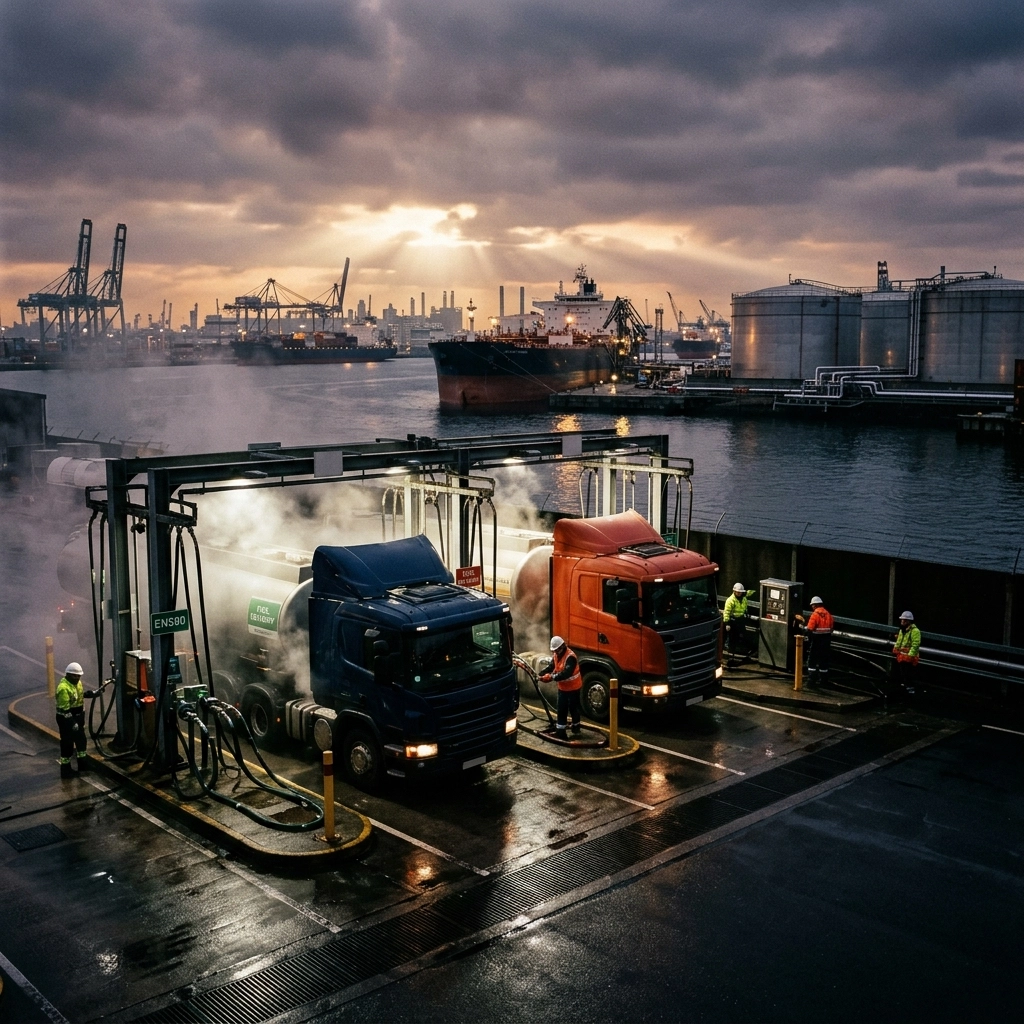
    Refinery Operations at Dusk

    The Pillars of a Resilient Fuel Procurement Strategy

    To survive and thrive in 2026, a fuel buyer must adopt a professional, compliance-first mindset. Energy resilience is built on three specific pillars:

    1. Verification of Proof of Product (POP)

    In a market defined by scarcity, fraudulent offers are rampant. Reliable sellers will always provide verifiable Proof of Product (POP). Without this, any negotiation is a waste of time. Buyers should be intimately familiar with what every fuel buyer should know about POP to protect their interests and their capital.

    2. Financial Compliance and SBLCs

    The role of financial institutions in energy trade cannot be overstated. Utilizing Standby Letters of Credit (SBLC) issued by top-tier banks is the standard for secure transactions. These instruments provide the necessary guarantees to both buyer and seller, ensuring that the transaction proceeds under regulated conditions. Understanding why top 50 global banks matter in fuel trade is essential for any serious procurement office.

    3. Vetted Logistics and D6 Availability

    While much of the focus is on EN590 and Jet A1, Virgin Fuel Oil D6 remains a vital component for industrial power generation and bunkering. Resilience involves diversifying your fuel portfolio to include D6 when necessary to maintain operational continuity. Van Dyke Energy’s expertise extends across the full spectrum of refined products, ensuring that your energy needs are met regardless of the specific fuel type required.

    Compliance Manager Reviewing Energy Contracts

    Warning Signs: Red Flags in the Current Market

    The Iranian conflict has created a "fog of war" in the energy markets. As an authoritative voice in the industry, we advise all buyers to look out for the following red flags:

    • Unrealistic Pricing: If the offered price for EN590 is significantly below the current Platts benchmarks, the product is either non-existent or fails to meet regulatory standards.
    • Non-Standard Procedures: Buyers should be wary of sellers who demand upfront payments before providing any verifiable documents or SGS reports.
    • Vague Origin Documentation: With sanctions in flux, the origin of the fuel is paramount. Ensure all certifications of origin are clear and from non-sanctioned entities.

    The Van Dyke Energy Advantage: Reliability Powered by Trust

    In a world where regional instability can shut down supply chains overnight, Van Dyke Energy stands as a beacon of reliability. Our logistics expertise allows us to move EN590, Jet Fuel A1, and D6 across the globe, bypassing volatile regions through a network of vetted suppliers and secure transit routes.

    We don't just facilitate trades; we build resilient energy infrastructures for our clients. By focusing on redefining global oil & gas built on trust, we ensure that our customers are never left in the dark, regardless of the geopolitical weather.

    Fuel Buyer RFP Badge

    Conclusion: Taking Control of Your Energy Future

    The conflict in Iran serves as a stark reminder that the energy market is interconnected and fragile. However, for those who prioritize energy resilience, these challenges also present an opportunity to solidify supply chains and gain a competitive edge.

    Securing EN590 and Jet Fuel A1 requires a professional partner who understands the stakes. At Van Dyke Energy, we invite serious buyers to engage with our team to discuss how we can secure your fuel requirements through our verified and compliant network.

    For more information on our procedures and how to join our network of qualified buyers, visit our buyers page or contact us directly.

    Mark Van Dyke
    Sales Director, VanDykeEnergy.com
    Reliability Powered by Trust.

  • Fueling America: Announcing the Launch of FuelDeliveryUSA.com for Reliable Nationwide Logistics

    Fueling America: Announcing the Launch of FuelDeliveryUSA.com for Reliable Nationwide Logistics

    Fueling America: Announcing the Launch of FuelDeliveryUSA.com for Reliable Nationwide Logistics

    The American economy does not sleep, and neither does the demand for high-grade energy. In an era where supply chain volatility has become the "new normal," the ability to secure a consistent, reliable, and scalable fuel supply is the difference between operational success and systemic failure. Today, we are proud to announce the official launch of FuelDeliveryUSA.com, a premier domestic platform backed by the global expertise of Van Dyke Energy.

    While our parent organization continues to dominate the international landscape: facilitating high-volume trades of EN590 diesel and Jet Fuel A1 across global borders: FuelDeliveryUSA.com is specifically engineered to solve the logistical challenges within the United States. We are bringing the same level of institutional trust and transparency found at vandykeenergy.com to the domestic fuel delivery USA market.

    Bridging the Gap: From Global Trade to Domestic Logistics

    For years, Van Dyke Energy has been a cornerstone for international buyers seeking refined products. However, as the domestic market evolved, we recognized a critical gap in the American landscape: the need for a logistics-first fuel provider that understands both the macro-economic pressures of the energy sector and the micro-logistical requirements of a local fleet.

    FuelDeliveryUSA.com was built to fill that void. While Van Dyke Energy focuses on the complexities of SBLCs and top-tier bank interactions for global shipments, FuelDeliveryUSA is focused on the "last mile" and the "bulk drop." We are moving beyond the digital trade desk and putting boots on the ground to ensure that American infrastructure remains powered 24/7.

    Industrial fuel tanker truck delivering bulk diesel supply to a construction site for nationwide logistics.

    Specializing in Bulk Diesel Supply and Nationwide Gasoline Delivery

    Domestic energy procurement is often plagued by "paper brokers" who lack the physical infrastructure to guarantee delivery. FuelDeliveryUSA.com eliminates the middleman. Our focus is on high-volume, high-reliability distribution, specializing in:

    1. Bulk Diesel Supply: We provide Tier 1 ultra-low sulfur diesel (ULSD) to construction sites, manufacturing plants, and distribution centers. Our network ensures that your heavy machinery never sits idle due to a dry tank.
    2. Nationwide Gasoline Delivery: Whether it’s 87, 89, or 93 octane, we manage the procurement and transport of gasoline across all 50 states, ensuring price competitiveness and delivery punctuality.
    3. Fleet Fueling Solutions: For companies managing hundreds of vehicles, fuel isn't just a cost: it's a massive logistical hurdle. We streamline this with on-site fueling and automated reporting.

    By integrating the financial stability of a global player with the tactical agility of a domestic distributor, we offer a level of bulk diesel supply security that is unmatched in the current market.

    The Standard for Emergency Fuel Logistics

    In the event of a natural disaster, grid failure, or geopolitical shift, fuel becomes the most valuable commodity on the planet. FuelDeliveryUSA.com is more than a supplier; we are a critical infrastructure partner.

    As an established government contractor, we understand the rigorous compliance and rapid-response requirements of federal and state agencies. Our emergency fuel logistics division is built for high-stakes environments where "later" is not an option. We maintain 24/7 support structures to deploy fuel assets to hospitals, data centers, and emergency response hubs at a moment’s notice.

    Reliability in these moments is built on the same foundations we use for our Proof of Product (POP) protocols globally: verification, transparency, and execution.

    Global Network Connectivity

    Red Flags in Domestic Fuel Procurement: What to Avoid

    In today's climate, everyone claims to have a "direct line to the refinery." The reality is much messier. When seeking a domestic partner for nationwide gasoline delivery or diesel, watch out for these industry red flags:

    • Lack of Tangible Assets: If a provider cannot explain their transport network or their storage capabilities, they are likely a broker-of-a-broker.
    • Vague Pricing Structures: Transparency is key. If the pricing doesn't align with current market indexes (like OPIS), you are likely being overcharged to cover a chain of commissions.
    • Zero Emergency Response Plan: A fuel partner that only operates 9-to-5 is a liability. Energy needs are constant; your provider should be too.
    • Poor Compliance History: Always verify the vendor’s ability to meet EPA and DOT standards. At FuelDeliveryUSA, compliance is baked into our DNA, mirroring the strict standards we set for EN590 diesel procurement.

    Why the Van Dyke Pedigree Matters

    Operating under the Van Dyke Energy umbrella gives FuelDeliveryUSA.com a strategic advantage. While many domestic delivery companies are struggling with rising costs and tightening credit markets, we leverage our global standing to maintain stable supply chains.

    We understand the "Language of Energy." Whether we are discussing the distillation of Jet Fuel A1 for an international carrier or the sulfur content of off-road diesel for a local farm, our expertise is absolute. You can learn more about our foundational principles on our About Us page.

    Technician monitoring critical infrastructure backup generators as part of 24/7 emergency fuel logistics.

    24/7 Support and Critical Infrastructure Focus

    Our mission is simple: To fuel the builders, the movers, and the protectors of America.

    We have invested heavily in technology that allows for real-time tracking and tank monitoring. This means our clients aren't just getting a delivery; they are getting a managed energy solution. We predict your needs before they become emergencies. This proactive approach is why we are the preferred choice for critical infrastructure projects that cannot afford a single minute of downtime.

    Moving Forward: Join the Network

    The launch of FuelDeliveryUSA.com marks a new chapter for Van Dyke Energy. We are taking the trust we have built on the global stage and applying it to every highway, construction site, and government facility in the United States.

    If you are tired of the uncertainty associated with traditional fuel procurement, it is time to upgrade to a partner that treats your logistics with the seriousness they deserve. Whether you need a one-time bulk drop or a long-term fleet fueling contract, we have the capacity and the commitment to deliver.

    Fuel Buyer RFP Badge

    Conclusion: Reliability is a Choice

    In the energy sector, you don't get what you hope for; you get what you plan for. FuelDeliveryUSA.com is the plan for companies that value uptime, safety, and fiscal responsibility. From the refinery to your tank, we own the process so you can own your results.

    Visit https://FuelDeliveryUSA.com today to explore our full suite of services and secure your supply chain.

    For those looking for international trading opportunities or to learn more about our global operations, feel free to explore our FAQ or contact our global team.

    Mark Van Dyke
    Sales Director, VanDykeEnergy.com
    Reliability Powered by Trust.

  • The Fuel Buyer’s Guide to Secure Storage at MVP Terminalling Houston

    The Fuel Buyer’s Guide to Secure Storage at MVP Terminalling Houston

    Hey everyone, Mark Van Dyke here. I’ve got some massive news to share that’s going to make a lot of our fuel buyers very happy.

    We’ve officially solidified our partnership with MVP Terminalling LLC in Pasadena, Texas. If you’ve been tracking the Houston Ship Channel lately, you know that finding reliable, high-capacity storage for refined products like EN590 and Jet Fuel is becoming a major bottleneck. By aligning with MVP, we are giving our clients a massive edge in logistics and inventory security.

    Storage isn't just a place to put fuel; in today’s market, it’s a strategic asset. Whether you’re a long-term diesel buyer or a spot trader looking for a reliable "buffer," this partnership changes the game for how we move product through the Gulf Coast.

    Let’s get into why this matters and how you can leverage this infrastructure for your next deal.


    Why Houston is the Ultimate Hub for EN590 Buyers

    In the world of global energy trade, the Houston Ship Channel is the beating heart of the midstream sector. For a diesel buyer looking to move high-quality EN590, the ability to access deep-water docks and major pipeline intersections is the difference between a successful lift and a demurrage nightmare.

    MVP Terminalling sits right in the center of this action in Pasadena, Texas. With a staggering 5.5 million barrels of storage capacity, this isn't just a small-scale operation. It is a sophisticated infrastructure hub designed to handle the rigorous demands of modern fuel procurement. For those of you targeting the U.S. and international markets, having your product staged in a facility of this caliber provides the ultimate proof of product (POP) credibility.

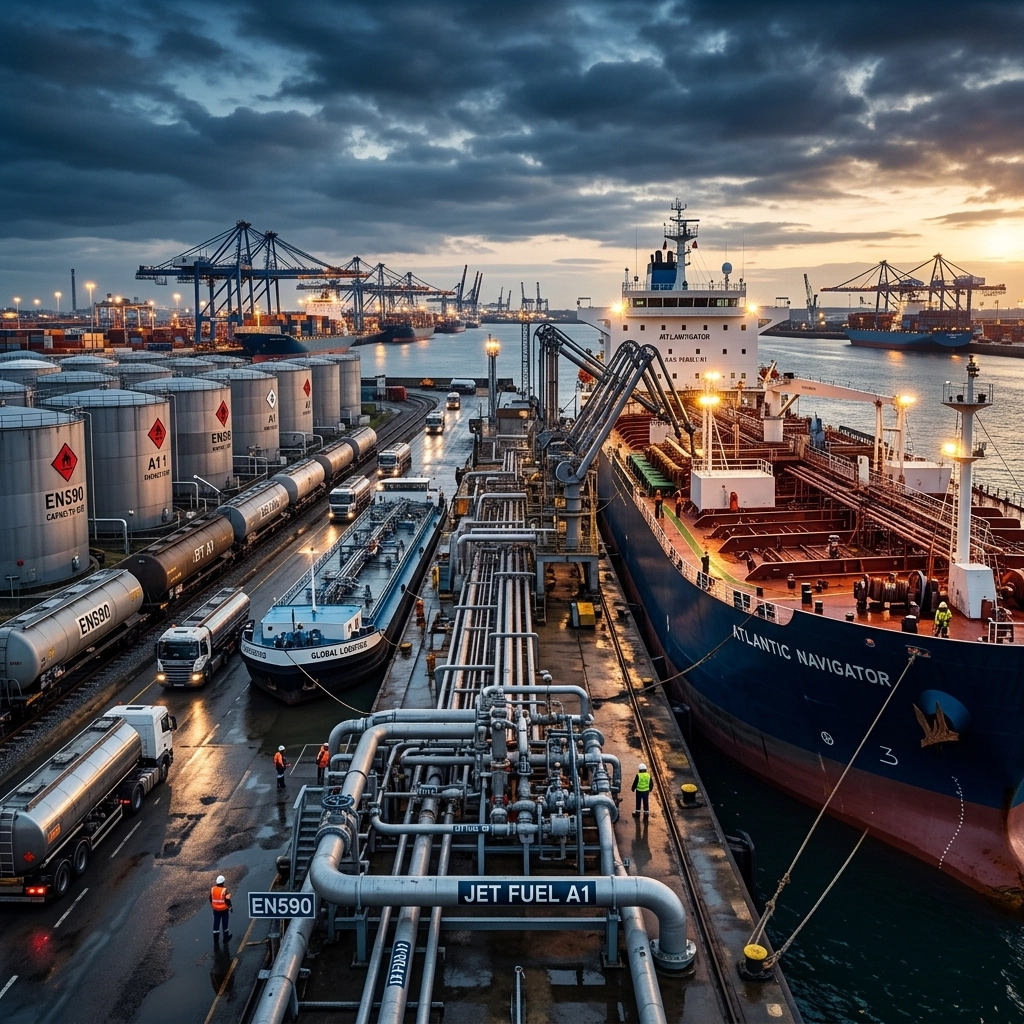
    Aerial view of a massive Houston fuel storage terminal and tanker for EN590 diesel buyers at MVP Terminalling.

    Anatomy of a World-Class Terminal: Inside the MVP Pasadena Facility

    When we vet partners at Van Dyke Energy, we look for more than just tank space. We look for operational flexibility. MVP Terminalling offers a multi-mode approach that ensures your fuel stays moving, regardless of the transport method.

    1. Marine Logistics and Deep-Water Docks

    The facility features two LR-Class ship docks. Dock 1 supports a maximum vessel length overall (LOA) of 810 feet, while Dock 2 handles up to 750 feet. Both docks offer a maximum draft of 40 feet, making them ideal for large-scale international exports. If you are moving EN590 or Jet Fuel A1 via vessel, this terminal minimizes turnaround time and maximizes throughput efficiency.

    2. Pipeline Connectivity

    One of the biggest advantages of the MVP terminal is its connectivity to the "Big Three" pipelines. You have direct access to:

    • Colonial Pipeline: The primary artery for refined products to the U.S. East Coast.
    • Explorer Pipeline: Critical for moving product into the Midwest.
    • Magellan Pipeline Company South System: Providing localized and regional flexibility.

    This connectivity means that once your fuel is in the tanks at MVP, you have multiple exit strategies. You aren't "stuck" in one market; you can pivot based on where the arbitrage is most favorable.

    3. Segregated Storage and Product Integrity

    For an EN590 buyer, purity is everything. MVP is engineered for segregated storage. This means different crude specifications and refined product grades are handled independently. You don't have to worry about cross-contamination or quality degradation. They provide full blending and conditioning services, quality testing, and precise measurement, ensuring that the fuel that goes into the tank is exactly what comes out at the loading rack.

    Fuel Buyer RFP Badge


    The Gateway for Verified Buyers: Transitioning to RequestFuel.com

    As we scale our operations, we’ve made a significant update to our procurement process. Our flagship platform, formerly known as Fuel Buyer RFP, has officially moved to RequestFuel.com.

    This isn't just a domain change; it’s an upgrade to how we handle Houston fuel storage inquiries and procurement requests. RequestFuel.com is the exclusive gateway for verified buyers to submit their requirements.

    Why use the Request Fuel platform?

    • Verification: We filter out the "mandates of mandates" and the "jokers" to ensure that only real, capable buyers are in the room.
    • Speed: By providing your specifications through the Request Fuel portal, our team can instantly match your needs with our current inventory and storage availability at facilities like MVP Terminalling.
    • Transparency: All documentation and communications are handled in a compliant, secure environment.

    If you are a serious buyer looking for EN590 or Jet Fuel A1, you need to be on the RequestFuel.com list. It is the fastest way to get your deal from a "maybe" to "funded and moving."


    Avoiding Logistics Nightmares: Storage as a Risk Management Tool

    I see it all the time: a buyer secures a contract for 100,000 MT of diesel, but they haven't secured their storage or their "laycan" (loading window). Suddenly, the vessel is sitting off the coast, and the demurrage fees are eating the profit margin alive.

    Strategic storage acts as your safety net. By leasing space at a facility like MVP Terminalling, you create a buffer. You can take delivery of product when the price is low, store it securely, and then wait for the optimal window to load your vessel or push it into the pipeline.

    Red Flags for Fuel Buyers

    When scouting for Houston fuel storage, watch out for these common mistakes:

    • Unverified Tank Ownership: Always ensure the party claiming to have storage actually has a valid TSA (Tank Storage Agreement) or owns the facility.
    • Lack of Pipeline Access: A terminal without pipeline connectivity is an island. It limits your exit options and increases transport costs.
    • Poor Compliance Standards: Ensure the facility is in full compliance with EPA and OSHA. A regulatory shutdown at the terminal can freeze your assets for months.

    MVP Terminalling excels in these areas, maintaining a "Safety First" culture with advanced fire protection, emergency shutdown controls, and vapor recovery units. When your product is with MVP, it’s safe.

    Van Dyke Energy Globe Graphic


    The Value of Blending and Quality Testing

    One aspect of midstream logistics that is often overlooked is the ability to condition and blend product. Not all EN590 is created equal, and different regions have different winter/summer grade requirements.

    MVP Terminalling provides on-site blending services that allow us to tailor the product to your specific end-user requirements. Combined with their advanced automation and modern infrastructure, we can provide real-time inventory management. You’ll know exactly how much product you have, its current quality specs, and its readiness for transit.

    For more information on how we handle these technicalities, check out our guide on What Every Fuel Buyer Should Know About POP.


    How to Get Started with Van Dyke Energy and MVP Terminalling

    The partnership between Van Dyke Energy and MVP Terminalling is built on one thing: Trust. We’ve done the heavy lifting to ensure that the infrastructure is there, the compliance is handled, and the logistics are seamless.

    If you are ready to secure storage or source EN590 diesel in the Houston area, here is your roadmap:

    1. Visit RequestFuel.com: This is your first step. Submit your RFP so we can verify your requirements.
    2. Consult with Our Team: Once verified, we will review your logistics needs. Do you need pipeline injection? Marine export? Truck loading?
    3. Secure Your Capacity: Storage at the Houston Ship Channel is in high demand. By working through our partnership, you get priority access to available capacity that might not be on the open market.

    Whether you are a seasoned procurement officer for a major airline or a private buyer expanding your fuel portfolio, the combination of Van Dyke Energy’s trading expertise and MVP’s world-class facilities provides a turnkey solution that is hard to beat.

    Industrial fuel-blending manifold and gauges ensuring quality control for refined EN590 diesel fuel shipments.

    Final Thoughts: The Future of Fuel Procurement in 2026

    The energy landscape is changing. Markets are more volatile, and supply chains are more fragile than ever. In this environment, the winners are those who control the middle of the chain: the storage and the logistics.

    Our partnership with MVP Terminalling is a testament to our commitment to providing Reliability Powered by Trust. We don't just facilitate trades; we provide the physical foundation that makes those trades possible.

    Don't wait until your vessel is on the horizon to think about storage. Be proactive, get verified, and let’s get to work.

    Head over to RequestFuel.com today and let us know what you're looking for.

    Mark Van Dyke
    Sales Director, VanDykeEnergy.com
    Reliability Powered by Trust.


    Looking for more insights on fuel procurement? Check out our latest posts on Why Top 50 Global Banks Matter in Fuel Trade and 7 Mistakes You're Making with EN590 Diesel Procurement.

  • The Ultimate Guide to Energy Resilience: How Savvy Fuel Buyers Navigate Global Conflict

    The Ultimate Guide to Energy Resilience: How Savvy Fuel Buyers Navigate Global Conflict

    As we navigate the closing days of March 2026, the global energy landscape remains in a state of high-stakes transformation. For the professional fuel buyer, the priorities have shifted dramatically. Gone are the days when procurement was a simple exercise in price optimization. In today’s climate, dominated by the escalating conflict in Iran and its ripple effects across the Middle East, the conversation has moved toward a singular, critical objective: Energy Resilience.

    At Van Dyke Energy, we have watched the market adapt to regional instability that threatens the world’s most vital maritime arteries. Navigating these waters requires more than just capital; it requires a sophisticated logistics infrastructure and a vetted network that can bypass bottlenecks. This guide explores how institutional buyers are securing EN590, Jet Fuel A1, and D6 in an era of unprecedented geopolitical volatility.

    The Iran Factor: Understanding the Global Supply Shock

    The ongoing conflict in Iran has introduced a level of "risk premium" into the market that hasn't been seen in decades. As a primary actor in the heart of the world’s energy-producing region, any instability in Iran immediately impacts the Strait of Hormuz: a chokepoint through which roughly 20% of the world’s total petroleum liquids consumption passes.

    For the modern fuel buyer, this conflict is not just a headline; it is a direct threat to delivery timelines and contract fulfillment. We are seeing a marked increase in "Force Majeure" declarations from less-prepared suppliers who lack the geographical diversity to pivot when traditional routes are compromised. Energy resilience in 2026 is defined by the ability to maintain supply continuity when the primary map of global trade is being redrawn in real-time.

    refinery-operations-at-dusk.webp

    Strategic Diversification of Refined Products

    In a volatile market, the demand for high-quality refined products like EN590 (Ultra-Low Sulfur Diesel) and Jet Fuel A1 remains inelastic. Aviation and heavy industry cannot simply pause operations because a regional conflict has flared up. Savvy buyers are now looking for suppliers who hold physical positions in multiple jurisdictions.

    EN590: The Backbone of Industrial Mobility

    EN590 10ppm diesel is currently the most sought-after middle distillate for European and Asian markets. With traditional supply lines under pressure, the focus has shifted to compliance and origin verification. Buyers must ensure that their product is not only available but also fully compliant with international sanctions regimes that have tightened significantly since the onset of the Iran conflict.

    Jet Fuel A1: Securing the Skies

    The aviation sector is particularly sensitive to supply chain disruptions. Jet Fuel A1 procurement in 2026 requires a partner with a deep understanding of logistics expertise. Moving fuel from refineries to major hubs like Rotterdam, Houston, or Singapore requires more than just a tanker; it requires a pre-vetted pathway that avoids high-risk zones without compromising on delivery windows.

    D6 Virgin Fuel Oil: Powering the Recovery

    As regions look to bolster their internal energy grids to prevent power outages: a core trend identified in 2026: the demand for D6 fuel oil has surged. It serves as a critical bridge for firm power generation when renewable sources or traditional gas lines are under threat.

    The Van Dyke Energy Advantage: Logistics as a Shield

    At Van Dyke Energy, we don't just trade fuel; we manage risk. Our approach to energy resilience is built on three pillars that allow us to move products like EN590 and Jet Fuel A1 worldwide despite regional instability.

    1. Vetted Logistics Network: We maintain active relationships with storage facilities and shipping lines that are capable of rapid rerouting. When the Strait of Hormuz becomes a bottleneck, our ability to leverage alternative hubs becomes our clients' greatest asset.
    2. Compliance-First Framework: In a high-conflict era, the "Know Your Customer" (KYC) and "Know Your Product" (KYP) protocols are non-negotiable. We ensure every drop of fuel is documented, verified, and transparently sourced to protect our buyers from legal and operational risks.
    3. Financial Integrity: We understand the role of Top 50 Global Banks in facilitating these trades. By utilizing secure financial instruments like SBLCs and DLCs, we provide a layer of protection that ensures capital is only moved when the product is verified.

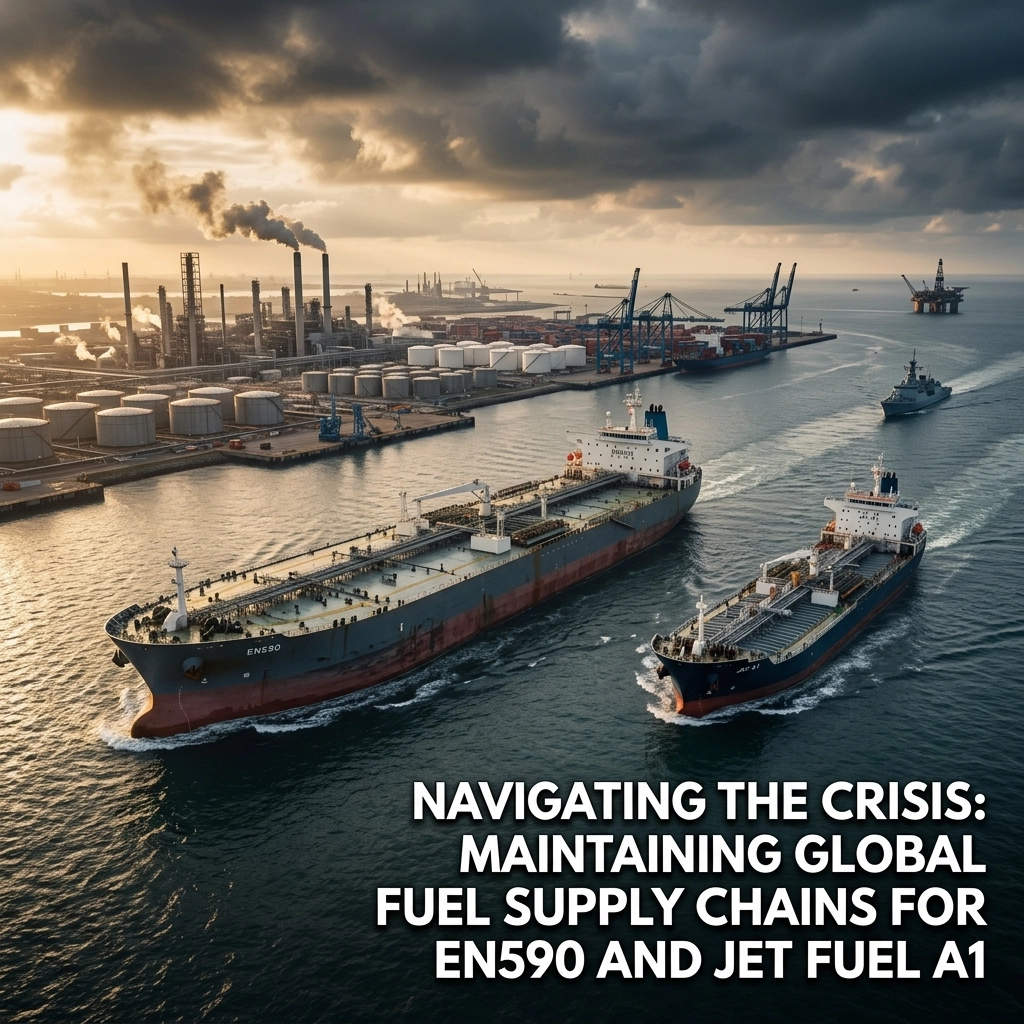
    Fuel tanker navigating dark waters to deliver EN590 and Jet Fuel A1, ensuring global energy resilience.

    Red Flags: Avoiding Procurement Traps in High-Conflict Zones

    Conflict always invites opportunism. We have observed a significant rise in sophisticated scams targeting fuel buyers who are desperate for supply. When navigating the market today, be wary of the following red flags:

    • Deeply Discounted Prices: If a seller is offering EN590 or D6 at prices significantly below the Platts or Argus benchmarks despite the current conflict-driven premiums, it is almost certainly a fraudulent offer.
    • Pressure to Bypass Procedures: Scammers often use the "urgency of war" to skip vital steps like Proof of Product (POP) verification. Never waive your right to inspection.
    • Non-Standard Financial Requests: Avoid any seller who asks for upfront payments or utilizes non-bank-to-bank communication for financial instruments. For more on this, see our guide on why top banks matter in fuel trade.

    Navigating the RFP Process with Precision

    To achieve true energy resilience, buyers must move away from informal "spot" inquiries and toward a structured Request for Proposal (RFP) process. This professionalizes the transaction and signals to major suppliers like Van Dyke Energy that the buyer is sophisticated and ready to perform.

    A well-structured RFP should include:

    • Clear quantity requirements and delivery schedules.
    • Specified discharge ports and preferred Incoterms (CIF, FOB).
    • Detailed banking coordinates to establish financial capability early.

    fuel-buyer-rfp-badge.webp

    The Shift to Business Value and Reliability

    As recent industry research suggests, the energy sector in 2026 is moving away from "net zero at all costs" toward "business value at all times." For our clients, this means that the most valuable fuel is the fuel that actually arrives at the terminal.

    We are seeing a trend where companies are investing in on-site storage and distributed energy resources to hedge against grid instability. However, these systems still require a steady supply of refined distillates to function as backups. This is where Van Dyke Energy bridges the gap, providing the reliable fuel supply necessary to keep these resilience systems operational.

    Building a Global Network of Trust

    The complexity of the Iran conflict has proven that no single entity can navigate the global energy market alone. Success in 2026 depends on the strength of your network. We have spent years building an interconnected web of buyers and sellers that spans continents, ensuring that even if one door closes, three others remain open.

    global-network-connectivity.webp

    Our buyers' portal is designed to streamline this process, allowing qualified parties to enter a secure ecosystem where transparency is the default, not the exception. In a world of conflict, trust is the only currency that doesn't devalue.

    Final Thoughts: Resilience is a Choice

    The conflict in Iran is a stark reminder that the energy market is inextricably linked to global politics. However, for the savvy fuel buyer, these challenges are also opportunities to harden their supply chains and build long-term energy resilience.

    By focusing on vetted logistics, strict compliance, and high-quality products like EN590 and Jet Fuel A1, organizations can insulate themselves from the worst of the volatility. At Van Dyke Energy, we remain committed to being the steady hand in an unsteady world, ensuring that your operations never stop, regardless of what happens on the global stage.

    If you are looking to secure your supply chain or want to learn more about our current allocations, we invite you to contact us directly.


    Mark Van Dyke
    Sales Director, VanDykeEnergy.com
    Reliability Powered by Trust.
  • The Ultimate Guide to Energy Resilience: Navigating Fuel Procurement in Volatile Markets

    The Ultimate Guide to Energy Resilience: Navigating Fuel Procurement in Volatile Markets

    In the current landscape of March 2026, the global energy market is facing a level of volatility not seen in decades. As a professional fuel buyer, you are likely grappling with the ripple effects of the ongoing conflict in Iran, which has sent shockwaves through the supply chains of everything from crude oil to highly refined products like EN590 and Jet Fuel A1.

    Energy resilience is no longer a theoretical concept discussed in boardrooms; it is an operational necessity. Navigating these turbulent waters requires more than just capital: it requires a deep understanding of geopolitical shifts, a robust logistics framework, and a commitment to rigorous compliance. At Van Dyke Energy, we recognize that in a world of uncertainty, reliability is the only true currency.

    The Iranian Conflict: A Catalyst for Global Market Shifts

    The escalation of regional instability in the Middle East, specifically involving Iran, has fundamentally altered the risk profile for energy procurement. The Strait of Hormuz remains a critical chokepoint, and any disruption: or even the threat of disruption: immediately translates into price premiums and supply anxieties. For the modern fuel buyer, this means that traditional sourcing routes are under constant pressure.

    The conflict has not only impacted the price of Brent and WTI but has also created a bottleneck for refined products. As refineries in proximity to the conflict face operational risks or insurance hikes, the global demand for "safe-haven" fuel: product that is already refined, stored, and ready for lift in stable jurisdictions: has skyrocketed. This is where energy resilience begins: by diversifying your supply chain away from single-point-of-failure regions and partnering with entities that possess the logistical reach to bypass regional instability.

    Van Dyke Energy Globe Graphic

    The Pillars of Refined Fuel Procurement: EN590, Jet Fuel A1, and D6

    In today’s climate, the demand for high-quality refined fuels remains inelastic. Whether it is the transportation sector’s reliance on EN590 (10ppm diesel) or the aviation industry’s non-negotiable need for Jet Fuel A1, the stakes of procurement have never been higher.

    EN590 Diesel (Ultra-Low Sulfur Diesel)

    As the primary fuel for European and global logistics, EN590 is the lifeblood of international commerce. In a volatile market, the risk of receiving off-spec product increases as "fly-by-night" suppliers attempt to capitalize on shortages. Procurement managers must prioritize verified Proof of Product (POP) and rigorous inspection standards. Understanding the nuances of these transactions is vital; for more insight, see our guide on 7 mistakes you’re making with EN590 diesel procurement.

    Jet Fuel A1 (Aviation Kerosene)

    The aviation sector requires absolute consistency. The conflict in Iran has redirected many flight paths, increasing the fuel burn for long-haul carriers and tightening the supply of Jet Fuel A1 at major hubs. Securing long-term supply contracts with a partner who can guarantee delivery through vetted logistics networks is the only way to insulate your operations from sudden regional dry-spells.

    D6 Virgin Fuel Oil

    For industrial and maritime applications, D6 remains a staple. However, the complexity of its transport and the specific requirements for heating and storage mean that only those with sophisticated logistics expertise can ensure timely delivery. In volatile markets, the ability to move D6 without interruption is a hallmark of a resilient supply chain.

    Navigating Logistics Amidst Regional Instability

    Logistics is where energy resilience is tested. It is one thing to secure a contract; it is quite another to ensure that the physical product reaches its destination when shipping lanes are contested or insurance costs are prohibitive.

    Van Dyke Energy specializes in the complex movement of refined fuels across borders, even when those borders are adjacent to conflict zones. Our logistics expertise allows us to:

    • Leverage a Vetted Network: We work only with Tier-1 storage providers and shipping companies that have proven track records in high-risk environments.
    • Ensure Compliance: In a world of sanctions and rapidly changing regulations, our compliance team monitors every transaction to ensure that every drop of fuel is sourced and transported legally.
    • Maintain Flexibility: We utilize a portfolio approach to logistics, allowing us to pivot shipping routes or storage locations in response to real-time geopolitical developments.

    Refinery Operations at Dusk

    Red Flags and Risk Mitigation: The Insider’s Perspective

    As markets tighten, the prevalence of fraudulent actors increases. We often see buyers lured by "too-good-to-be-true" pricing from unverified sources. In the energy sector, if the price is significantly below the Platts index, it is likely a red flag.

    To build true energy resilience, you must implement a rigorous vetting process:

    1. Verification of POP (Proof of Product): Never proceed without a verifiable, bank-to-bank or inspector-to-buyer proof of product. You can learn more about this in our article on what every fuel buyer should know about POP.
    2. Financial Instrument Integrity: The use of Standby Letters of Credit (SBLCs) from Top-50 global banks is standard for a reason. It protects both parties and ensures that the transaction is backed by reputable financial institutions. Understand the importance of Top-50 global banks in fuel trade.
    3. Vetted Sellers Only: Avoid chains of brokers that have no direct mandate or connection to the product. At Van Dyke Energy, we pride ourselves on transparency and directness.

    Strategies for a Resilient Procurement Framework

    Relying on spot-market purchases in a volatile 2026 is a recipe for operational disaster. A resilient strategy involves a blend of long-term planning and short-term agility.

    Diversify Geographies

    Don't put your entire supply chain in one basket. By sourcing EN590 or Jet Fuel A1 from multiple geographical regions, you mitigate the impact of a localized conflict. Van Dyke Energy facilitates this by maintaining connections across major global trading hubs, ensuring that a disruption in one area doesn't halt your entire operation.

    Implement Flexible Contracting

    Move away from rigid, fixed-price contracts that don't account for market shifts. Blended pricing models that allow for flexibility while providing a ceiling on costs can help manage your bottom line without sacrificing supply security.

    Conduct Regular Stress Testing

    Evaluate how your procurement strategy would hold up if a major shipping lane were closed for 30 days. If your answer involves a complete shutdown, it’s time to rethink your logistics partners. Real-time flexibility assets, such as access to secondary storage facilities, can provide a critical buffer during supply shocks.

    Fuel Buyer RFP Badge

    The Van Dyke Energy Commitment

    In today's market, trust is not given; it is earned through performance. The conflict in Iran and the broader instability in energy-producing regions have made the role of the supplier more critical than ever. We don't just facilitate trades; we build the infrastructure of trust that allows our clients to operate with confidence.

    Our commitment to reliability, compliance, and logistical excellence ensures that whether you are looking for Jet Fuel A1 for a fleet or EN590 for industrial use, you are receiving a product that has been vetted and a service that is backed by years of industry expertise. We invite serious buyers to explore our buyer resources and contact us to discuss how we can strengthen your energy resilience.

    Final Thoughts for the 2026 Fuel Buyer

    The era of easy energy is over. The "new normal" is defined by volatility, geopolitical tension, and the constant threat of supply chain disruption. However, for the informed fuel buyer, these challenges also present opportunities to build a more robust, efficient, and resilient procurement operation.

    By focusing on verified networks, insisting on the highest compliance standards, and partnering with logistics experts like Van Dyke Energy, you can navigate the current market instability not just as a survivor, but as a leader in your industry.

    For more information on our mission and how we are redefining the global oil and gas landscape, visit our About Us page or read about how we are built on trust.


    Mark Van Dyke
    Sales Director, VanDykeEnergy.com
    Reliability Powered by Trust.

  • Request Fuel™ Platform: Verified Buyers Only @ RequestFuel.com

    Request Fuel™ Platform: Verified Buyers Only @ RequestFuel.com

    The global fuel trade is currently navigating one of its most volatile periods in recent history. As of March 2026, the intersection of geopolitical tension and shifting supply chains has created a marketplace where real fuel is scarce, but "offers" are everywhere. For procurement officers and serious buyers of EN590, Jet Fuel A1, and D6, the primary obstacle isn't a lack of sellers, it is the overwhelming volume of noise.

    The industry is plagued by "Joker Brokers" and recycled templates. If you are a buyer, you’ve likely seen hundreds of Soft Corporate Offers (SCOs) that look identical, save for the letterhead. Most of these never lead to a lift; they are simply fishing expeditions. At Van Dyke Energy, we are drawing a line in the sand. We are moving away from the chaos of broker chains and toward a compliance-first, verified-only ecosystem.

    Stop Chasing Fake SCOs

    In today’s climate, a Soft Corporate Offer is often nothing more than a wish list. The secondary market is saturated with intermediaries who claim to have "direct mandates" but cannot produce a verifiable Proof of Product (POP) or an actual allocation holder's signature.

    When you chase these unverified offers, you risk more than just lost time. You risk your company’s reputation and financial security. Fake SCOs often come with unrealistic procedures designed to extract sensitive banking information or performance bonds before any product is even proven to exist.

    Red Flags to Watch For:

    • Pricing that defies market logic: If the discount on Platts is double digits, it’s likely a ghost offer.
    • Overly complex broker chains: If there are more than two intermediaries between you and the title holder, the deal will likely collapse under its own weight.
    • Non-standard banking requirements: Demands for upfront fees or unusual MT799/MT760 formats before the seller has been vetted.
    • Generic documents: Offers that use outdated terminology or lack specific refinery allocation details.

    If you are tired of the "bait and switch" of the traditional broker market, it is time to transition to a structured procurement model.

    Start Closing Real Fuel Deals

    Closing a deal in 2026 requires more than a handshake; it requires Verified Procedures. At Van Dyke Energy, we have pivoted to a model that prioritizes the Request Fuel™ Platform This is not just a form; it is an entry point into a high-compliance trading environment.

    By centralizing the request process, we eliminate the ambiguity that kills deals. When a buyer submits a formal RFP, they are signaling that they are ready to perform under vetted, bank-accepted procedures. This is how real fuel moves. We focus on the heavy hitters of the energy world: EN590 10ppm, Jet Fuel A1, and Virgin Fuel Oil D6.

    The Compliance-First Trading Desk

    Transparency is the only currency that matters when dealing with high-volume refined products. Our trading desk operates on a compliance-first mandate. This means that before a buyer ever sees a contract, a rigorous internal vetting process occurs.

    We specialize in:

    1. EN590 (Ultra-Low Sulfur Diesel): Navigating the complex logistics of European and Asian supply routes.
    2. Jet Fuel A1: Coordinating with major airport hubs and storage facilities to ensure timely delivery for aviation fleets.
    3. D6 (Virgin Fuel Oil): Managing the high-demand requirements of industrial and maritime sectors.

    Our approach removes the guesswork. We don't deal in "maybe" or "if." We deal in allocation-backed supply. This means every gallon we discuss is tied to a specific refinery production schedule or a verified storage tank.

    Modern energy trading desk monitoring global fuel logistics and supply chains for verified fuel buyers.

    No Broker Chains: Direct to Supplier

    The "daisy chain" of brokers is the single greatest threat to a successful fuel transaction. Every link in the chain adds a layer of potential miscommunication, a markup in price, and a point of failure for the non-circumvention/non-disclosure agreement (NCNDA).

    Van Dyke Energy cuts through this by facilitating direct-to-supplier or direct-to-title-holder connections. When you use the Request Fuel™ Platform, you are entering an environment where the path to the fuel is shortened. We vet the buyers for financial capability and the sellers for product ownership.

    This directness ensures that:

    • Procedures are standard: No "special" broker-invented steps.
    • Communication is clear: You speak to the people who can actually sign the contract.
    • Pricing is competitive: No hidden layers of "commissions" that bloat the price beyond market viability.

    Verified Procedures & Allocation-Backed Supply

    What does "allocation-backed" actually mean? In the current market, refineries sell the majority of their output through long-term contracts. The remaining "spot" market is where most buyers get burned.

    At Van Dyke Energy, we verify that the fuel is actually in the tanks or on the production schedule. This involves checking Proof of Product (POP), confirming Tank Storage Receipts (TSR), and ensuring that the seller has the legal right to sell that specific allocation.

    Why Compliance Matters in 2026:
    With the tightening of global banking regulations and the increased scrutiny on energy transactions, compliance is no longer optional. Using Top 50 Global Banks for financial instruments is a requirement for any serious trade. We ensure that all procedures align with UCP 600 standards, protecting both the buyer and the seller.

    Refinery Operations at Dusk

    Why Verified Buyers Choose Van Dyke Energy

    We understand that as a procurement director or a private buyer, your time is your most valuable asset. You cannot afford to spend weeks on due diligence for a deal that was never real.

    Our About Us page details our commitment to integrity, but our actions speak louder. We provide a structured environment where verified buyers can interact with verified sellers without the usual "market noise."

    The Van Dyke Process Includes:

    • KYC (Know Your Customer): We perform deep-dive background checks on all parties to ensure compliance with international trade laws.
    • Vetted Logistics: We don't just find the fuel; we help ensure the logistics, from the refinery to the port, are sound.
    • Transparent Documentation: We assist in clarifying POP requirements to avoid the common pitfalls that stall transactions.

    Common Mistakes to Avoid

    If you are new to high-volume fuel procurement or are looking to refine your process, we highly recommend reviewing our guide on 7 Mistakes You’re Making with EN590 Diesel Procurement. The most common error is failing to verify the seller’s track record before issuing an ICPO (Irrevocable Corporate Purchase Order). In our ecosystem, the RFP comes first, allowing us to align expectations before any binding documents are signed.

    Global Network Connectivity

    Moving Forward: Submit Your RFP

    The era of the "unverified offer" is over. Serious players in the energy sector are moving toward digital, verified platforms that prioritize security and speed. Whether you are looking for a spot trial or a 12-month contract (SPA), the starting point is the same.

    Stop the cycle of failed deals. Engage with a trading desk that understands the nuances of global fuel logistics and the importance of bank-ready procedures.

    Submit your formal Request Fuel Order today and gain access to a world of verified fuel supply.

    Request Fuel™ Platform: RequestFuel.com 

    For more information on our specific procedures or to see our most frequently asked questions, please visit our FAQ page or Contact Us directly.

    Mark Van Dyke
    Sales Director, VanDykeEnergy.com, RequestFuel.com
    Reliability Powered by Trust.

  • Request Fuel™ Platform: Verified Buyers Only @ RequestFuel.com

    Request Fuel™ Platform: Verified Buyers Only @ RequestFuel.com

    The global fuel trade is currently navigating one of its most volatile periods in recent history. As of March 2026, the intersection of geopolitical tension and shifting supply chains has created a marketplace where real fuel is scarce, but "offers" are everywhere. For procurement officers and serious buyers of EN590, Jet Fuel A1, and D6, the primary obstacle isn't a lack of sellers, it is the overwhelming volume of noise.

    The industry is plagued by "Joker Brokers" and recycled templates. If you are a buyer, you’ve likely seen hundreds of Soft Corporate Offers (SCOs) that look identical, save for the letterhead. Most of these never lead to a lift; they are simply fishing expeditions. At Van Dyke Energy, we are drawing a line in the sand. We are moving away from the chaos of broker chains and toward a compliance-first, verified-only ecosystem.

    Stop Chasing Fake SCOs

    In today’s climate, a Soft Corporate Offer is often nothing more than a wish list. The secondary market is saturated with intermediaries who claim to have "direct mandates" but cannot produce a verifiable Proof of Product (POP) or an actual allocation holder's signature.

    When you chase these unverified offers, you risk more than just lost time. You risk your company’s reputation and financial security. Fake SCOs often come with unrealistic procedures designed to extract sensitive banking information or performance bonds before any product is even proven to exist.

    Red Flags to Watch For:

    • Pricing that defies market logic: If the discount on Platts is double digits, it’s likely a ghost offer.
    • Overly complex broker chains: If there are more than two intermediaries between you and the title holder, the deal will likely collapse under its own weight.
    • Non-standard banking requirements: Demands for upfront fees or unusual MT799/MT760 formats before the seller has been vetted.
    • Generic documents: Offers that use outdated terminology or lack specific refinery allocation details.

    If you are tired of the "bait and switch" of the traditional broker market, it is time to transition to a structured procurement model.

    Start Closing Real Fuel Deals

    Closing a deal in 2026 requires more than a handshake; it requires Verified Procedures. At Van Dyke Energy, we have pivoted to a model that prioritizes the Request Fuel™ Platform This is not just a form; it is an entry point into a high-compliance trading environment.

    By centralizing the request process, we eliminate the ambiguity that kills deals. When a buyer submits a formal RFP, they are signaling that they are ready to perform under vetted, bank-accepted procedures. This is how real fuel moves. We focus on the heavy hitters of the energy world: EN590 10ppm, Jet Fuel A1, and Virgin Fuel Oil D6.

    Fuel Buyer RFP Badge

    The Compliance-First Trading Desk

    Transparency is the only currency that matters when dealing with high-volume refined products. Our trading desk operates on a compliance-first mandate. This means that before a buyer ever sees a contract, a rigorous internal vetting process occurs.

    We specialize in:

    1. EN590 (Ultra-Low Sulfur Diesel): Navigating the complex logistics of European and Asian supply routes.
    2. Jet Fuel A1: Coordinating with major airport hubs and storage facilities to ensure timely delivery for aviation fleets.
    3. D6 (Virgin Fuel Oil): Managing the high-demand requirements of industrial and maritime sectors.

    Our approach removes the guesswork. We don't deal in "maybe" or "if." We deal in allocation-backed supply. This means every gallon we discuss is tied to a specific refinery production schedule or a verified storage tank.

    Modern energy trading desk monitoring global fuel logistics and supply chains for verified fuel buyers.

    No Broker Chains: Direct to Supplier

    The "daisy chain" of brokers is the single greatest threat to a successful fuel transaction. Every link in the chain adds a layer of potential miscommunication, a markup in price, and a point of failure for the non-circumvention/non-disclosure agreement (NCNDA).

    Van Dyke Energy cuts through this by facilitating direct-to-supplier or direct-to-title-holder connections. When you use the Fuel Buyer RFP, you are entering an environment where the path to the fuel is shortened. We vet the buyers for financial capability and the sellers for product ownership.

    This directness ensures that:

    • Procedures are standard: No "special" broker-invented steps.
    • Communication is clear: You speak to the people who can actually sign the contract.
    • Pricing is competitive: No hidden layers of "commissions" that bloat the price beyond market viability.

    Verified Procedures & Allocation-Backed Supply

    What does "allocation-backed" actually mean? In the current market, refineries sell the majority of their output through long-term contracts. The remaining "spot" market is where most buyers get burned.

    At Van Dyke Energy, we verify that the fuel is actually in the tanks or on the production schedule. This involves checking Proof of Product (POP), confirming Tank Storage Receipts (TSR), and ensuring that the seller has the legal right to sell that specific allocation.

    Why Compliance Matters in 2026:
    With the tightening of global banking regulations and the increased scrutiny on energy transactions, compliance is no longer optional. Using Top 50 Global Banks for financial instruments is a requirement for any serious trade. We ensure that all procedures align with UCP 600 standards, protecting both the buyer and the seller.

    Refinery Operations at Dusk

    Why Verified Buyers Choose Van Dyke Energy

    We understand that as a procurement director or a private buyer, your time is your most valuable asset. You cannot afford to spend weeks on due diligence for a deal that was never real.

    Our About Us page details our commitment to integrity, but our actions speak louder. We provide a structured environment where verified buyers can interact with verified sellers without the usual "market noise."

    The Van Dyke Process Includes:

    • KYC (Know Your Customer): We perform deep-dive background checks on all parties to ensure compliance with international trade laws.
    • Vetted Logistics: We don't just find the fuel; we help ensure the logistics, from the refinery to the port, are sound.
    • Transparent Documentation: We assist in clarifying POP requirements to avoid the common pitfalls that stall transactions.

    Common Mistakes to Avoid

    If you are new to high-volume fuel procurement or are looking to refine your process, we highly recommend reviewing our guide on 7 Mistakes You’re Making with EN590 Diesel Procurement. The most common error is failing to verify the seller’s track record before issuing an ICPO (Irrevocable Corporate Purchase Order). In our ecosystem, the RFP comes first, allowing us to align expectations before any binding documents are signed.

    Global Network Connectivity

    Moving Forward: Submit Your RFP

    The era of the "unverified offer" is over. Serious players in the energy sector are moving toward digital, verified platforms that prioritize security and speed. Whether you are looking for a spot trial or a 12-month contract (SPA), the starting point is the same.

    Stop the cycle of failed deals. Engage with a trading desk that understands the nuances of global fuel logistics and the importance of bank-ready procedures.

    Submit your formal Request Fuel Order today and gain access to a world of verified fuel supply.

    Request Fuel™ Platform: RequestFuel.com 

    For more information on our specific procedures or to see our most frequently asked questions, please visit our FAQ page or Contact Us directly.

    Mark Van Dyke
    Sales Director, VanDykeEnergy.com, RequestFuel.com
    Reliability Powered by Trust.
  • Request Fuel™ Platform: Verified Buyers Only

    Request Fuel™ Platform: Verified Buyers Only

    The global fuel trade is currently navigating one of its most volatile periods in recent history. As of March 2026, the intersection of geopolitical tension and shifting supply chains has created a marketplace where real fuel is scarce, but "offers" are everywhere. For procurement officers and serious buyers of EN590, Jet Fuel A1, and D6, the primary obstacle isn't a lack of sellers, it is the overwhelming volume of noise.

    The industry is plagued by "Joker Brokers" and recycled templates. If you are a buyer, you’ve likely seen hundreds of Soft Corporate Offers (SCOs) that look identical, save for the letterhead. Most of these never lead to a lift; they are simply fishing expeditions. At Van Dyke Energy, we are drawing a line in the sand. We are moving away from the chaos of broker chains and toward a compliance-first, verified-only ecosystem.

    Stop Chasing Fake SCOs

    In today’s climate, a Soft Corporate Offer is often nothing more than a wish list. The secondary market is saturated with intermediaries who claim to have "direct mandates" but cannot produce a verifiable Proof of Product (POP) or an actual allocation holder's signature.

    When you chase these unverified offers, you risk more than just lost time. You risk your company’s reputation and financial security. Fake SCOs often come with unrealistic procedures designed to extract sensitive banking information or performance bonds before any product is even proven to exist.

    Red Flags to Watch For:

    • Pricing that defies market logic: If the discount on Platts is double digits, it’s likely a ghost offer.
    • Overly complex broker chains: If there are more than two intermediaries between you and the title holder, the deal will likely collapse under its own weight.
    • Non-standard banking requirements: Demands for upfront fees or unusual MT799/MT760 formats before the seller has been vetted.
    • Generic documents: Offers that use outdated terminology or lack specific refinery allocation details.

    If you are tired of the "bait and switch" of the traditional broker market, it is time to transition to a structured procurement model.

    Start Closing Real Fuel Deals

    Closing a deal in 2026 requires more than a handshake; it requires Verified Procedures. At Van Dyke Energy, we have pivoted to a model that prioritizes the Fuel Buyer RFP. This is not just a form; it is an entry point into a high-compliance trading environment.

    By centralizing the request process, we eliminate the ambiguity that kills deals. When a buyer submits a formal RFP, they are signaling that they are ready to perform under vetted, bank-accepted procedures. This is how real fuel moves. We focus on the heavy hitters of the energy world: EN590 10ppm, Jet Fuel A1, and Virgin Fuel Oil D6.

    Fuel Buyer RFP Badge

    The Compliance-First Trading Desk

    Transparency is the only currency that matters when dealing with high-volume refined products. Our trading desk operates on a compliance-first mandate. This means that before a buyer ever sees a contract, a rigorous internal vetting process occurs.

    We specialize in:

    1. EN590 (Ultra-Low Sulfur Diesel): Navigating the complex logistics of European and Asian supply routes.
    2. Jet Fuel A1: Coordinating with major airport hubs and storage facilities to ensure timely delivery for aviation fleets.
    3. D6 (Virgin Fuel Oil): Managing the high-demand requirements of industrial and maritime sectors.

    Our approach removes the guesswork. We don't deal in "maybe" or "if." We deal in allocation-backed supply. This means every gallon we discuss is tied to a specific refinery production schedule or a verified storage tank.

    Modern energy trading desk monitoring global fuel logistics and supply chains for verified fuel buyers.

    No Broker Chains: Direct to Supplier

    The "daisy chain" of brokers is the single greatest threat to a successful fuel transaction. Every link in the chain adds a layer of potential miscommunication, a markup in price, and a point of failure for the non-circumvention/non-disclosure agreement (NCNDA).

    Van Dyke Energy cuts through this by facilitating direct-to-supplier or direct-to-title-holder connections. When you use the Fuel Buyer RFP, you are entering an environment where the path to the fuel is shortened. We vet the buyers for financial capability and the sellers for product ownership.

    This directness ensures that:

    • Procedures are standard: No "special" broker-invented steps.
    • Communication is clear: You speak to the people who can actually sign the contract.
    • Pricing is competitive: No hidden layers of "commissions" that bloat the price beyond market viability.

    Verified Procedures & Allocation-Backed Supply

    What does "allocation-backed" actually mean? In the current market, refineries sell the majority of their output through long-term contracts. The remaining "spot" market is where most buyers get burned.

    At Van Dyke Energy, we verify that the fuel is actually in the tanks or on the production schedule. This involves checking Proof of Product (POP), confirming Tank Storage Receipts (TSR), and ensuring that the seller has the legal right to sell that specific allocation.

    Why Compliance Matters in 2026:
    With the tightening of global banking regulations and the increased scrutiny on energy transactions, compliance is no longer optional. Using Top 50 Global Banks for financial instruments is a requirement for any serious trade. We ensure that all procedures align with UCP 600 standards, protecting both the buyer and the seller.

    Refinery Operations at Dusk

    Why Verified Buyers Choose Van Dyke Energy

    We understand that as a procurement director or a private buyer, your time is your most valuable asset. You cannot afford to spend weeks on due diligence for a deal that was never real.

    Our About Us page details our commitment to integrity, but our actions speak louder. We provide a structured environment where verified buyers can interact with verified sellers without the usual "market noise."

    The Van Dyke Process Includes:

    • KYC (Know Your Customer): We perform deep-dive background checks on all parties to ensure compliance with international trade laws.
    • Vetted Logistics: We don't just find the fuel; we help ensure the logistics, from the refinery to the port, are sound.
    • Transparent Documentation: We assist in clarifying POP requirements to avoid the common pitfalls that stall transactions.

    Common Mistakes to Avoid

    If you are new to high-volume fuel procurement or are looking to refine your process, we highly recommend reviewing our guide on 7 Mistakes You’re Making with EN590 Diesel Procurement. The most common error is failing to verify the seller’s track record before issuing an ICPO (Irrevocable Corporate Purchase Order). In our ecosystem, the RFP comes first, allowing us to align expectations before any binding documents are signed.

    Global Network Connectivity

    Moving Forward: Submit Your RFP

    The era of the "unverified offer" is over. Serious players in the energy sector are moving toward digital, verified platforms that prioritize security and speed. Whether you are looking for a spot trial or a 12-month contract (SPA), the starting point is the same.

    Stop the cycle of failed deals. Engage with a trading desk that understands the nuances of global fuel logistics and the importance of bank-ready procedures.

    Submit your formal Request Fuel Order today and gain access to a world of verified fuel supply.

    Request Fuel™ Platform: RequestFuel.com 

    For more information on our specific procedures or to see our most frequently asked questions, please visit our FAQ page or Contact Us directly.

    Mark Van Dyke
    Sales Director, VanDykeEnergy.com, RequestFuel.com
    Reliability Powered by Trust.

  • Why Energy Resilience Will Change the Way Every Fuel Buyer Navigates the Iran Conflict

    Why Energy Resilience Will Change the Way Every Fuel Buyer Navigates the Iran Conflict

    In the current geopolitical landscape of March 2026, the term "business as usual" has been effectively scrubbed from the lexicon of the global energy sector. As the conflict in Iran continues to exert pressure on the world’s most sensitive maritime arteries, the role of the fuel buyer has evolved from a procurement officer to a strategic risk manager. The volatility we are witnessing is not merely a temporary price spike; it is a fundamental restructuring of how refined products move from point A to point B.

    For organizations relying on consistent supplies of EN590, Jet Fuel A1, and D6, the stakes have never been higher. Navigating these waters requires more than just a line of credit: it requires energy resilience. At Van Dyke Energy, we define energy resilience as the ability to maintain supply continuity through a combination of logistical expertise, vetted networks, and unwavering compliance, even when traditional corridors are under threat.

    The Strait of Hormuz: A Systemic Vulnerability Exposed

    The ongoing instability in the Middle East has once again highlighted the fragility of the Strait of Hormuz. With approximately one-fifth of the world’s crude and LNG supply passing through this narrow waterway, any disruption sends immediate shockwaves through the global market. In today’s climate, we are seeing Asian markets: which account for over 80% of the crude and LNG transiting the region: facing unprecedented exposure.

    However, the impact is not limited to crude. The refined products market is feeling the squeeze as well. When supply lines are threatened, the premium on "safe" fuel increases. We are observing European natural gas prices surging by nearly 50%, forcing a reallocation of resources that creates a vacuum in other markets. For the savvy fuel buyer, relying on a single source or a single transit route is no longer a viable strategy. You must look toward providers who possess the logistical infrastructure to bypass traditional bottlenecks.

    Van Dyke Energy Globe Graphic

    Why "Cheapest" is Currently the Most Expensive Option

    In a market defined by conflict, the pursuit of the lowest possible price per metric ton is a dangerous game. We are seeing an influx of "ghost offers" and unverified intermediaries claiming to have access to discounted Iranian or regional fuels. For a professional fuel buyer, these offers are massive red flags.

    Energy resilience is built on the foundation of reliability and compliance. Attempting to navigate the Iran conflict by cutting corners on vetting or choosing unverified sellers often leads to:

    • Seizure of assets due to non-compliance with international sanctions.
    • Total loss of capital through fraudulent SBLC (Standby Letter of Credit) demands.
    • Supply chain paralysis when "paper fuel" fails to materialize at the port.

    At Van Dyke Energy, we prioritize transparency. We encourage our partners to understand the banking side of these transactions. Understanding why top 50 global banks matter in fuel trade is essential when navigating high-risk geopolitical zones. If your seller cannot provide a clear, bank-verified path to product, the "discount" you are chasing is likely a mirage.

    Logistics: The True North of Fuel Procurement

    When regional instability occurs, the physical movement of fuel: logistics: becomes the primary differentiator between success and failure. Moving refined fuels like EN590 (Ultra-Low Sulfur Diesel) and Jet Fuel A1 requires more than just a vessel; it requires a vetted network of storage facilities and shipping routes that can adapt in real-time.

    Van Dyke Energy’s strength lies in our ability to maintain a global footprint that is not beholden to a single region. Whether we are moving D6 Virgin Fuel Oil or high-grade aviation fuel, our logistics framework is designed for redundancy.

    refinery-operations-at-dusk.webp

    Key Pillars of Our Resilient Logistics:

    1. Vetted Tank Farms: We utilize secure storage in strategic hubs (Rotterdam, Houston, Fujairah, and Singapore) to ensure that product is available even if regional production is throttled.
    2. Compliance-First Shipping: Every vessel in our network undergoes rigorous vetting to ensure it meets international safety and environmental standards, reducing the risk of port delays.
    3. Real-Time Diversification: If a primary shipping lane becomes high-risk, our team has the capability to reroute or source from alternative, pre-vetted refineries within our network.

    For more information on our specific seller capabilities, you can visit vandykeenergy.com/sellers.

    Red Flags: Navigating Fraud During Regional Conflict

    Crises create opportunities for bad actors. As the Iran conflict dominates headlines, we have seen an uptick in sophisticated scams targeting fuel buyers. If you are currently in the market for EN590 or Jet Fuel A1, be on the lookout for these specific warnings:

    • Requests for Upfront "Logistics Fees": Legitimate sellers like Van Dyke Energy do not require "insurance fees" or "clearance costs" to be paid to private accounts before Proof of Product (POP) is established.
    • Non-Standard Documentation: If the CIQ or SGS reports look tampered with or are more than a few weeks old, walk away. In a fast-moving conflict, only recent inspections matter.
    • Avoidance of Bank-to-Bank Communication: If a seller refuses to engage via standard banking procedures (MT799/MT760), they are likely avoiding the scrutiny of the Top 50 global banks that regulate this industry.

    To avoid these pitfalls, we recommend reviewing our guide on 7 mistakes you’re making with EN590 diesel procurement.

    The Importance of Proof of Product (POP) in 2026

    In an unstable market, "Proof of Product" is the only currency that matters before funds are committed. The Iran conflict has led to a surge in "shorted" contracts where buyers pay for fuel that simply does not exist or is currently under embargo.

    A resilient fuel buyer demands transparency. You should be able to verify the existence of the product through independent inspectors and bank-confirmed documents. This is a core component of how we operate at Van Dyke Energy. We believe that trust is not given; it is earned through the delivery of verified product. You can learn more about our commitment to this in our article on what every fuel buyer should know about POP.

    Verified fuel inspection of EN590 diesel ensuring proof of product for a global fuel buyer.

    Adapting Your Strategy: The Forward-Looking Perspective

    Building energy resilience is not a one-time fix; it is a continuous process of adaptation. In today’s climate, fuel buyers must shift from a reactive "spot market" mentality to a proactive "contractual" mentality. Secure, long-term relationships with established firms provide a buffer against the price volatility and supply shocks caused by the Iran conflict.

    Steps to Increase Your Resilience:

    • Diversify your sourcing: Do not rely solely on Middle Eastern exports. Leverage Van Dyke Energy’s global network to access refined products from multiple jurisdictions.
    • Formalize your RFP process: Use structured requests to ensure you are dealing with vetted entities. Our Buyer RFP process is designed to filter out the noise and focus on executable trades.
    • Verify the financial chain: Ensure your financial instruments are backed by reputable institutions that can withstand market turbulence.

    fuel-buyer-rfp-badge.webp

    Conclusion: Reliability as the Ultimate Competitive Advantage

    The Iran conflict has rewritten the rules of the energy trade. It has exposed the vulnerabilities of those who prioritize short-term gains over long-term stability. For the modern fuel buyer, the path forward is clear: you must align yourself with partners who prioritize energy resilience, logistics expertise, and absolute compliance.

    At Van Dyke Energy, we remain committed to moving the world’s most essential fuels: EN590, Jet Fuel A1, and D6: with the precision and reliability that today’s market demands. Our vetted network and transparent processes are built to withstand regional instability, ensuring that your operations never miss a beat.

    In a world of uncertainty, reliability is the only true competitive advantage.

    Mark Van Dyke
    Sales Director, VanDykeEnergy.com
    Reliability Powered by Trust.

    Ready to secure your supply chain? Contact our team today or visit our FAQ page for more information on our procurement processes.

  • The Ultimate Guide to Energy Resilience: Navigating the Iran Conflict as a Global Fuel Buyer

    The Ultimate Guide to Energy Resilience: Navigating the Iran Conflict as a Global Fuel Buyer

    As of March 26, 2026, the global energy landscape is facing one of its most significant tests in decades. The ongoing conflict in Iran has transcended regional borders, creating a ripple effect that touches every fuel buyer, refinery, and logistics provider on the planet. With approximately one-fifth of the world's global crude and natural gas supply currently disrupted, the term "energy resilience" is no longer just a boardroom buzzword: it is a survival mandate for industrial and commercial operations.

    In today's climate, navigating the volatility of the Middle East requires more than just capital; it requires a sophisticated understanding of maritime chokepoints, a vetted network of non-OPEC suppliers, and a logistics partner capable of moving refined products like EN590, Jet Fuel A1, and D6 through high-risk corridors. At Van Dyke Energy, we are dedicated to providing the stability and reliability required to keep global supply chains moving when the traditional markets falter.

    The Chokepoint Crisis: Understanding the Strait of Hormuz

    The primary driver of current market anxiety is the status of the Strait of Hormuz. Historically responsible for roughly 20% of global petroleum liquids consumption: approximately 20 million barrels per day: any sustained disruption here sends immediate shockwaves through the Brent and WTI indices.

    In early March 2026, international Brent prices surpassed $92 per barrel, marking a nearly 30% increase in a single week. For a fuel buyer, this volatility makes long-term forecasting nearly impossible. The current "war premium" on oil is not just about the availability of raw crude; it is about the risk associated with the transit of refined fuels.

    Regional Vulnerabilities in 2026

    • Europe: Having already pivoted away from Russian pipeline gas, Europe is now heavily reliant on LNG. With major exporters like Qatar facing project delays and regional instability, European buyers are aggressively seeking EN590 diesel and heating oil from alternative sources to replenish low stockpiles.
    • Asia (Japan & China): Japan remains particularly vulnerable, relying on the Middle East for roughly 95% of its crude oil. China, while diversifying, still moves half of its crude imports through the Strait.
    • Southeast Asia: The region is facing a "wake-up call" regarding energy security, leading to a surge in demand for verified, non-Middle Eastern supply contracts.

    global-network-connectivity.webp

    The Shift to Refined Products: EN590, Jet Fuel A1, and D6

    While crude oil makes the headlines, the real battle for energy resilience is fought in the refined products market. Industrial sectors, aviation, and heavy shipping cannot run on crude; they require specific, high-spec fuels that meet international standards.

    EN590 (Ultra-Low Sulfur Diesel)

    As supply chains tighten, EN590 has become the gold standard for European and Asian transport sectors. However, regional instability in the Gulf has led to a surge in fraudulent offers and "phantom" allocations. Buyers must prioritize sources that offer transparent logistics and verifiable Proof of Product (POP). Understanding what every fuel buyer should know about POP is critical to avoiding the pitfalls of a desperate market.

    Jet Fuel A1

    The aviation sector is particularly sensitive to the Iran conflict. Jet Fuel A1 prices have seen steep premiums for prompt delivery. Van Dyke Energy specializes in securing Jet A1 allocations from vetted refineries that bypass the immediate conflict zone, ensuring that commercial fleets remain operational despite regional theater escalations.

    D6 Virgin Fuel Oil

    For power generation and heavy industry, D6 remains a vital component of the energy mix. As natural gas supplies face potential blockades, D6 serves as a critical secondary fuel source. Ensuring the delivery of D6 in today's environment requires a logistics network that understands the nuances of secondary trading hubs outside the immediate conflict zone.

    Logistics Expertise: The Van Dyke Energy Advantage

    During periods of regional instability, the value of a fuel supplier is measured by their logistics expertise. It is one thing to have a contract for fuel; it is another thing entirely to have that fuel loaded onto a vessel and cleared for departure.

    At Van Dyke Energy, we leverage a vetted network of storage facilities and shipping partners to ensure that our buyers are protected from the worst of the regional disruptions. Our approach to energy resilience is built on three pillars:

    1. Vetted Supply Chains: We do not rely on a single geographical source. By diversifying our refinery relationships, we mitigate the risk of a single regional conflict halting our operations.
    2. Compliance Rigor: In a high-price environment, the risk of "too-good-to-be-true" offers increases. We adhere to the strictest compliance standards, working only with Top 50 Global Banks for SBLC and DLC transactions. You can read more about why global banks matter in fuel trade to understand how we protect our clients' capital.
    3. Real-Time Logistics Monitoring: We provide our clients with clarity on the movement of their products, ensuring that refined fuels like EN590 and Jet Fuel A1 are moving according to schedule, even when shipping lanes are under pressure.

    refinery-operations-at-dusk.webp

    Red Flags for Fuel Buyers in a Conflict Zone

    When regional instability peaks, the "bad actors" in the energy trade become more active. Every fuel buyer should be on high alert for the following red flags:

    • Deep Discounts: If a seller is offering EN590 or Jet Fuel A1 at $20 below market price during a global shortage, the product likely does not exist or is tied to sanctioned entities.
    • Non-Standard Payment Terms: Requests for upfront payments via Western Union or non-banking channels are immediate disqualifiers. Always insist on bank-to-bank communication (MT799/MT760/MT103).
    • Unverifiable Logistics: If a seller cannot provide a clear path of how the fuel will bypass the Strait of Hormuz or other chokepoints, the delivery is at high risk.
    • Incomplete Documentation: Be wary of sellers who cannot provide a full Proof of Product (POP) or who use outdated SGS reports. For more on this, check our guide on 7 mistakes you’re making with EN590 procurement.

    Strategic Actions for Long-Term Resilience

    Navigating the 2026 Iran conflict requires a proactive strategy. Forward-thinking buyers are moving away from spot-market desperation and toward structured, long-term procurement plans.

    1. Diversify Your Supplier Base

    Do not put your entire energy needs in the hands of a single producer. By working with a broker-dealer like Van Dyke Energy, you gain access to a broad portfolio of vetted sellers across different continents.

    2. Accelerate Strategic Reserves

    If your operations depend on D6 or EN590, current market signals suggest that waiting for a "price dip" is a high-risk gamble. Securing allocations now, even at current premiums, is a hedge against the potential for a total blockade of the Strait of Hormuz.

    3. Formalize Your RFP Process

    A structured Request for Proposal (RFP) process ensures that you are only dealing with serious, capable suppliers. We recommend all our clients use a formal Fuel Buyer RFP to vet potential partners effectively.

    fuel-buyer-rfp-badge.webp

    4. Monitor Secondary Impacts

    The Iran conflict doesn't just affect fuel; it affects fertilizer and food security, as many agricultural precursors transit the same routes. A holistic view of your supply chain's energy needs will help you anticipate indirect costs.

    Conclusion: Reliability is the Only Currency

    In the face of the 2026 Iran conflict, the global energy market is undergoing a fundamental shift. The days of easy, uninterrupted supply are momentarily behind us, replaced by a climate where logistics expertise and vetted networks are the primary drivers of success.

    For the serious fuel buyer, energy resilience is achieved through a combination of strategic diversification and a partnership with a firm that understands the complexities of global oil and gas. At Van Dyke Energy, we pride ourselves on being that partner: redefining global oil and gas through a foundation built on trust and professional execution.

    If you are ready to secure your fuel supply chain and navigate these volatile markets with confidence, we invite you to contact us today.

    Mark Van Dyke
    Sales Director, VanDykeEnergy.com
    Reliability Powered by Trust.