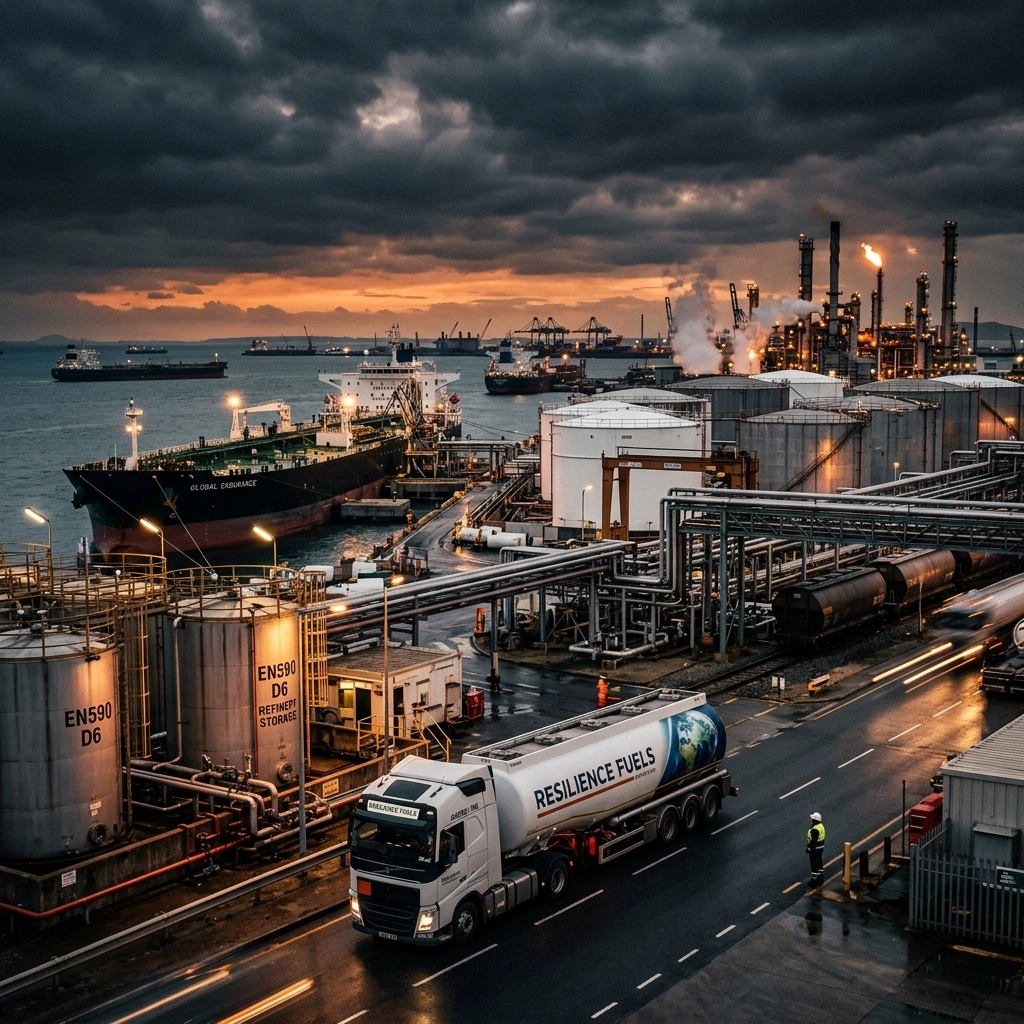
In the energy sector, April 2026 has proven to be a watershed moment for global supply chains. As the ongoing conflict involving Iran continues to escalate, the traditional arteries of the fuel trade are under unprecedented pressure. For any serious fuel buyer, the "business as usual" approach to procurement has effectively vanished. The volatility in the Middle East isn't just a headline; it is a direct threat to the energy resilience of nations and industries reliant on EN590, Jet Fuel A1, and D6 Virgin Fuel Oil.
At Van Dyke Energy, we have spent years building a logistics infrastructure designed precisely for this kind of regional instability. Maintaining a steady flow of refined products during a geopolitical crisis requires more than just capital: it requires a vetted network, deep compliance expertise, and the tactical agility to pivot routes in real-time.
The Geopolitical Chokehold: Iran and the Strait of Hormuz
The current conflict in Iran has placed a massive question mark over the Strait of Hormuz, a maritime corridor through which roughly 20% of the world’s liquid petroleum flows. When tensions spike, insurance premiums for tankers skyrocket, often increasing by 30% to 50% overnight. For buyers of EN590 and D6, this translates to immediate price inflation and, more dangerously, delivery delays that can halt industrial operations.
The ripple effects are felt far beyond the Persian Gulf. As carriers avoid high-risk zones, the pressure on the Suez Canal and alternative routes like the Cape of Good Hope intensifies. While circumnavigating Africa adds 10 to 15 days to a transit, it has become a necessary strategic move for those prioritizing reliability over the lowest possible freight cost.

Understanding Energy Resilience in a Volatile Market
Energy resilience is no longer a buzzword; it is a competitive necessity. In today's climate, resilience is defined by a buyer's ability to absorb supply shocks without compromising their operational integrity. To achieve this, you must move away from "just-in-time" delivery models toward a more robust, "just-in-case" strategy.
For EN590 diesel and D6 fuel oil, resilience involves three core pillars:
- Geographic Diversification: Not sourcing all product from a single refinery or region.
- Logistics Redundancy: Having pre-vetted shipping partners capable of switching routes instantly.
- Financial Stability: Utilizing Top 50 Global Banks for SBLCs to ensure that transactions remain secure even if regional banking hubs are disrupted.
Logistics Secrets: How We Move Fuel Despite the Chaos
The secret to successful fuel delivery during Middle East instability lies in vetted networks and predictive logistics. At Van Dyke Energy, we don’t just monitor the news; we monitor the water.
1. Utilizing Alternative Maritime Corridors
When the Red Sea or the Strait of Hormuz becomes a "no-go" zone for standard insurance providers, we utilize our Baltic and Mediterranean export channels. By sourcing EN590 from non-impacted regions and utilizing the Atlantic corridor, we bypass the primary conflict zones entirely. This ensures that while our competitors are stuck in "Force Majeure" negotiations, our clients are receiving their shipments.
2. Real-Time Compliance and Sanction Screening
Conflict zones are breeding grounds for sanctioned products. In the rush to secure fuel, many buyers inadvertently fall into the trap of purchasing sanctioned vs. non-sanctioned fuels. Our compliance team utilizes AI-driven tracking to verify the origin of every drop of Jet Fuel A1 and D6 we move. We ensure that our supply chain is 100% compliant with OFAC and international regulations, protecting our buyers from legal and financial ruin.

3. Vetting the Vessel, Not Just the Fuel
A common mistake for a fuel buyer is focusing solely on the Product Availability (POP) without looking at the vessel’s history. During the Iran conflict, "dark fleets" often attempt to mask their locations. Van Dyke Energy maintains a rigorous vetting process for every tanker in our network. If a vessel has a history of AIS (Automatic Identification System) manipulation, it is blacklisted from our operations.
Warnings and Red Flags for Fuel Buyers in 2026
The current instability has brought "bad actors" out of the woodwork. If you are in the market for EN590 or D6, you must be hyper-vigilant. Watch out for these red flags:
- Prices Significantly Below Platts: If a seller is offering fuel at a steep discount despite rising insurance and freight costs, the product is likely either non-existent, substandard, or sanctioned.
- Pressure to Bypass Standard Procedures: Avoid any seller who asks you to skip the Proof of Product (POP) phase or demands upfront payments to "unblock" logistics issues.
- Vague Logistics Plans: A reliable partner should be able to provide a clear, multi-modal logistics plan that accounts for current regional tensions.

The Strategic Importance of D6 and Jet Fuel A1
While EN590 powers the terrestrial logistics of the world, D6 Virgin Fuel Oil and Jet Fuel A1 are the lifelines of global power generation and aviation.
D6, specifically, is a heavy fuel oil that requires specialized handling and heating during transport. In a conflict scenario, the specialized tankers required for D6 become scarce. Our ability to secure these vessels through long-term charters ensures that our clients in the industrial and maritime sectors are never left in the dark.
For Jet Fuel A1, the standards are even more stringent. Contamination during a rerouted journey can render a multi-million dollar shipment useless. We maintain strict quality control protocols at every transfer point, ensuring that the fuel reaching the destination meets all international ASTM specifications.
Why a Vetted Network Matters More Than Ever
In the energy trade, your network is your net worth. Van Dyke Energy has spent decades cultivating relationships with refineries and logistics providers who prioritize transparency. We bridge the gap between sellers and buyers by acting as the filter that removes risk.
In 2026, the complexity of moving refined products is at an all-time high. The Iran conflict has added layers of bureaucracy, risk, and cost. However, for those who partner with experts, these challenges are merely variables to be managed, not barriers to entry.

Conclusion: Building a Resilient Future
The instability in the Middle East is a stark reminder that the energy market is fragile. However, fragility can be mitigated through expertise, compliance, and superior logistics. Whether you are looking to secure a one-time spot shipment or a long-term contract for EN590, Jet Fuel A1, or D6, the focus must remain on the reliability of the supply chain.
Don't let regional conflicts dictate your company's operational capacity. By diversifying your sources, vetting your partners, and insisting on total transparency, you can maintain energy resilience regardless of the geopolitical climate.
For more information on how we can secure your supply chain, visit our FAQ or contact us directly to discuss your specific requirements.
Mark Van Dyke
Sales Director, VanDykeEnergy.com
Reliability Powered by Trust.