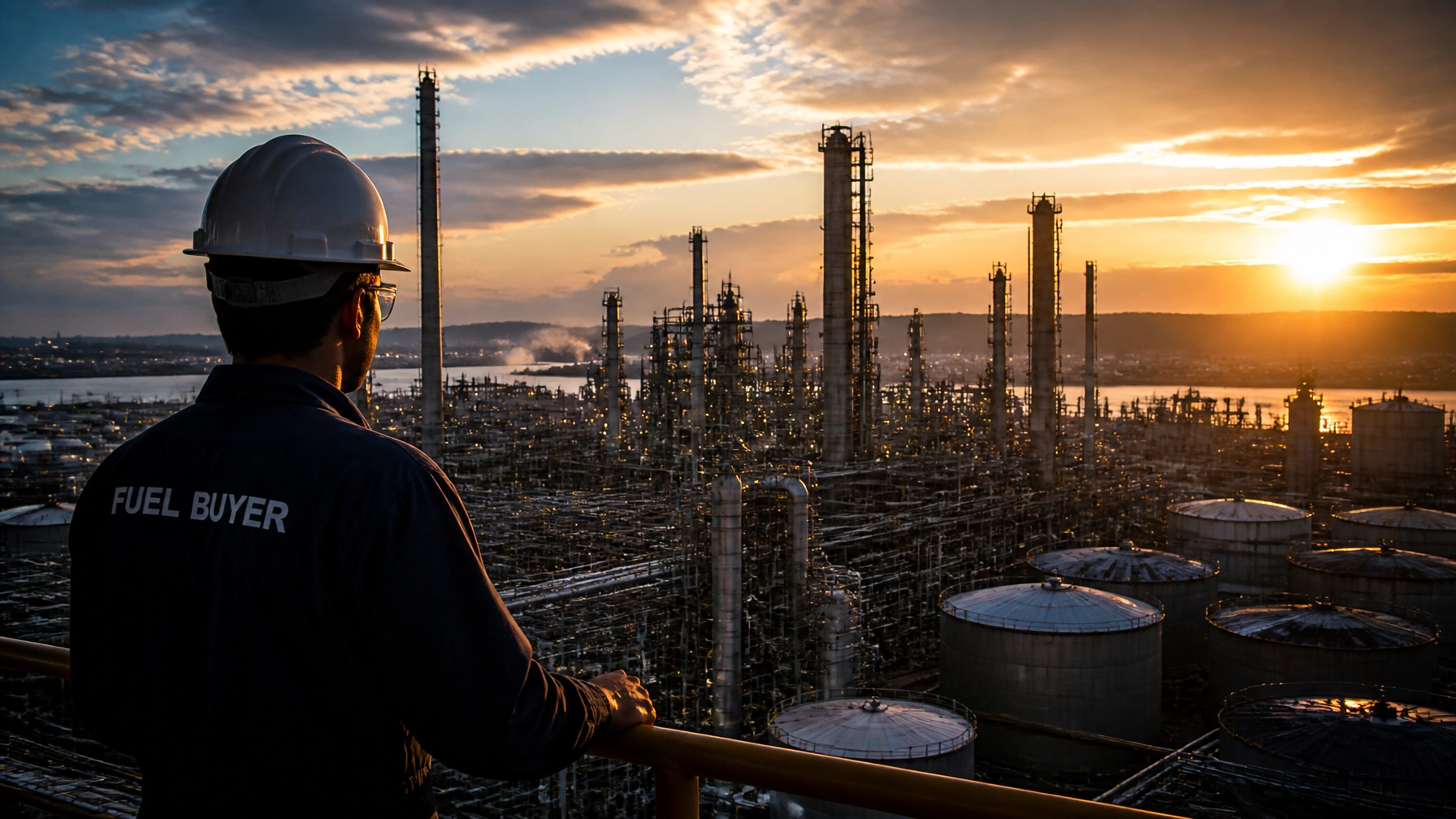
In the energy sector, volatility is no longer a seasonal outlier: it is the baseline. As of June 2026, the ongoing conflict in Iran has fundamentally reshaped the flow of refined fuels across the globe. For any serious fuel buyer, the question is no longer just about the price per metric ton; it is about energy resilience and the physical certainty of delivery.
When the Strait of Hormuz: a corridor responsible for roughly 20-30% of global oil flows: faces de facto closure or severe impairment, the traditional playbooks for procuring EN590, Jet Fuel A1, and D6 become obsolete. At Van Dyke Energy, we operate at the intersection of high-stakes logistics and rigorous compliance to ensure our clients aren't left stranded when the market shifts.
Here are the 10 critical factors you must understand to navigate Middle East logistics in today's climate.
1. The Geopolitical Risk Premium is Now Permanent
Market participants must accept that Brent crude price spikes: often reaching the $100–$130 range during peak escalation: are not temporary glitches. This "risk premium" is baked into every contract. When sourcing EN590, you are not just paying for the refined product; you are paying for the secured logistics corridor that brings it to your port.
2. Strategic Rerouting and the Death of "Standard" Transit Times
With the Strait of Hormuz effectively a high-risk zone, transit times have ballooned. Tankers that once made short runs from the Gulf to Asian or European hubs are now rerouting around the Cape of Good Hope or utilizing alternative overland pipelines where available. This adds weeks to delivery schedules and significantly increases freight and insurance costs. Logistics expertise is now measured by a partner's ability to secure vessel space months in advance.
3. EN590 10ppm: Quality Stability Amidst Scarcity
During periods of regional instability, the temptation for sub-par refineries to push "off-spec" product increases. EN590 10ppm diesel must meet strict European standards regardless of where the feedstock originated. A common mistake is overlooking the technical stability of the fuel during longer transit periods. At Van Dyke Energy, we emphasize rigorous inspection protocols to ensure that what leaves the refinery is exactly what arrives at your terminal.

4. Jet Fuel A1 Uplift is Shifting to Alternative Hubs
The conflict has forced a massive realignment of aviation refueling. Major Gulf hubs that served as the backbone of international long-haul travel are seeing a shift in demand to Singapore, Rotterdam, and Houston. For procurement teams, this means Jet Fuel A1 availability in these alternative hubs is tightening. Securing long-term offtake agreements in these stable regions is the only way to guarantee operational continuity for airlines and charter operators.
5. Identifying the "Shadow" Market Red Flags
Instability always brings out opportunistic actors. We are seeing a surge in "mandates" claiming access to vast reserves of non-sanctioned fuel at "pre-war" prices. If the price seems disconnected from the current Platt’s index, it is likely a scam. You should be wary of any seller who cannot provide a verifiable track record or who refuses to work with Top 50 global banks.
6. Logistics Hubs: The Fujairah Factor
While Fujairah remains a critical bunkering hub, its proximity to the conflict zone makes it a double-edged sword. Energy resilience today requires a diversified port strategy. Van Dyke Energy leverages a vetted network that spans Fujairah, Singapore, and Rotterdam, allowing us to pivot delivery locations based on real-time security assessments.
7. CIF vs. FOB: Allocating Risk in Volatile Zones
In a stable market, many buyers prefer FOB (Free On Board) to control their own shipping. In 2026, the complexity of securing "War Risk" insurance and specialized tankers makes CIF (Cost, Insurance, and Freight) increasingly attractive. When you buy CIF from a provider like Van Dyke Energy, you are offloading the logistical nightmare and the liability of transit to experts who have the infrastructure to handle it.

8. The Criticality of Sanctions Compliance
The line between sanctioned and non-sanctioned fuel has never been thinner. With the Iran conflict at the forefront, OFAC compliance is non-negotiable. One "tainted" cargo can lead to catastrophic legal and financial consequences. We maintain a zero-tolerance policy, vetting every refinery and seller in our network to ensure absolute compliance with international standards.
9. SGS and Independent Inspection: Your Only Insurance
In the middle of a logistics crisis, "trust" is a liability. The only thing that matters is the SGS or CIQ report. These independent inspections must be conducted at the port of loading and, ideally, again at the port of discharge. This ensures that the quantity and quality of your EN590 or Jet Fuel A1 haven't been compromised during a complex rerouting process.
10. The Shift from Spot to Term Contracts
The "spot" market is currently a landscape of high prices and low certainty. To achieve true energy resilience, professional buyers are moving toward structured, long-term offtake agreements. Locking in a supplier who can demonstrate a vetted global network ensures that you are at the front of the line when supply tightens.

Conclusion: Execution Certainty in an Uncertain World
Navigating Middle East logistics in 2026 requires more than just a capital allocation; it requires a partner with deep industry expertise and a commitment to transparency. The conflict in Iran has changed the rules, but for those who understand the importance of compliance, vetting, and strategic rerouting, the market still offers significant opportunities.
At Van Dyke Energy, we don't just find fuel; we secure your supply chain. Whether you are looking for EN590, Jet Fuel A1, or D6, our team delivers the speed, integrity, and clarity required to succeed in today’s volatile energy landscape.

Ready to secure your next cargo?
Explore our Buyer's Guide or contact our desk directly to discuss your requirements.
Mark Van Dyke
Sales Director, VanDykeEnergy.com
Reliability Powered by Trust.