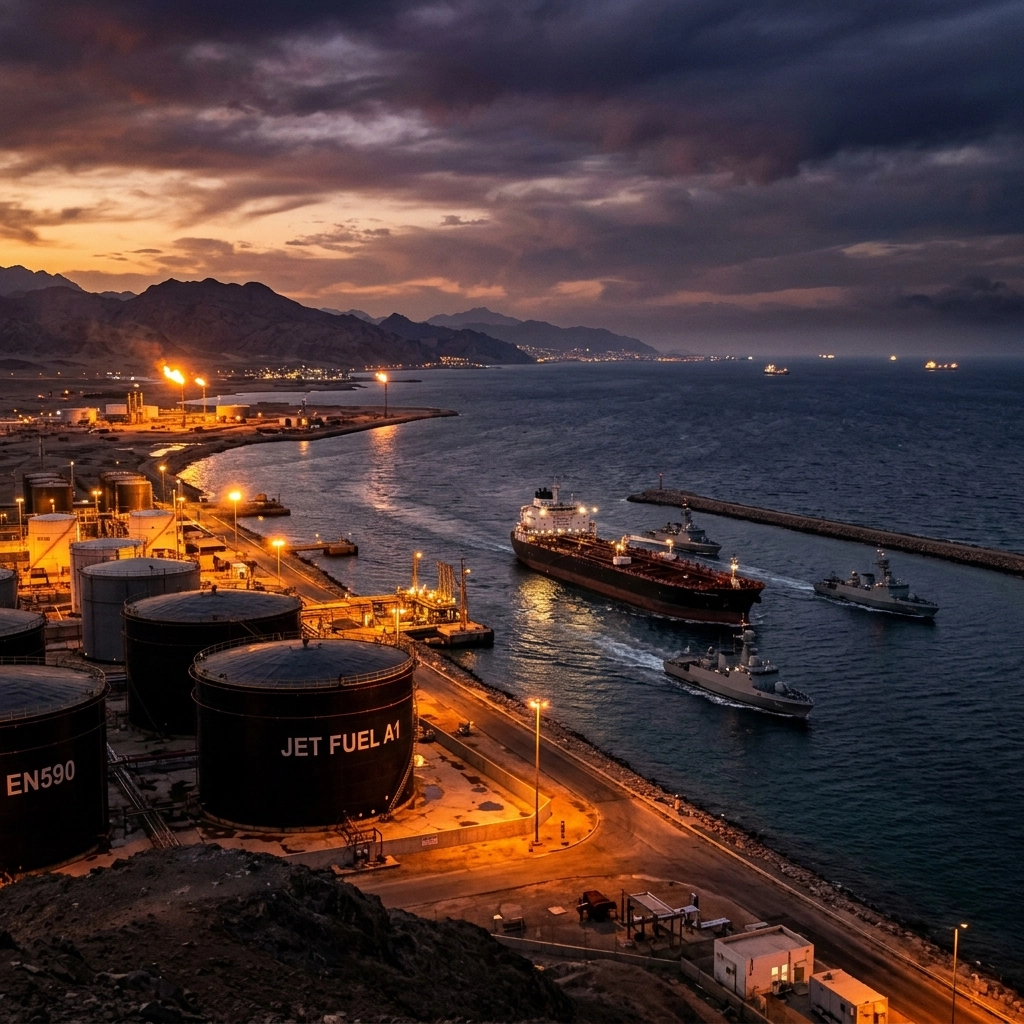
As of April 19, 2026, the global energy landscape is navigating its most volatile period in decades. The ongoing conflict involving Iran has moved beyond regional skirmishes, fundamentally restructuring how EN590 diesel and Jet Fuel A1 move across the globe. For the modern fuel buyer, the traditional playbooks have been discarded. Resilience is no longer a corporate buzzword; it is the difference between operational continuity and catastrophic supply failure.
In today’s climate, maritime chokepoints like the Strait of Hormuz and the Red Sea have become high-stakes corridors where geopolitical tensions dictate market pricing. With reports indicating that nearly 800 tankers are currently stalled or rerouted due to security threats, the bottleneck is real, and the implications for global industry are profound.

The Current State of Global Supply Disruptions
The escalation in the Iran-Israel-US theater has sent shockwaves through the refined products market. Jet Fuel A1 prices have nearly doubled in some regions since the onset of the conflict, with a staggering 40% increase in spot pricing within the last quarter alone.
The International Energy Agency (IEA) has issued a critical warning for European markets, noting that many nations have fewer than six weeks of jet fuel reserves remaining. This scarcity is driven by the fact that the Gulf region remains the largest source of jet fuel for the continent. With shipping traffic at a literal standstill in key areas, the "just-in-time" delivery model has collapsed.
For EN590, the situation is equally precarious. As a primary fuel for logistics and heavy industry, the disruption of Middle Eastern exports means buyers must look toward European, Asian, and non-sanctioned Russian refineries to fill the void. However, this shift comes with increased freight costs: often 30% to 50% higher: and skyrocketing war-risk insurance premiums.
Why Energy Resilience is the Priority for Every Fuel Buyer
In this environment, energy resilience refers to the ability of a buyer to maintain a steady supply of fuel despite regional instability. Achieving this requires a combination of logistical agility and a vetted network of supply partners.
At Van Dyke Energy, we have spent years building the infrastructure necessary to bypass these regional chokepoints. Our expertise in moving EN590, Jet Fuel A1, and Virgin Fuel Oil D6 worldwide ensures that our clients are not held hostage by a single geographic route or political development.
To secure fuel in 2026, buyers must focus on three core pillars:
- Diversification of Sourcing: Relying on a single refinery or region is a critical failure point.
- Logistical Redundancy: Having the ability to switch between FOB and CIF terms or utilize alternative shipping routes.
- Stringent Compliance: In a high-demand market, the risk of dealing with sanctioned vs. non-sanctioned refineries increases significantly.

Navigating Logistics: Moving Fuel Beyond the Conflict Zone
The primary challenge in the current conflict is not just the production of fuel, but the logistics of delivery. With the Suez Canal corridor seeing a massive reduction in tanker volume, savvy fuel buyers are looking for partners who can manage complex rerouting.
While the United States remains a major producer of its own jet fuel, global markets: particularly those in the EMEA region: are scrambling. We are seeing a trend where airlines are forced to make intermediate stops for refueling, further increasing operational costs.
Van Dyke Energy’s logistics network is built on the principle of mobility. Whether we are moving EN590 from European hubs or facilitating Jet Fuel A1 transfers through secure Asian corridors, our focus is on reliability. We understand the nuances of how US brokers are reshaping jet fuel procurement to meet these new global demands.
Red Flags to Watch for in a High-Scarcity Market
When fuel becomes scarce, the number of bad actors in the market increases. As a professional buyer, you must be hyper-vigilant.
- Unverified POP (Proof of Product): If a seller cannot provide a clear, verifiable chain of custody for the product, walk away. Learn what every fuel buyer should know about POP.
- Irregular Financial Demands: Be wary of requests for upfront payments outside of standard Top 50 Global Bank SBLCs.
- Too-Good-To-Be-True Pricing: In a market where freight rates have spiked by 50%, anyone offering "pre-conflict" prices is likely offering a scam or sanctioned product.

Compliance as a Competitive Advantage
Reliability is powered by trust and, more importantly, compliance. Amidst the Iran conflict, the regulatory scrutiny on fuel origins has reached an all-time high. Ensuring that your EN590 or Jet Fuel A1 shipment is not inadvertently funding sanctioned entities is not just a moral obligation: it is a legal necessity to protect your corporate standing.
Van Dyke Energy operates with a "Compliance First" mindset. Our vetted network of refineries and storage facilities allows us to guarantee the provenance of the fuel we move. We specialize in transparent fuel trading, which is the only way to operate securely in 2026.
Strategic Steps to Secure Your 2026 Fuel Supply
If you are responsible for procurement, your strategy should shift from "price-seeking" to "supply-securing." Here is how you should be approaching your next RFP:
- Audit Your Supply Chain: Identify exactly how much of your current supply passes through the Strait of Hormuz or the Red Sea.
- Evaluate Alternative Products: For certain industrial applications, exploring D6 or alternative diesel grades might be necessary if EN590 availability dips further.
- Engage with Global Logistics Partners: Work with firms like Van Dyke Energy that have established footprints in both the US and international markets. Our ability to bridge the gap between US brokers and global buyers is a critical asset.
- Stay Informed on Trade Shifts: The landscape is changing weekly. For instance, understanding how the US-China trade war is reshaping oil & gas can provide insights into where the next supply shifts might occur.

Conclusion: Reliability in an Unreliable World
The conflict in Iran has rewritten the rules of the energy trade, but it has also highlighted the value of true energy resilience. For companies that rely on EN590 and Jet Fuel A1, the path forward requires a partner who understands the intricacies of global logistics, the weight of international compliance, and the urgency of the current moment.
At Van Dyke Energy, we don’t just track the market: we navigate it. Our global network and deep industry expertise ensure that your operations remain fueled, no matter how the geopolitical winds shift. Avoid the 7 mistakes you’re making with EN590 procurement and secure your energy future today.

Reliability is not an accident; it is the result of a structured, compliant, and vetted process. Whether you are a government entity or a private industrial giant, securing your fuel supply amid the Iran conflict is the most important move you will make this year.
Mark Van Dyke
Sales Director, VanDykeEnergy.com
Reliability Powered by Trust.