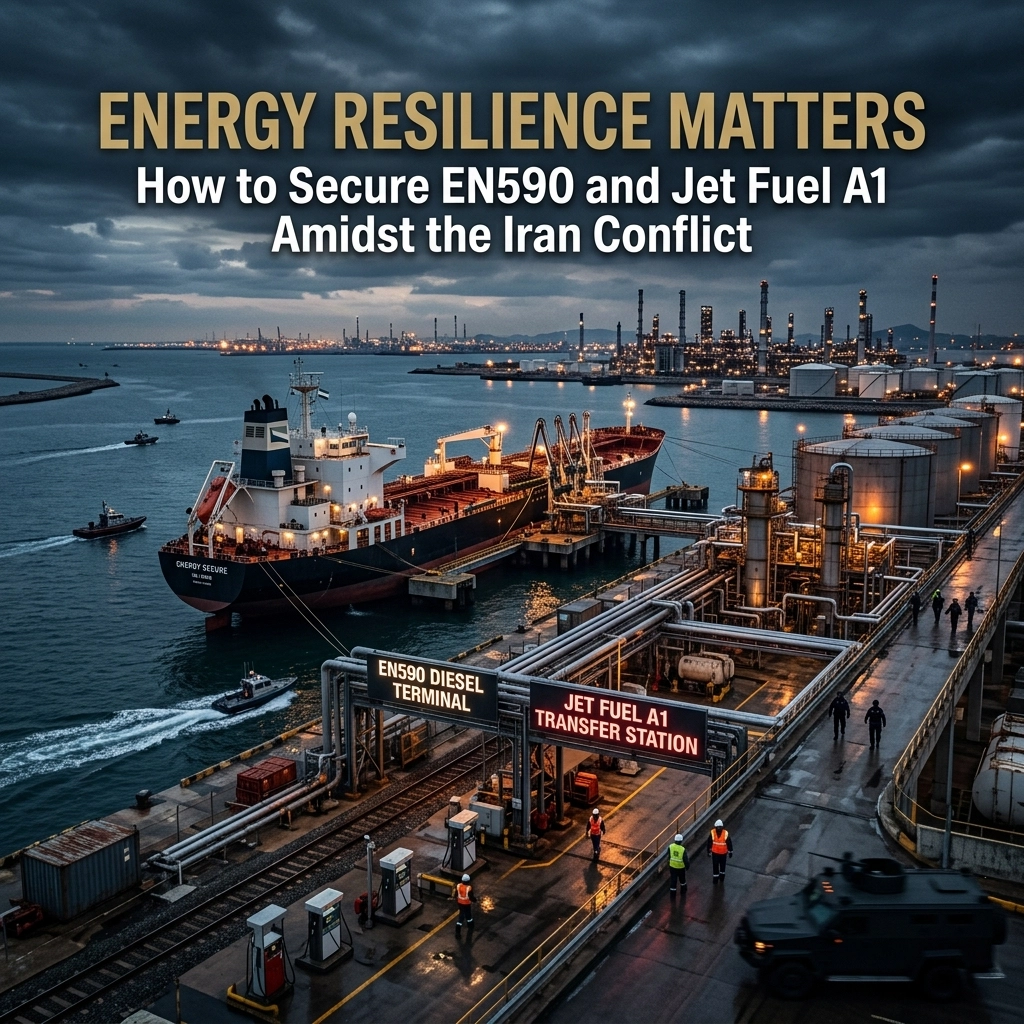
In the second quarter of 2026, the global energy landscape is facing a period of unprecedented volatility. As the ongoing conflict in Iran continues to destabilize the Strait of Hormuz: a corridor responsible for roughly 20% of the world’s petroleum liquids: the definition of "business as usual" has been permanently altered for every serious fuel buyer.
Securing high-demand refined products like EN590 10ppm Diesel and Jet Fuel A1 is no longer just a matter of finding the right price; it is a matter of energy resilience. For procurement officers and energy wholesalers, navigating this instability requires a sophisticated understanding of logistics, a rigid adherence to compliance, and a partner with a vetted, global network that can bypass regional bottlenecks.
The Geopolitical Chokepoint: Impact on EN590 and Jet Fuel A1
The escalating tensions in the Middle East have sent ripples through the maritime shipping industry. With the Persian Gulf and Red Sea classified as high-risk zones, insurance premiums for tankers have surged to record highs. For the average fuel buyer, this translates to higher freight costs, extended lead times, and an increased risk of delivery cancellations.
Jet fuel prices, in particular, have felt the brunt of this instability. In early 2026, we saw prices fluctuate wildly, testing the capacity of airlines and industrial logistics firms to remain profitable. When the primary arteries of energy transit are threatened, the "lowest price" often becomes the "highest risk." This is where energy resilience becomes the competitive advantage.

Navigating Sanctions and Source Verification
In today’s climate, the origin of your fuel is as important as its specification. With shifting sanctions and heightened regulatory scrutiny, many buyers unknowingly find themselves dangerously close to non-compliant supply chains. As we have noted in our guide on sanctioned vs. non-sanctioned refineries, the legal and financial repercussions of a compliance breach are catastrophic.
Van Dyke Energy maintains a strict vetting process that ensures all products, including EN590, Jet Fuel A1, and D6, are sourced from reputable, non-sanctioned refineries. We prioritize transparency and provide verifiable Proof of Product (POP) to ensure our clients are shielded from the "grey market" risks that proliferate during times of regional conflict.
Red Flags for Fuel Buyers in 2026:
- Unrealistic Discounts: Any offer significantly below the current Platts or Argus benchmarks for EN590 should be treated with extreme skepticism.
- Vague Origin Documentation: If a seller cannot clearly outline the refined product’s journey from the refinery to the port of loading, the risk of "tainted" or sanctioned fuel is high.
- Pressure to Bypass Procedures: Requests to skip standard SGS or Saybolt inspections are immediate grounds for terminating negotiations.
Logistics Expertise: Bypassing the Conflict Zones
Energy resilience is fundamentally a logistics challenge. While the Strait of Hormuz remains a critical chokepoint, Van Dyke Energy utilizes a diversified logistics network to ensure delivery continuity. By leveraging European, Asian, and North American refining hubs, we reduce dependency on vulnerable maritime corridors.
Our ability to move refined fuels worldwide: despite regional instability: rests on our deep relationships with global shipping lines and port authorities. Whether you are seeking FOB (Free on Board) procedures at major hubs like Rotterdam or Houston, or CIF (Cost, Insurance, and Freight) deliveries to safe-zone ports, our logistics framework is built to absorb shocks.

The Importance of Financial Compliance and Top-Tier Banks
Securing a multi-million dollar fuel contract in a high-risk environment requires more than just a handshake. The financial instruments used to facilitate these trades: typically SBLCs (Standby Letters of Credit) or DLCs (Documentary Letters of Credit): must be issued by top-tier global financial institutions.
In the current market, banks are increasingly cautious about energy transactions involving the Middle East. Understanding why top 50 global banks matter in fuel trade is essential for any serious fuel buyer. At Van Dyke Energy, we work exclusively with reputable financial structures to ensure that transactions are secure, transparent, and fully compliant with international anti-money laundering (AML) standards.

Strategic Measures for Building Resilience
To protect your operations from the fallout of the Iran conflict, we recommend a multi-faceted strategy:
- Diversification of Sourcing: Do not rely on a single geographical region for your Jet Fuel A1 or EN590 needs. A balanced portfolio of supply origins is the only way to mitigate geopolitical risk.
- Increased Strategic Reserves: Buyers should consider increasing their storage capacity to buffer against temporary supply disruptions and price spikes.
- Vetted Networks: Partner with intermediaries and sellers who have a proven track record. Avoid the pitfalls of unverified brokers by reviewing our insights on 7 mistakes you're making with EN590 diesel procurement.
- Rigorous Due Diligence: Ensure that every Proof of Product (POP) is authenticated. You can learn more about this process in our breakdown of what every fuel buyer should know about POP.
Reliability Powered by Trust
At Van Dyke Energy, we understand that in 2026, reliability is the ultimate currency. The Iran conflict has proven that the global energy market can change in an instant. Our mission is to provide the stability our clients need to keep their fleets moving and their infrastructure powered.
By combining technical expertise in refined products like D6, EN590, and Jet Fuel A1 with a relentless focus on compliance and logistics, we bridge the gap between global instability and operational certainty. Our role is to manage the complexity of the trade so that you can focus on your core business.

Authoritative Conclusion
The current conflict in Iran is a stark reminder that energy resilience is not a luxury: it is a strategic necessity. As supply chains remain under pressure and maritime routes stay volatile, the ability to secure verified, high-quality fuel depends on the strength of your supply chain partners.
A sophisticated fuel buyer understands that the cheapest barrel is often the most expensive when logistics fail or compliance is breached. By prioritizing vetted networks, robust financial instruments, and diversified logistics, you can navigate these turbulent waters with confidence.

For those looking to secure their energy future, Van Dyke Energy offers the transparency and reliability required in today’s market. Explore our Sellers and Buyers pages to learn more about how we facilitate secure global transactions.
Mark Van Dyke
Sales Director, VanDykeEnergy.com
Reliability Powered by Trust.