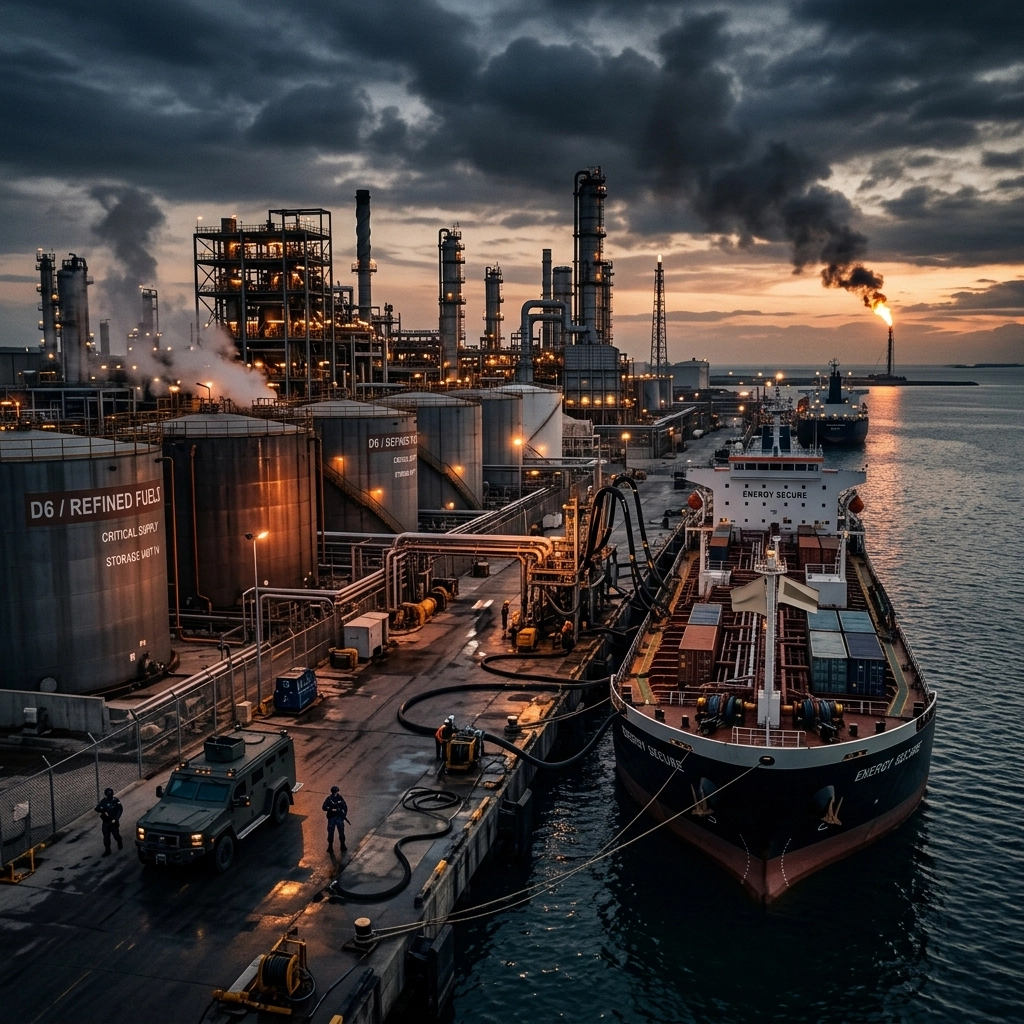
![[HERO] The Ultimate Guide to Energy Resilience: Securing D6 and Refined Fuels Amid the Iran Conflict](https://cdn.mar4blism.com/kWPv-imM7Gx.webp)
In the current geopolitical landscape of May 2026, the global energy market is facing its most significant challenge in decades. The ongoing conflict in Iran has transcended regional borders, creating a ripple effect that threatens the stability of refined fuel supplies across every continent. For the modern fuel buyer, the priority has shifted from simple procurement to a sophisticated strategy of energy resilience.
The Strait of Hormuz, a critical artery for global oil, remains a point of extreme volatility. With nearly 20% of the world’s liquid petroleum passing through this narrow passage, any disruption isn't just an "oil problem": it is a catastrophic supply chain event for refined products like EN590, Jet Fuel A1, and D6 Virgin Fuel Oil. As traditional routes become high-risk zones, the ability to secure molecules depends entirely on logistics expertise and a vetted network of non-sanctioned origins.
The Shift from Crude to Refined Product Vulnerability
While the media often focuses on crude oil prices, the real crisis for industrial and aviation sectors lies in refined product availability. The conflict has seen targeted strikes on regional refineries and storage hubs, causing "crack spreads" to reach historic highs.
For those operating in the aviation sector, Jet Fuel A1 has become increasingly difficult to move through traditional channels. Similarly, the agricultural and transport sectors relying on EN590 (10PPM Diesel) are seeing a tightening of supply as European and Asian refineries struggle to compensate for Middle Eastern shortfalls.
Van Dyke Energy has anticipated these disruptions. By leveraging a global logistics framework that bypasses primary conflict zones, we ensure that our clients maintain operational continuity. Resilience in 2026 means moving beyond "just-in-time" delivery and embracing a "just-in-case" infrastructure.

Understanding the D6 Challenge: Heavy Fuel Oil vs. Financial Instruments
In today's market, the term "D6" is often used loosely, but for the serious fuel buyer, it refers to Virgin Fuel Oil D6. This heavy residual fuel is the lifeblood of large-scale power generation, marine engines, and industrial boilers.
Securing D6 amid the Iran conflict requires more than just a contract; it requires logistics hardening. Because D6 is highly viscous and requires specialized heating for storage and transport, the destruction of regional infrastructure has made it one of the hardest fuels to source reliably.
Why D6 Sourcing is High-Risk Right Now:
- Infrastructure Damage: Regional storage tanks for heavy fuels are primary targets in conflict zones.
- Shipping Bottlenecks: Many Tier-1 tankers are refusing to enter the Gulf, leading to a massive shortage of "dirty" tankers capable of carrying D6.
- Compliance Minefields: Distinguishing between sanctioned and non-sanctioned heavy fuel has become a full-time job for legal departments.
For guidance on navigating these legal complexities, we recommend reviewing our analysis on sanctioned vs. non-sanctioned refineries.
Energy Resilience: A Strategic Framework for 2026
To achieve true energy resilience, fuel buyers must move away from a single-source mindset. The Iran conflict has proven that geographic concentration is the enemy of stability.
1. Diversify Origin Points
Do not rely on a single refinery or even a single region. Van Dyke Energy maintains a vetted network of suppliers in the US Gulf Coast, West Africa, and Southeast Asia. By spreading your procurement across different geopolitical zones, you insulate your operations from localized conflict.
2. Lock in Term Contracts
The spot market is currently a playground for speculators and scammers. In a time of war, a term contract with a reliable partner provides volume protection. Spot deals for EN590 or Jet Fuel A1 are increasingly subject to "Force Majeure" cancellations. A term agreement ensures you are a priority customer when allocations are restricted.
3. Verify Your Logistics
A contract is only as good as the ship carrying the fuel. Van Dyke Energy’s logistics expertise allows us to re-route shipments in real-time. If a specific port of entry becomes compromised, our network of freight forwarders and vessel owners provides the flexibility to divert cargo to safer terminals.

The Role of Compliance and Banking in Fuel Procurement
In a high-volatility environment, the "paper trail" becomes your shield. Financial institutions are under increased pressure to ensure that no funds are inadvertently supporting sanctioned entities or conflict participants. This is why we emphasize the importance of working with Top 50 Global Banks and utilizing instruments like the Standby Letter of Credit (SBLC).
Working with secondary or tertiary banks during a regional war is a massive red flag. These institutions are often the first to have their liquidity frozen or their correspondent banking relationships severed. For a deeper dive into why your choice of bank dictates your fuel security, see our post on why Top 50 global banks matter in fuel trade.
Red Flags to Watch For:
- Off-Market Pricing: If the price for Jet Fuel A1 is significantly below the Platts benchmark during a conflict, the fuel is likely either non-existent or of sanctioned origin.
- Complex Intermediary Chains: Every extra broker in the chain is a point of failure and a potential compliance risk.
- Lack of Proof of Product (POP): In 2026, transparency is non-negotiable. If a seller cannot provide verifiable POP, walk away. Learn more about what every fuel buyer should know about POP.
How Van Dyke Energy Secures Your Supply Chain
At Van Dyke Energy, we don't just facilitate trades; we engineer supply chain solutions. Our approach to the Iran conflict is rooted in proactive risk mitigation. We utilize a vetted network of refineries and logistics providers that have been audited for both quality and compliance.

Our expertise in EN590 and Jet Fuel A1 logistics means we understand the technical nuances of these products: from flash points to sulfur content: and the specific regulatory hurdles of different international ports. We handle the complexity so that your mission-critical operations never run dry.
Whether you are fueling a national airline or a massive industrial complex, our reliability is powered by trust. We navigate the sanctions, the shipping lanes, and the shifting geopolitical sands so you don't have to.
Moving Forward: The Fuel Buyer RFP Process
In this climate, we encourage serious buyers to engage in a structured Request for Proposal (RFP) process. This allows for a transparent exchange of requirements and capabilities, ensuring that both parties are aligned on compliance and delivery schedules.

The era of "casual" fuel trading is over. The Iran conflict has ushered in a period where only the most professional, compliant, and logistically sound operators will thrive. To begin securing your energy future, visit our buyers page or contact us directly.
Conclusion: Security Through Expertise
Energy resilience is not a luxury; it is a necessity for survival in the 2026 market. By understanding the risks associated with D6, EN590, and Jet Fuel A1, and by partnering with an organization that prioritizes logistics and compliance, you can navigate the current instability with confidence.
The conflict may be ongoing, but your supply chain doesn't have to be a casualty. Trust the experts who move the world’s fuel, even when the world is in turmoil.
Mark Van Dyke
Sales Director, VanDykeEnergy.com
Reliability Powered by Trust.