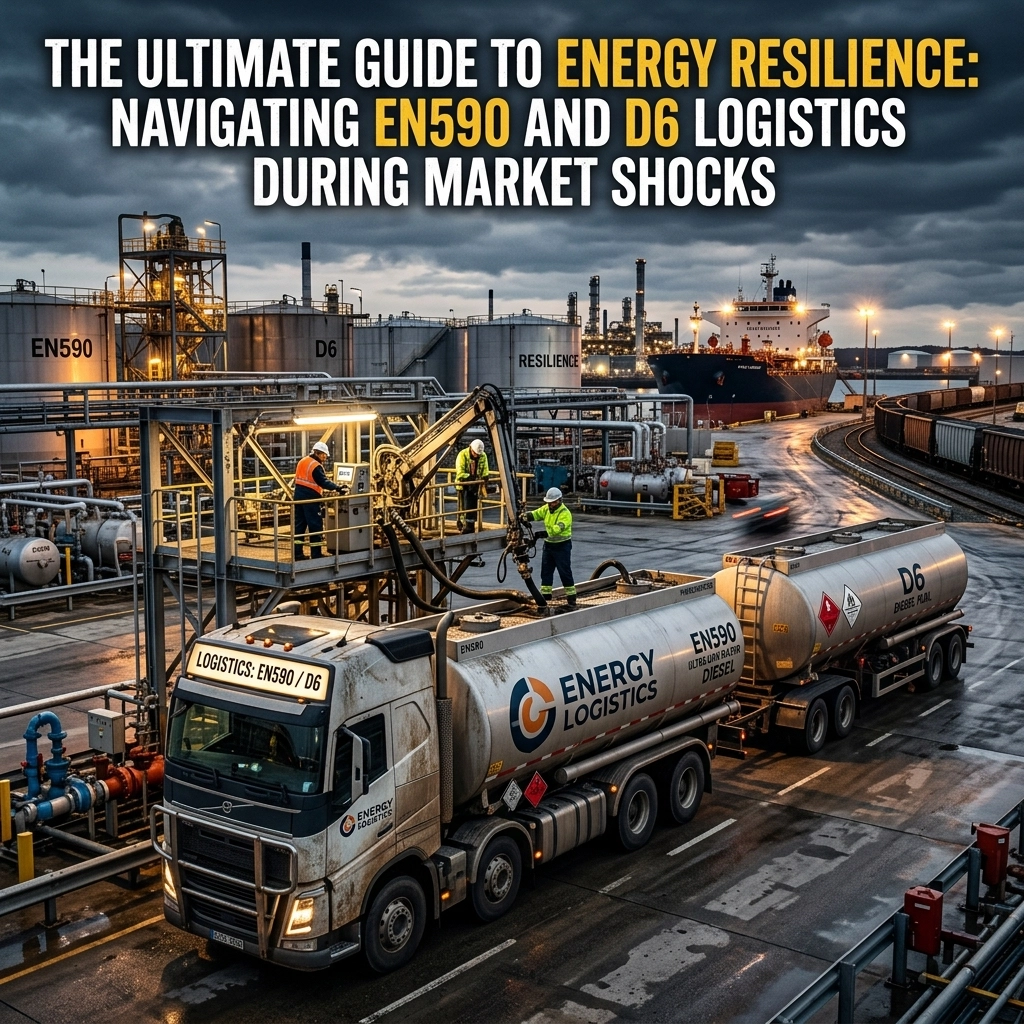
In the energy sector, 2026 has already proven that stability is a luxury, not a guarantee. As of late April, the escalating conflict involving Iran has fundamentally reshaped the risk profile for every major fuel buyer on the planet. With the Strait of Hormuz under constant threat and regional instability reaching a boiling point, the global energy market is experiencing a "perfect storm" of supply constraints and logistical nightmares.
For those of us in the trenches of fuel procurement, "business as usual" is a dangerous mindset. Navigating the current volatility requires more than just a contact list; it requires energy resilience. This guide breaks down how we at Van Dyke Energy are managing the movement of EN590, Jet Fuel A1, and D6 despite the chaos, and what you need to know to protect your supply chain.
The Iran Conflict: A Chokepoint for Global Energy
The current situation in the Middle East is not just a regional skirmish; it is a direct assault on global energy liquidity. The Strait of Hormuz, which sees approximately 20 million barrels of oil movement per day, is the world’s most sensitive chokepoint. Any disruption here creates an immediate ripple effect that drives up the cost of refining and shipping.
We are seeing Singapore diesel spreads exceeding $24 per barrel, and Brent crude hovering at levels that make long-term planning difficult for most. For the fuel buyer, the primary risk isn't just the price: it’s the sanction risk and origin compliance. As traditional supply routes are throttled, "gray market" fuels from sanctioned regions often attempt to enter the supply chain through deceptive blending practices.
Understanding the difference between sanctioned vs. non-sanctioned refineries has never been more critical. At Van Dyke Energy, our vetting process ensures that every drop of EN590 or D6 we move is fully compliant, traceable, and sourced from stable, non-sanctioned jurisdictions.

EN590: Maintaining European Standards in a Volatile Market
EN590 diesel remains the gold standard for automotive and industrial diesel in Europe and many other global markets. With its strict 10ppm sulfur limit, it is the lifeblood of modern logistics. However, market shocks often lead to "specification drift," where suppliers try to pass off lower-grade diesel as EN590 to maintain margins.
When navigating EN590 procurement during a crisis, you must focus on reliability and technical compliance.
- Density Requirements: Ensure the product meets the 820–845 kg/m³ standard.
- Cetane Number: A minimum of 51 is non-negotiable for engine health.
- Winter vs. Summer Grade: In the current climate, logistics delays can push a "summer" shipment into a colder season, leading to waxing issues if the cold filter plugging point (CFPP) wasn't properly addressed.
Many buyers fall into traps by ignoring these technicalities in a rush to secure volume. We’ve identified the 7 mistakes you’re making with EN590 diesel procurement to help you avoid the most common pitfalls during these high-pressure periods.
D6 and Jet Fuel A1: The Heavy Lifters of Energy Resilience
While EN590 powers the roads, D6 (Residual Fuel Oil) and Jet Fuel A1 power the infrastructure and the skies. D6 is particularly vital for power plants and heavy industrial applications. During market shocks, the demand for D6 often spikes as a backup fuel source for power generation.
Jet Fuel A1 logistics are even more sensitive. Aviation fuel requires a "clean" supply chain; any contamination can ground a fleet. The conflict in Iran has forced a rerouting of many international flights, increasing the demand for Jet Fuel at "hub" airports that aren't traditionally equipped for such high throughput.
At Van Dyke Energy, we leverage a vetted network of storage facilities in Rotterdam, Houston, and Jurong to ensure that our Jet Fuel A1 and D6 supplies are positioned where they are needed most. We understand that US brokers are reshaping jet fuel procurement by providing more transparent, reliable pathways than the opaque brokerage models of the past.

Red Flags: Protecting Your Capital in 2026
Market volatility is a magnet for bad actors. When prices are high and supply is tight, scammers emerge with "too good to be true" offers. If you are a fuel buyer in today's market, you must be hyper-vigilant.
Specific Red Flags to Watch For:
- Non-Bank-to-Bank Communications: If a seller refuses to use standard SWIFT protocols (like MT199 or MT799) for initial proof of funds/product, walk away.
- Unrealistic Discounts: In a market where diesel spreads are at record highs, nobody is selling EN590 at $100 below the Platts price.
- Missing Origin Documentation: If the seller cannot provide a clear trail of the fuel's origin, you risk violating international sanctions.
- Upfront "Procedure" Fees: Never pay for "tank farm coordinates" or "registration fees" before a contract is signed and vetted by your bank.
Energy resilience is as much about financial security as it is about physical fuel. This is why top 50 global banks matter in fuel trade. Using an SBLC (Standby Letter of Credit) through a Tier 1 bank is the only way to ensure your capital is protected while the fuel is in transit.
The Van Dyke Energy Advantage: Logistics Expertise
Logistics is where most fuel deals fail. Moving a tanker of D6 from a refinery to a buyer’s tank during a conflict requires more than just a ship; it requires a deep understanding of maritime law, insurance (P&I clubs), and real-time geopolitical monitoring.
Our team at Van Dyke Energy doesn't just "find fuel." We manage the entire lifecycle of the transaction. From the initial RFP process to the final SGS inspection at the discharge port, we provide a level of transparency that is rare in this industry. Our ability to move refined fuels worldwide: even when the Strait of Hormuz is a "no-go" zone for some: is built on a foundation of trust and vetted relationships.

Navigating the Forward Path
The "Ultimate Guide" to energy resilience isn't a static document; it’s a strategy of constant adaptation. In today's climate, you cannot rely on the suppliers of yesterday. You need a partner who understands the nuances of CIF vs. FOB in high-risk zones and who has the banking relationships to move large volumes of EN590 and Jet Fuel A1 without delay.
Reliability is the new currency. As the Iran conflict continues to evolve, the gap between those who have secured their supply chains and those who are "spot buying" on hope will only widen.
Why Choose Van Dyke Energy?
- Vetted Networks: We only work with refineries and storage facilities that pass our rigorous compliance audits.
- Worldwide Reach: Whether it’s D6 in the Americas or EN590 in Europe, our logistics footprint is global.
- Transparency: We believe in a transparent fuel trading model where both parties are protected.

The volatility of 2026 isn't going away. If you are responsible for fueling fleets, power plants, or aviation hubs, the time to harden your supply chain is now. Don't let market shocks dictate your operational success. Partner with a team that views logistics as a mission-critical operation.
If you're ready to secure your next allocation of EN590, Jet Fuel A1, or D6 with a partner you can trust, reach out to our desk today.
Mark Van Dyke
Sales Director, VanDykeEnergy.com
Reliability Powered by Trust.