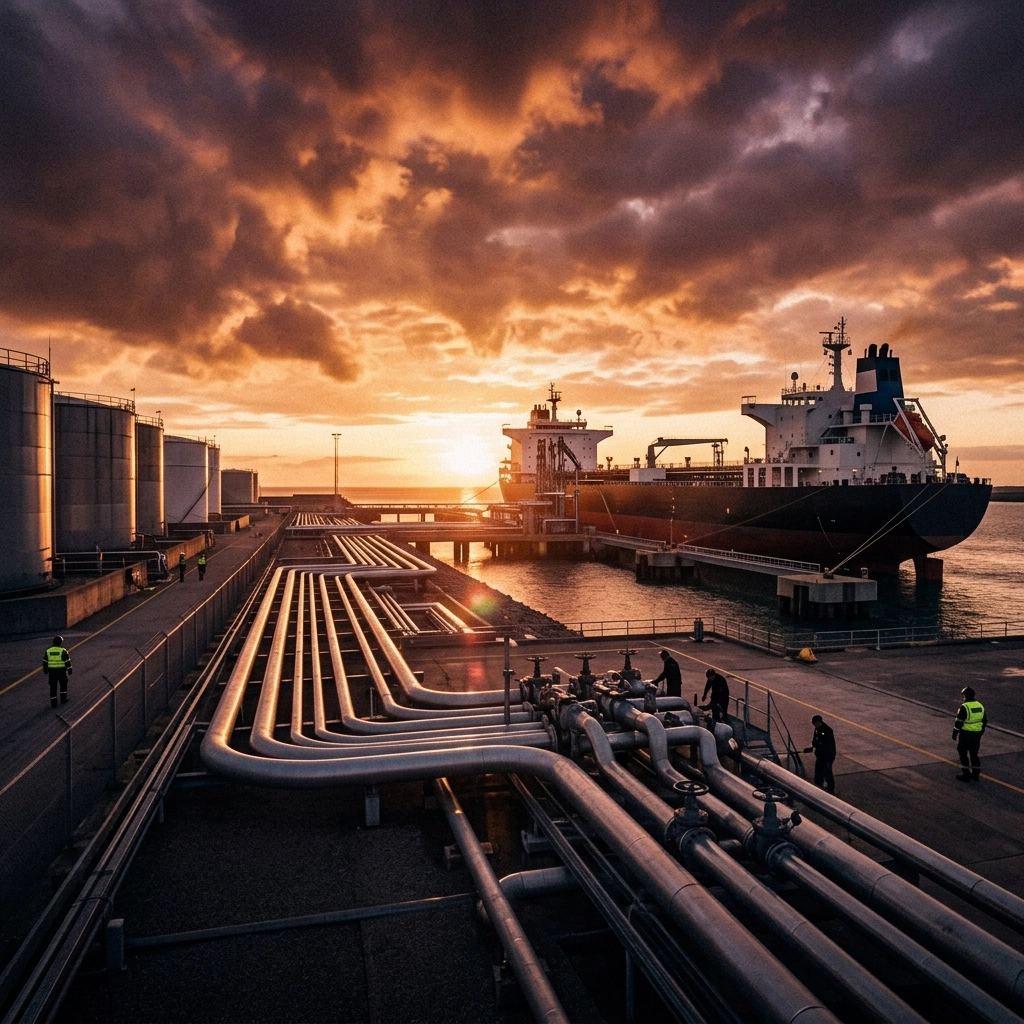
In today's climate, "business as usual" is a relic of the past. As of Tuesday, April 7, 2026, the global energy market is navigating a period of unprecedented volatility driven by the escalating conflict in Iran and the broader Middle East. For any high-volume fuel buyer, the stakes have never been higher. The stability of supply lines for critical refined products: specifically Jet Fuel A1, EN590, and D6: is currently under siege by geopolitical shifts that threaten the very core of global commerce.
The reality of 2026 is one of geographic concentration risk. With the Strait of Hormuz facing intermittent closures and Suez Canal traffic dropping from 4.0 to 1.7 million tons per day, the logistical gymnastics required to move fuel have become a primary differentiator between companies that thrive and those that face operational grounding. At Van Dyke Energy, we recognize that energy resilience is no longer just a buzzword; it is a mission-critical mandate.
The Geopolitical Shockwave of April 2026
The ongoing conflict involving Iran has sent Brent crude climbing toward the $90 per barrel mark, with daily surges of 4% to 5% becoming common. This regional instability does more than just raise prices; it destroys traditional supply routes. When maritime chokepoints are threatened, the cost of air transport fuel doesn't just rise: it doubles. We have seen Jet Fuel A1 prices spike from the $85–$90 range to nearly $200 per barrel in high-risk zones.
For an airline or a major logistics fleet, these numbers are catastrophic if not managed with an ironclad supply strategy. Most major carriers have abandoned financial fuel hedging over the last year, leaving them fully exposed to the spot market. This is where Van Dyke Energy steps in. Our logistics expertise allows us to bypass the noise and focus on the movement of physical product through a vetted network that prioritizes security and reliability above all else.

Navigating the Logistics of Refined Fuels: EN590 and Jet Fuel A1
Maintaining a consistent supply of EN590 diesel and Jet Fuel A1 requires more than just a contract; it requires a deep understanding of the current "sanctioned vs. non-sanctioned" landscape. As geopolitical lines are redrawn, the risk of accidentally engaging with restricted entities increases exponentially.
Fuel buyers must understand the nuance of sanctioned vs. non-sanctioned refineries to protect their corporate integrity and financial standing. At Van Dyke Energy, our compliance protocols are designed to filter out high-risk sources, ensuring that every drop of EN590 or D6 we move is fully compliant with international trade laws and 2026 regulatory standards.
Why the Strait of Hormuz Matters to You
The Strait of Hormuz is the world's most important oil transit chokepoint. In the current 2026 conflict, even a partial blockade forces tankers into longer, more expensive routes around the Cape of Good Hope. This adds weeks to delivery times and millions to freight costs. We mitigate these risks by:
- Diversifying refining sources away from single-point-of-failure regions.
- Utilizing strategic storage hubs in stable jurisdictions to buffer against sudden maritime closures.
- Maintaining real-time visibility on global tanker movements to pivot logistics in response to immediate threats.
The Resilience Gap: Why Reliability is the New Currency
Most fuel buyers rely on "just-in-time" delivery models. In 2026, "just-in-time" is a recipe for disaster. When supply chains strain, refineries prioritize long-term partners with proven track records. If you are not working with a provider that has a vetted network and deep-seated industry relationships, you are at the back of the line.
The resilience gap is widening. Airlines with limited storage capacity: typically 30 days or less: are finding themselves unable to secure the volume of Jet Fuel A1 needed to maintain their flight schedules during peak disruptions. Our role at Van Dyke Energy is to bridge this gap, leveraging our position to ensure our clients receive priority allocations even when the market is in a state of flux.

Compliance, Transparency, and the POP Process
In a high-volatility market, scammers and "paper" sellers proliferate. They promise deep discounts on EN590 or Jet Fuel A1 that are physically impossible in the current market climate. A sophisticated fuel buyer knows that if the deal looks too good to be true, it’s a liability.
This is why we emphasize the importance of understanding Proof of Product (POP). Without a verifiable, transparent POP process, a transaction is nothing more than a gamble. We operate with a level of transparency that is built on trust, ensuring that every transaction is backed by physical inventory and rigorous inspection standards (SGS/Saybolt).
Red Flags to Watch for in 2026:
- Unrealistic Pricing: If a seller offers EN590 significantly below the current Brent-adjusted market rate, they are likely selling "phantom" fuel.
- Lack of Financial Pedigree: In today's market, the involvement of Top 50 global banks is non-negotiable for securing SBLCs and ensuring transaction safety.
- Vague Logistics: If a supplier cannot tell you exactly which port the product is lifting from or provide a clear vessel tracking number, walk away.

The Van Dyke Energy Advantage: Beyond Brokerage
We are not just intermediaries; we are logistics architects. In the face of the Iran conflict and the reshaping of global energy markets, our ability to move D6 and refined fuels worldwide is rooted in our operational grit. We understand that transparent fuel trading is the only way to build long-term energy resilience.
Whether it is navigating the 7 common mistakes in EN590 procurement or managing the complexities of how US brokers are reshaping jet fuel procurement, our team provides the expertise needed to keep your operations running. We focus on the heavy lifting: compliance, logistics, and vetting: so you can focus on your core business.
Building a Future-Proof Fuel Strategy
Energy resilience in 2026 requires a proactive stance. You cannot wait for the conflict to de-escalate to secure your supply lines. You should be:
- Establishing relationships with non-sanctioned refineries in diversified regions.
- Securing long-term Jet Fuel A1 allocations to hedge against further price spikes.
- Auditing your current suppliers for regulatory and procedural compliance.
The geopolitical landscape will continue to shift. The tension in Iran is a signal that the era of cheap, easy energy is over. However, with the right partner, these challenges become manageable. Reliability is not a lucky accident; it is the result of a structured, vetted, and compliant approach to global energy trade.

Conclusion: The Path Forward
As the world watches the developments in the Middle East, the mandate for the modern fuel buyer is clear: prioritize resilience. At Van Dyke Energy, we remain committed to delivering Jet Fuel A1, EN590, and D6 to our global partners, regardless of the regional instability. Our logistics network is built to withstand the pressures of 2026, and our commitment to compliance ensures that your supply chain remains as secure as it is efficient.
In a world of uncertainty, trust the experts who move the fuel that keeps the world moving.
Mark Van Dyke
Sales Director, VanDykeEnergy.com
Reliability Powered by Trust.